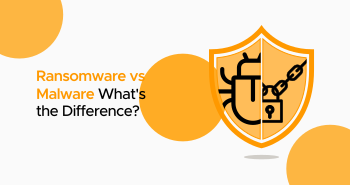





































Cybersecurity risks have escalated to the fact that even regular enterprises and laypeople are now at risk. And this is no longer only an issue for large businesses and professionals. Two words come up regularly in discussions about internet dangers. Both phrases are often utilized indistinctly. Yet, those two words can confuse someone easily: ransomware vs malware.
At a basic level, malware is more general. Ransomware is a subset of malware that has only one intention: locking your data and demanding money from you. This too sounds very easy, but trust us, it can be pretty serious, confusing, and costly if you are not familiar with it.
What Is Malware?
Malware is a nickname for “malicious software.” It’s a catch-all for anything designed into software that’s at all intended to ruin days. Malware is usually made to access your computer without your consent and perform tasks you didn’t ask it to do, like:
- Stealing your information
- Seeing what you’re doing
- Taking up space on the drive
- Interfering with your files
Malware has existed since the advent of personal computing. At the same time, it has advanced from harmless mischief to serious tools of crime, spying, and theft. Now, malware can affect people, businesses, and even government systems.
The Malware Basics – What’s in the World Of Computer Threats
- Viruses that attach to files and replicate when a file runs
- Malware/Trojans pretending to be software, but carrying malicious code within them
- Spyware is recording your every keystroke, click, or view
- Adware that covers your screen in unwelcome ads
They all behave differently but fall into the same broad category: malware. Their reasons may vary, ranging from stealing passwords to remotely controlling your system.
What is Ransomware?
Ransomware is a special sort of malware. Let us clear what Ransomware actually does. It hijacks your computer or files. You pay a ransom to have them released. Most frequently, your files are encrypted.
They turn your data (files or any computer data) into a puzzle. And if you want them back to their original state, you’ll need a special access digital key (in other words, you’ll have to hack your files, too).
The attackers may threaten to delete your files or leak sensitive information if you don’t pay within a certain time. This is because it tells you loud and clear that you have to decide very quickly. This is especially bad because when you pay for the decryption key, you can’t be guaranteed that your data will be restored.
Malware vs Ransomware: What’s the Main Difference
It is also easy to comprehend the distinction between malware and ransomware. Simply speaking, malware is a general class, and ransomware is a category of malware.
Here’s the easy and direct Malware vs Ransomware comparison:
| Aspect | Malware | Ransomware |
| What it is | A broad term for any software made to cause harm or misuse a system | A specific type of malware designed to lock data and demand payment |
| Main purpose | Can spy, steal data, damage files, or slow down systems | Focuses on extorting money by blocking access to files or devices |
| Visibility | Often runs quietly in the background without notice | Makes itself obvious with warnings and ransom messages |
| Impact on users | Effects can range from minor annoyance to serious data loss | Immediate disruption and high stress due to locked files |
| Examples | Viruses, spyware, trojans, and adware | WannaCry, CryptoLocker, LockBit |
Its main point, of course, is to extort money using encryption. It may be that the malware is back there watching you, stealing all your data, and compromising your computer silently. But ransomware is different; it’s demanding your urgent attention. It’s the thing that genuinely makes ransomware a violent experience.
Detailed Comparison Between Malware and Ransomware
Sometimes, the damage that malware does is limited. A kind of malware might display annoying advertisements or reduce performance. Another type might pass your confidential information, drain your bank account, or use your device as a participant in a crime syndicate without your knowledge.
The effects of a ransomware attack are more apparent. This is because, as a result of files becoming unretrievable, there is a complete shutdown of activity. A company might lose vital access to customer information, accounting, and business systems. An individual might lose personal photos, business documents, or schoolwork with irreversible consequences.
Although both malware and ransomware are harmful in their own ways, ransomware is more likely to provoke stress. It puts the target in a problematic situation with time running out.
How Malware & Ransomware Penetrate Systems
Mainly, human error is the leading cause of malware and ransomware. Attackers think it will be easier to fool humans than to overpower strong security standards.
The Common Ways of Infection Are:
- Phishing emails with links or attachments
- Downloading software files from untrustworthy sites
- Opening or visiting websites that contain Trojans or viruses
- The use of legacy software with recognized vulnerabilities
Ransomware can enter a system through the same channels as other malware, but its impact is mostly immediate. This can lock years’ worth of photos and documents in seconds with merely a click.
How to Protect Yourself from Malware & Ransomware
If you would like to protect yourself from malicious software or ransomware, no complicated skills are needed, but a good habit will be. This is because the majority of malfunctions are due to a lack of precautions.
Here are a couple of tips that will make a huge difference:
- Check that your operating system is up-to-date
- Employing reputable antivirus software or security software
- Use email attachments and links wisely
- It is necessary to back up files important to you regularly
The most important and effective tip to be safe from ransomware and malware is backup. You can get your data from your clean backup, and the attacker will lose their advantage.
Final Thoughts
The ransomware vs malware question is not about which is worse. It is a question of understanding the difference between the two terms and how this is important. Malware is a generic term given to different forms of malicious software. Ransomware is a type of malicious software whose objective is to force a person to pay a ransom.
At least, it is easier to avoid these threats if you are able to catch how they actually work. Most importantly, being knowledgeable about how they work will allow you to take necessary actions to be secure forever.
Having an “informed, aware, and prepared” mindset does not make one a fearful individual.