












Shopping in 2025 isn’t what it used to be; cause everything runs so fast and changes so quickly. Your buyers are everywhere, and maybe you have to catch them casually scrolling Instagram/TikTok at breakfast. But how and what platforms can you use? That’s why knowing about headless commerce and the top headless eCommerce platforms is important.
The numbers don’t lie: global ecommerce sales are predicted to touch $7 trillion by 2025. And traditional ecommerce platforms simply cannot cope with the rapid pace of the current market we are competing in. That’s why 60% of major North American retailers are adopting the headless approach.
In this blog, you will learn in simple terms what headless commerce really is. How is it different from traditional architecture? What are the key advantages? What are the seven best headless ecommerce platforms right now? And when a business should make the switch.
What Exactly is Headless Commerce?
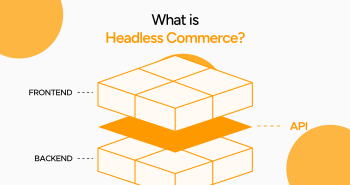
For a second, think of your ecommerce store as a car. Traditional platforms have the body and engine integrated—you can’t adjust one without impacting the other.
Headless commerce doesn’t work like that. It divides them. Your front-end (what consumers see) lives separately from your back-end (where orders, stock, and data are processed). We connect them via APIs so they can communicate while remaining independent at the same time. This means your design team can rebuild the entire website without your developers touching the backend code.
Here’s Why This Matters
When everything’s connected, even small changes take forever. Want to update your homepage? You might accidentally break your checkout process. Headless commerce services fix that. The market for headless commerce is expected to reach $11.8 billion by 2028, as businesses grow tired of being held back by their own platforms. You get speed, flexibility, and the freedom to sell anywhere your customers are hanging out.
Traditional E-commerce vs Headless E-commerce – The Real Effective Battle
Traditional e-commerce would require touching back-end code for almost any storefront design change. That slows teams down, limits creativity, and makes experimentation risky. Headless breaks that dependency. Your design team can update the UI freely, while developers manage the backend independently.
Comparing Traditional E-commerce and Headless E-commerce
|
Feature |
Traditional |
Headless |
| Speed | Slower updates | Faster updates & deployment |
| Flexibility | Slim | High |
| Customization | Template-based | Fully custom |
| Scalability | Requires heavy infrastructure | Cloud-native & scalable |
| Cost | Lower upfront | Higher upfront investment |
| Time-to-market | Slower | Rapid |
Key Benefits of Using Headless Commerce
Flexibility & Complete Personalization
Headless delivers complete control to brands over the digital experience. You’re never limited to templates, plugins, or theme limitations. If your brand requires a specific layout, custom interactions, or even an extensively personalized flow, headless is able to do that without compromising on the backend side.
Selling Easily in Omnichannel
Today’s consumers frequently switch between channels. Sometimes you’ll catch them browsing on mobile phones—researching products on desktop, buying goods via social commerce, or checking availability on a voice assistant. Headless commerce solves this problem for you by managing your content and product information without rebuilding everything from scratch.
Faster Launching
Speed matters: Ping Identity reports that companies embracing headless architecture experienced a 50% decrease in time-to-launch for new digital projects. With a stable backend, your team can update pages/products, content, or campaigns quickly.
Better Performance & Higher Conversions
In ecommerce, page speed is make-or-break. According to research by NauticalCommerce, sites loading within one second see 3x higher conversion rates than those loading within five seconds. Headless architectures, particularly with React, Next.js, or static generation, improve performance dramatically.
Scalability During Traffic Spikes
Brands often stumble on high-traffic moments-holidays, flash sales, or influencer drops. As headless systems sit atop scalable infrastructure, it becomes much easier to manage unpredictable spikes without the risk of outages.
Developer Efficiency
Frontend and backend teams work independently: designers and marketers handle UI updates, while developers work on backend logic. No bottlenecks, no collisions.
7 Best Headless E-Commerce Platforms for You in 2025
1. Shopify Plus (Hydrogen & Oxygen)
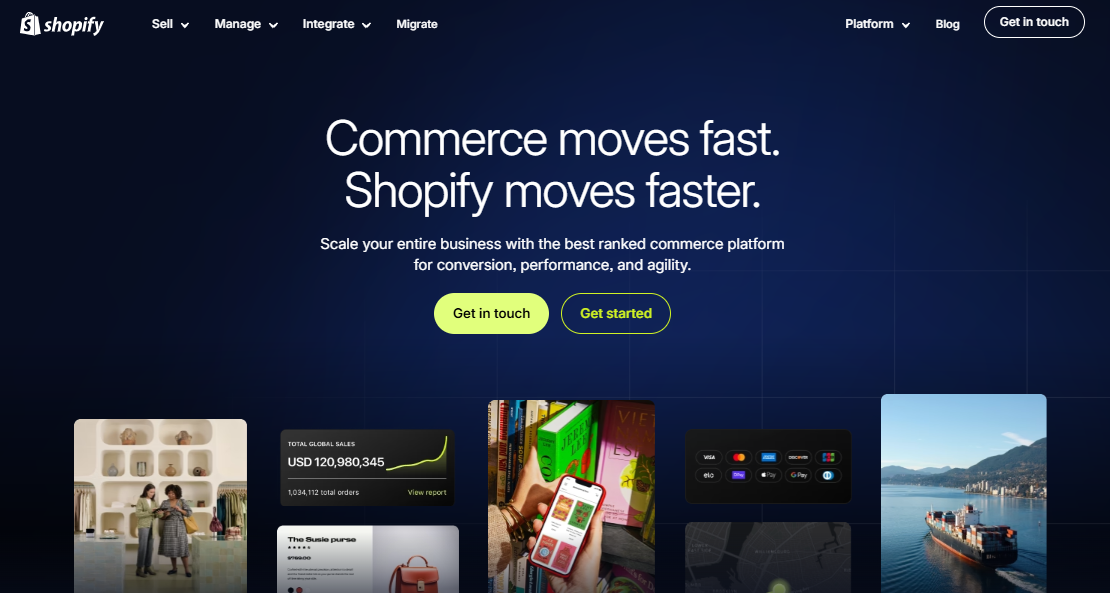
Best for growing Shopify merchants who need the freedom of a custom frontend combined with Shopify’s powerful backend.
Shopify Plus offers headless capabilities via Hydrogen (a React-based framework) integrated with Oxygen (Shopify’s global hosting). It is quick, flexible, and perfect for brands that require an advanced store without quitting Shopify’s ecosystem.
2. BigCommerce
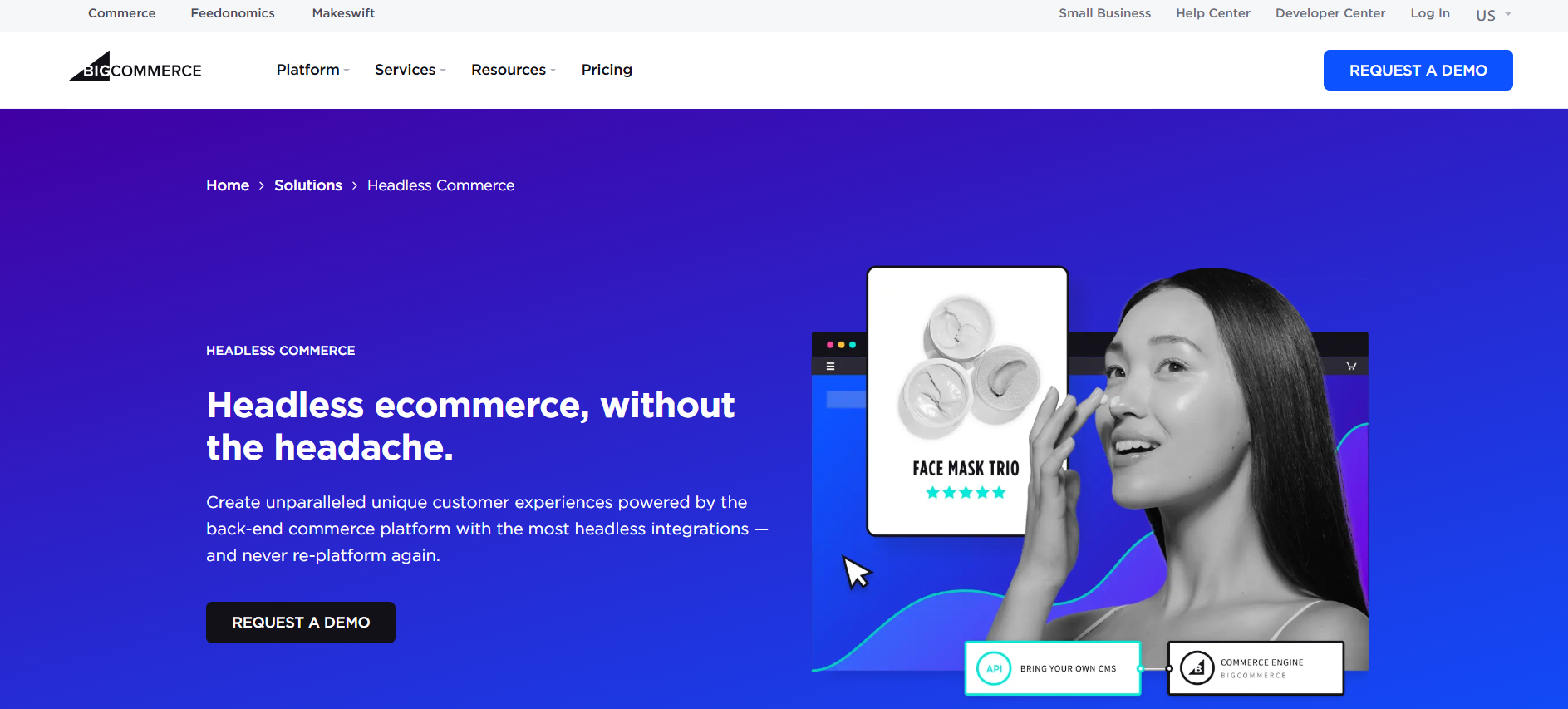
BigCommerce’s headless eCommerce solutions suit mid-sized and large-scale firms and enterprises.
BigCommerce reports 95% of its platform features through REST and GraphQL APIs, making it a perfect option for brands desiring a powerful API-driven backend. It perfectly combines with famous frontend frameworks and supports numerous storefronts.
3. Adobe Commerce (Magento)
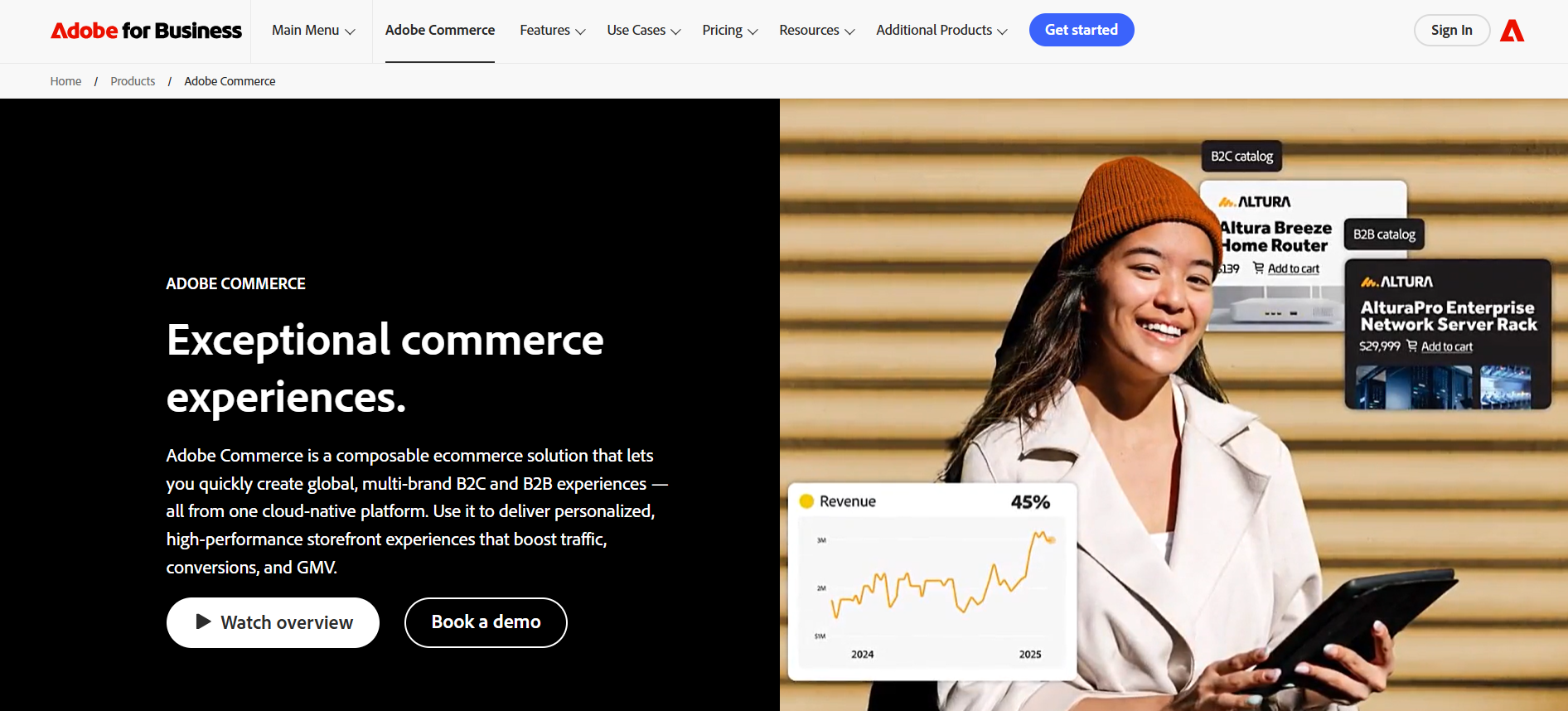
Ideal for enterprise businesses seeking extensive customization and full command.
Their headless commerce provides advanced features of personalization, managing multiple stores, and one of the most powerful customization powers in the industry. Although the open-source version doesn’t cost anything, hosting and development expenses can vary from project to project depending on the complexity.
4. Commercetools
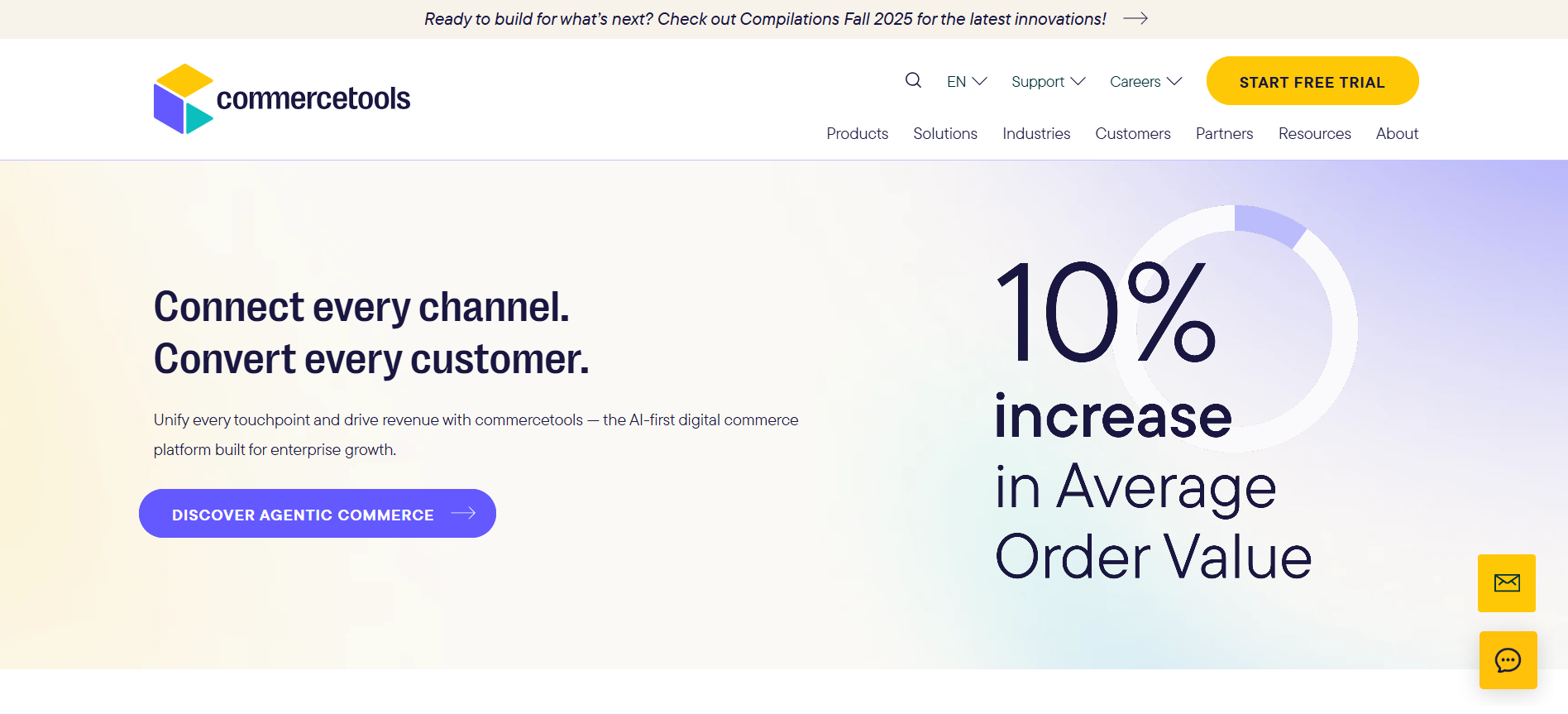
Best for: Enterprises adopting MACH-certified composable commerce.
Commercetools is entirely based on microservices, an API-first foundation, and cloud-native scalability. It’s very powerful but often best suited for brands with strong technical teams and large development budgets.
5. Salesforce Commerce Cloud
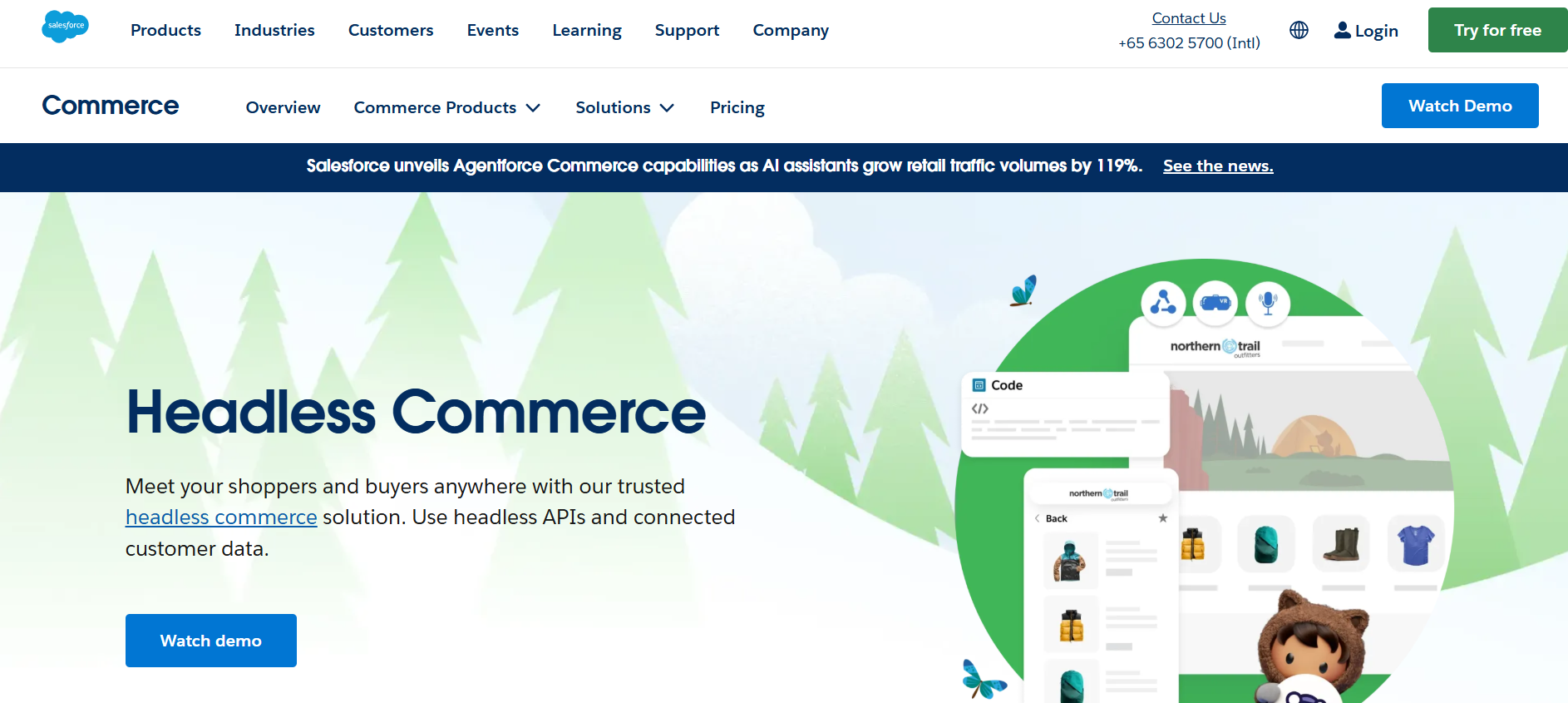
Best for: Businesses heavily focused on CRM and marketing automation.
Salesforce’s headless commerce solution provides deep integration with Salesforce’s ecosystem, powerful APIs, and complete AI-powered customization for you. Choose Salesforce if you have a large organization and you want a single view of your customers across sales, marketing, and service.
6. Elastic Path
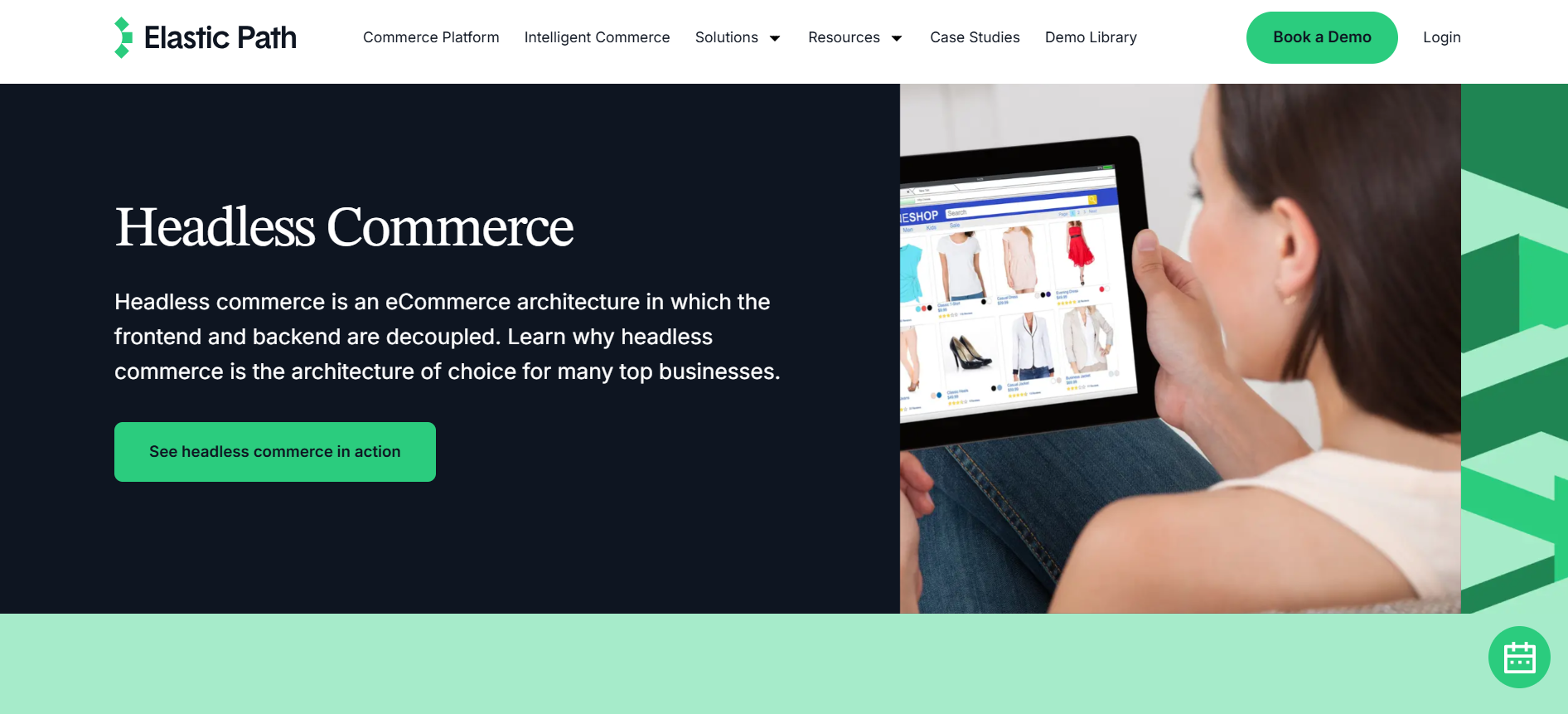
Best for: Highly flexible enterprise commerce stacks.
Elastic Path is characterized by a very high API response rate and enterprise-grade modularity. Built upon Java and Apache technologies, it can ensure strong performance and stability for brands with complex product catalogs.
7. Fabric
Best for modern, modular headless commerce.
Fabric is specially for retailers desiring modern, composable solutions without rebuilding their whole infrastructure. Fabric is designed with a core emphasis on speed, modularity, and enterprise reliability.
When to Choose Headless Commerce?
| You Need Headless If… | You Might Skip It If… |
| Selling across web, mobile, social, kiosks, and voice | One main sales channel (just your website) |
| The dev team knows APIs and modern frameworks | Small team or limited tech skills |
| Want total control over design and UX | Happy with platform templates |
| Need unique features competitors don’t have | Standard store features work fine |
| The current platform can’t keep up with growth | Not experiencing major scaling issues |
| Innovation feels slow or impossible | Can launch updates reasonably fast |
| Traffic spikes crash your site regularly | Steady, manageable traffic levels |
Conclusion
Headless commerce is best for you if speed and customer success are your first priority. It offers tremendous flexibility, independence, and performance benefits for enterprise or large-scale companies. Headless is definitely the future of e-commerce, as 80% of companies that don’t currently utilize headless will jump in to adopt it within 2 years.
Consider your business conditions, your technical team’s capacity, and your long-term brand goals before choosing headless commerce. And choosing expert headless commerce service providers leads you to faster growth, better customer experiences, and long-term adaptability.