


































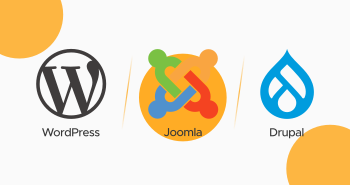
Creating and managing a website heavily relies on various technologies that work in tandem. You need a platform to keep your website up and running at all times. Of all the available platforms or CMS, WordPress, Drupal, and Joomla are the notable yet influential options. Therefore, you should proactively compare WordPress, Joomla, and Drupal.
Any of them can help you develop your dream website, but remember that these platforms excel in different areas. You must analyze which one is right for your website before investing time, money, and effort in any of them. Here is a comparison of WordPress, Joomla, and Drupal to help you determine which one is best suited for your needs.
What is WordPress?
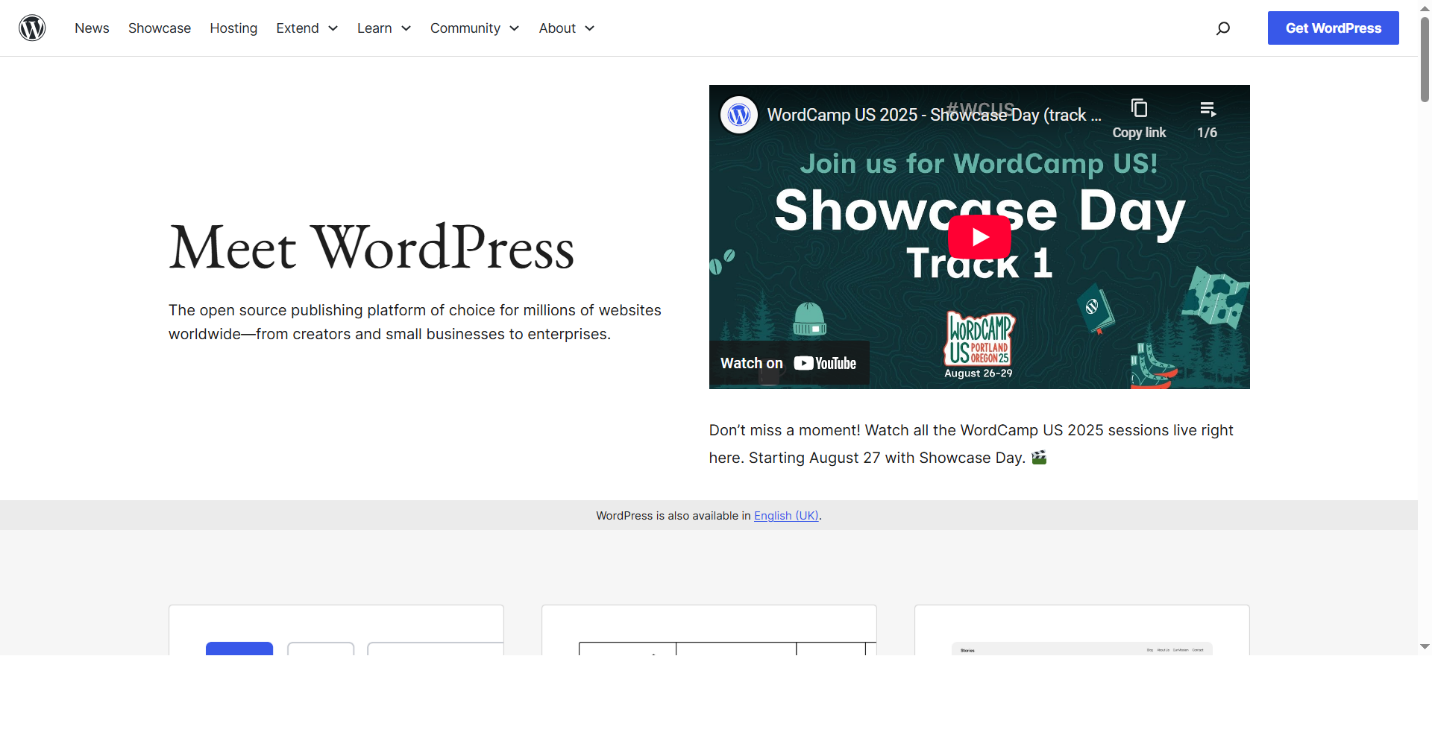
WordPress is one of the leading CMSs that helps users build a site from scratch. Moreover, they can develop blogs and web-based applications without needing to code. WordPress is an open-source platform that is preferred by millions of site owners and developers worldwide.
As a beginner, you can select your preferred themes and plugins, as there are thousands available to help customize your website based on your specific needs. In short, you can create a simple blogging site or a highly optimized e-commerce site via WordPress.
Therefore, you must understand what WordPress is all about and how it can help you become a successful entrepreneur.
WordPress Advantages
Before comparing WordPress vs Joomla, it is crucial to understand the advantages WordPress offers its users. These advantages are explained below:
| Specific Areas | Advantages |
|---|---|
| Popularity | The platform is famous and is user-friendly. |
| Themes, plugins, and support | Thousands of themes and plugins are available. Support is also available. |
| Hosting Integration | Different hosting services have customized packages. |
What is Joomla?
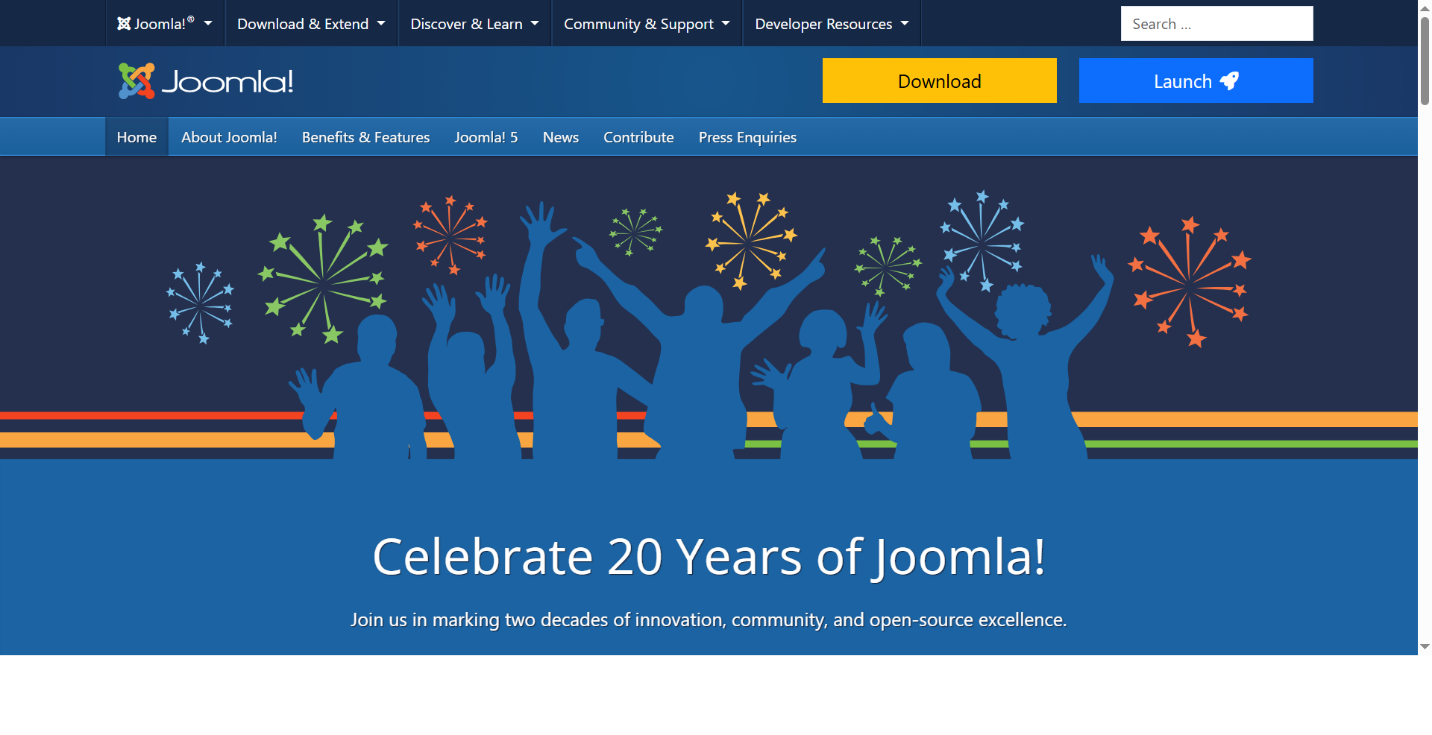
When comparing Joomla and WordPress, the former differs from the latter in a few ways. As you may be aware, Joomla supports large sites. Additionally, users can benefit from the code and interface when managing pages across various posts and pages. Due to its structure, you won’t encounter performance issues when scaling your website.
Besides, the platform supersedes WordPress through a two-part system. The two-part system comprises content and design, allowing users to manage these parts separately. Website owners can smartly perform content management tasks without impacting design.
Likewise, designers can carry out design-related tasks without impacting content. Joomla is more suitable for multifaceted websites that need flexibility and adaptability. This typically includes medium-sized business websites and extensive content websites, such as Wikipedia.
You have all the tools you need to manage a comprehensive website. You can also manage a complex business website using Joomla. That said, if you wish to begin an extensive corporate website, consider choosing Drupal instead.
Joomla Benefits
When comparing WordPress vs Joomla, it is essential to understand the distinct advantages that Joomla offers its users. These advantages are described below:
| Specific Areas | Advantages |
|---|---|
| Scalability | The platform is well-suited for large sites with numerous pages. |
| Two-part system | The separation of website building and CMS provides users with convenience. |
What is Drupal?

Drupal is a reasonable open-source content management system (CMS) for creating, managing, and updating websites. Dries Buytaert created the platform in 2001. Drupal heavily relies on PHP and is built on top of databases such as MySQL or PostgreSQL.
Drupal is highly customizable and flexible, featuring a vast library of modules and themes that enhance functionality and enable easy customization of appearance.
It is the preferred CMS platform for developing massive websites, including e-commerce sites, government sites, and social networks. According to this Joomla vs Drupal analysis, the former seems to be a good option.
This WordPress vs. Drupal comparison suggests that Drupal typically functions similarly to Joomla. However, it allows users to customize the whole design and content of a website. Moreover, Drupal is suitable for large business sites that enable users to make all the necessary changes to content and design.
Drupal Advantages
Aside from the Joomla vs. WordPress comparison, Drupal offers several practical advantages to users. These advantages are described below:
| Specific Areas | Advantages |
|---|---|
| Customization | The platform offers many customization options to optimize content management. |
| Use cases | It is beneficial for large businesses with extensive sites. |
What Factors Have Contributed to WordPress’s Success Over Joomla and Drupal?
There are several reasons, but they ultimately boil down to a single focus. WordPress has retained its ease of use—or perhaps low barrier of entry—focus. Let’s begin with Joomla when highlighting the success of WordPress over these two CMSs.
Joomla – A Substantial CMS
Joomla, we assume, has always been in last place. Since its inception, it has attempted to be all things to all users. Not quite as steep as the “learning cliff” of Drupal, so it was easier to use. However, it tried to have more power out of the box, which makes it still not as easy to use as WordPress.
The result was a somewhat cumbersome platform that annoyed both developers seeking a more focused experience and non-technical users, who found it frustrating to implement without the assistance of a developer. Now, let’s discuss Drupal to see if it is better than Joomla.
Drupal – Another Crucial CMS
Drupal is different. We can argue that Drupal was the better product initially, at least for developers. There were no paid plugins, so the open-source ecosystem that formed under it was for developers, by developers.
Moreover, there were no plugin issues as users utilized different add-ons in tandem. Similarly, the platform was user-friendly and highly flexible in terms of customization.
Drupal 8 and beyond, though, aimed squarely at the enterprise market. They rewrote more than 75% of its codebase and built the entire platform on top of the Symfony framework. The new version helped Drupal become a more standardized platform that is more user-conducive to traditional PHP developers.
This detailed Drupal vs Joomla analysis indicates that the latest version of Drupal incorporated new features to address previously existing issues, including unit testing, a configuration system, and package management, which were previously controlled in code, allowing them to be versioned in developers’ repositories.
Lastly, let’s explore WordPress and why it is a better option than Joomla and Drupal.
WordPress – A Near Perfect CMS
This leaves WordPress arguably the most significant CMS standing. The decision-makers behind WordPress built a comprehensive ecosystem of hosting (the essential component), developers who could generate revenue with freemium/premium plugins, and, by extension, a large customer base that seeks fast, easy-to-implement websites. And they kept it that way.
Now, it is one of the best solutions by some distance for numerous applications. Additionally, its popularity is self-sustaining. Many non-technical users are familiar with WordPress by name, while WordPress developers rarely need to venture out of their comfort zone due to the steady stream of clients.
Moreover, WordPress has supported legacy so well that many websites built years ago have no motivation to switch to a new platform. Users seeking a new, simple, budget-friendly, and fast website often choose a website builder like WordPress. Currently, it just continues to grow.
Functionality of WordPress vs Joomla vs Drupal
| Functionality | WordPress | Joomla | Drupal |
|---|---|---|---|
| Content types | WordPress helps users create multiple content types. | Joomla supports various content types. | Drupal empowers users to develop custom content types. |
| Data handling | WordPress works well with content-driven sites. It also supports data handling tasks. | Joomla works well with medium-sized sites. It also supports data handling tasks. | Drupal supports complex data handling tasks. It is well-suited for enterprise-level sites. |
| Access controls | WordPress has a variety of access control options. | Joomla offers various innovative access control options. | Drupal also provides users with several access control features. |
| Multilingual sites | It supports multilingual sites with plugins. | It helps develop and maintain multilingual sites. | It also supports the creation and development of multilingual sites. |
Wrapping Up
WordPress, Joomla, and Drupal are three of the most popular CMS systems, offering users numerous benefits. As a result, they can make informed decisions based on the thorough CMS comparison and their websites’ size, complexity, and specific needs.
We hope you enjoyed our in-depth analysis of WordPress vs Joomla vs Drupal. WordPress serves a diverse range of target audiences, including beginners, experts, small businesses, and large enterprises.
On the other hand, Joomla and Drupal are better alternatives when working in niche industries. Joomla suits humongous websites. The same applies to Drupal, which supports large businesses that want to attract diverse target audiences with sizeable corporate websites.