













Have you navigated through the e-commerce waves recently? Chances are high that you’ve seen how the lines between selling to businesses and selling to regular consumers are disappearing. It’s surprising how fast everything is changing.
Revamping your existing strategy is essential, whether you’re an old player in the E-commerce field or not. You should also understand the distinction between B2B and B2C and how it can impact your bottom line.
We will take you on a tour of the differences between these two worlds in 2025. We’ll reveal some actionable advice you can implement immediately.
Let us introduce you to why the most intelligent businesses we know are really cherry-picking pieces from both playbooks.
B2B vs B2C E-commerce at a Glance
| Aspect | B2B Ecommerce | B2C E-commerce |
|---|---|---|
| Buyer Profile | Professional procurement teams | Individual consumers |
| Decision Process | Complex, multiple stakeholders (6-10 people) | Simple, individual, or household |
| Average Order Value | High ($15,000+) | Lower ($10-200) |
| Purchase Frequency | Regular, scheduled | Sporadic, need or impulse-driven |
| Sales Cycle | Weeks to months | Minutes to days |
| Pricing | Dynamic, often negotiated | Fixed, transparent |
| Content Focus | ROI, specifications, case studies | Benefits, lifestyle, and emotional appeal |
| Customer Service | Dedicated account managers | Self-service + support |
What is B2B E-commerce All About
Want to know what is B2B ecommerce? It simply means business-to-business online transactions. B2B is like a craftsman selling its products to retailers, wholesalers, or restaurants. Or a software firm selling tools to other firms.
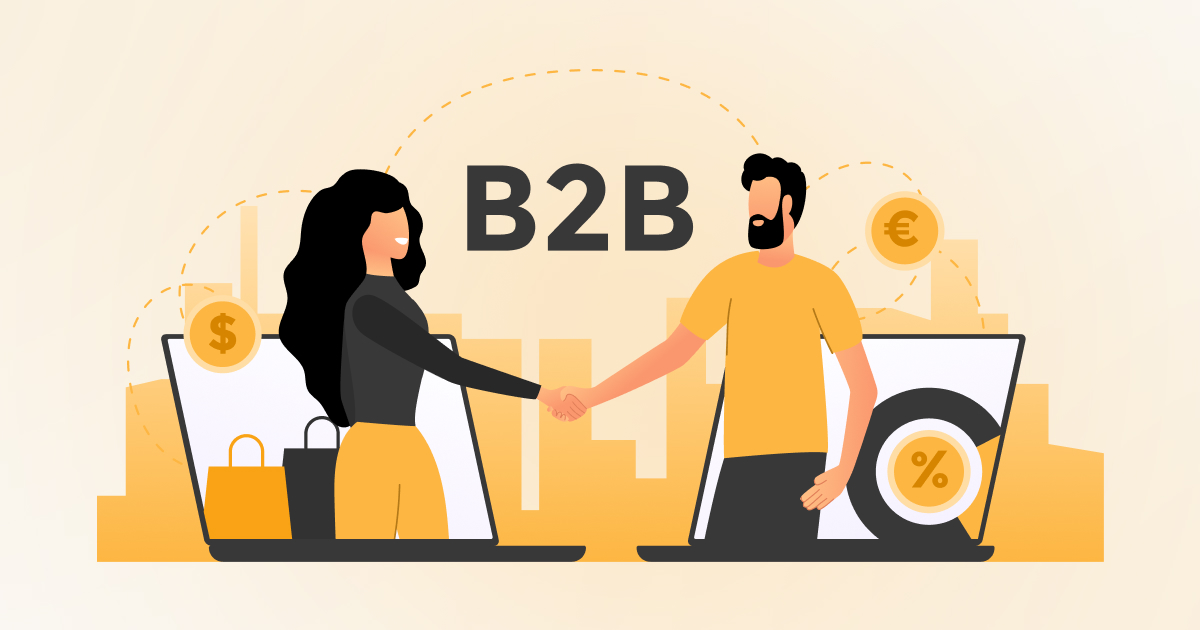
Let us inform you—this marketplace is enormous. Estimates are that it will be worth $25.65 trillion by 2028, over three times as much as B2C! Companies like Grainger, which sells supplies to business customers, are gathering billions from their sites.
A Slice of Real Life
Consider a restaurant supply store that is marketing upscale kitchen equipment. Their customers aren’t looking for a cute blender to make morning smoothies—they need heavy-duty equipment that will fill hundreds of orders a day and integrate with their existing kitchen setup. The stakes, size, and nuances are just different.
What About B2C Ecommerce?
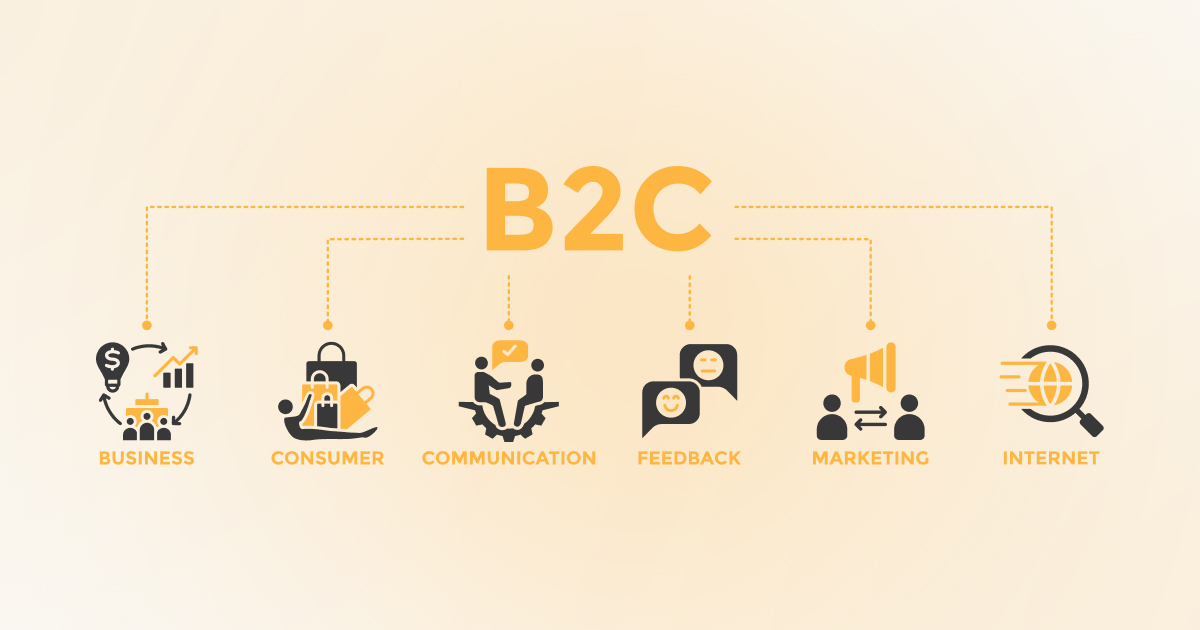
B2C (business-to-consumer) is probably what you picture when someone mentions “online shopping”. These businesses sell directly to people like you or anyone wanting a single product. Amazon, Walmart, Target, and more like these are cool direct-to-consumer brands that keep popping up in your social media feeds.
Real-World Example
A sportswear brand that sells exercise wear directly to consumers via its website is quintessential B2C e-commerce. It builds interactive product pages with lifestyle photography, provides easy one-click buying, and emphasizes building emotional relationships with its audience.
The 8 Key Differences Between B2B and B2C E-commerce
Let’s explore in more detail what sets these business models apart in reality.
1. Decision-Making Process and Buying Cycle
B2B Reality
The path to purchase is a marathon, not a sprint. A study released in The Challenger Customer indicates that the typical B2B purchase engages 6-10 decision-makers, each contributing their viewpoints and concerns to the process.
When searching, we found a Procurement Director at a large manufacturing company who described: “When we’re looking at a new supplier for key components, we require approval from engineering, finance, quality assurance, and operations. The sales people may adore a product, but unless it passes our technical requirements or ROI hurdles, we can’t proceed.”
This multifaceted dynamic results in a longer sales cycle—frequently 3-6 months for major purchases—and demands content that speaks to the concerns of multiple parties.
B2C Reality
Consumer purchases usually involve one or two decision-makers and a significantly shorter consideration period. Even for higher-ticket items such as electronics or furniture, the decision cycle rarely takes more than a few days.
Emotional triggers have a much greater influence, and 95% of buying decisions are made unconsciously, says Gerald Zaltman (Harvard Business School professor).
2. Customer Relationships and Lifetime Value
B2B Focus
Trust-based, long-term relationships with mutual benefit. The high cost of acquisition and order values explain why B2B firms invest so much in relationship development. One customer can be worth millions in revenue over time.
Similarly, a cloud services company CEO said: “Our typical customer remains with us for seven years,”. “That six-month sales cycle is the start of a relationship that might be worth $2-3 million to our company.”
B2C Orientation
Although loyalty is important, the personal value of each client is significantly smaller. B2C brands cast broader nets and aim to collect large volumes of customers with less expensive customer acquisition costs (CAC) compared to lifetime value.
3. Price Structures and Presentation
B2B Strategy
Pricing tends to be complicated, variable, and sometimes negotiated. Most B2B businesses never show prices at all, requiring account setup or direct contact with salespeople instead.
Factors influencing B2B pricing are:
- Volume discounts
- Contract terms
- Customer history
- Customization needs
- Credit terms
B2C Approach
Honest, fixed prices are the norm. Although there are promotions and loyalty discounts, customers want to see the price upfront and can buy at that price without negotiating.
4. Website Design and User Experience
B2B Websites Focus On:
When a business buyer comes to your site, they’re not merely browsing—they’re researching with purpose and precision. B2B sites must appeal to this analytical mindset with tools and features that enable intelligent decision-making among multiple stakeholders.
- In-depth technical data
- ROI calculators and validation tools
- Account management features
- Self-service ordering for repeat purchases
- Resources for several stakeholders (technical specs for engineers, ROI figures for financial officers)
B2C Sites Focus On:
Consumer websites live and die by their ability to create emotional connections in seconds. Unlike their B2B counterparts, these sites must captivate visitors immediately. They should remove every possible barrier between desire and purchase to convert those impulse clicks into completed sales.
- Emotional connection and brand storytelling
- Visual appeal and lifestyle imagery
- Easy, frictionless checkout flows
- Product suggestions and upselling
- Mobile-responsive design (71% of B2C buying now occurs on mobile)
5. Content Marketing Tactics
The content requirements of business buyers versus consumers are night and day.
B2B Content Types That Convert:
Behind every business purchase is a team looking to justify their decision with complex data and proven results. The content that moves these professional buyers through their journey needs substance, depth, and credibility that speaks to their challenges.
- Long-form white papers and case studies
- Detailed product specifications
- Comparison guides and ROI calculators
- Industry research and thought leadership
- Implementation guides and technical documentation
B2C Content That Drives Sales:
Consumers don’t download white papers before buying a pair of shoes—they want to see themselves wearing them! Effective B2C content taps into aspirations and solves everyday problems while keeping things light, visual, and instantly digestible.
- Lifestyle-oriented blog articles
- Customer reviews and user-generated content
- Video tutorials and demonstrations
- Social media posts highlighting products in action
- Influencer endorsements and partnerships
6. Customer Support Expectations
B2B Support Model:
Business customers anticipate extensive, tailored support. This typically entails specialized account managers, technical experts, and 24/7 emergency support for urgent matters.
When your parts are what a manufacturing line relies on or a company’s operations rest on your software, support stakes are unusually high.
B2C Support Model:
Although crucial, consumer support is on a different magnitude. Self-service, chatbots, and effective email support tend to be sufficient for consumers. Speed and ease of use are prioritized over extensive technical know-how.
7. Marketing Channels and Approaches
B2B Marketing Is Concerned With:
Business marketing isn’t about casting the widest net—it’s about fishing with precision in the right ponds. Smart B2B marketers know exactly where their ideal customers gather professionally and how to position themselves as trusted industry authorities in those spaces.
- LinkedIn and niche platforms
- Account-based marketing (ABM) to specific companies
- Industry conferences and trade shows
- Direct relationship and outreach building
- Thought leadership and educational content
B2C Marketing Focuses On:
Consumer marketing lives on visibility, virality, and emotional resonance. While business marketing sows seeds for long-term development, B2C campaigns tend to seek instant impact, reaching consumers where they’re already investing their personal time and attention.
- Instagram, TikTok, and visual platforms
- Broad demographic targeting
- Emotional and lifestyle messaging
- Influencer partnerships
- Flash sales and promotions
8. Payment Methods and Terms
B2B Payment Methods:
The financial relationship between businesses operates with complexity and flexibility that reflects the scale of their transactions. Enterprise customers expect payment solutions that accommodate their established procurement processes and financial workflows.
- Purchase orders
- Net 30/60/90 payment terms
- Credit lines and financing
- Electronic fund transfers
- Corporate credit cards
B2C Payment Methods:
Consumers nowadays expect checkout processes to be nearly frictionless. The shopper of today expects to pay in mere seconds, utilizing their preferred payment method, be it traditional cards or the newest digital wallet technology.
- Credit/debit cards
- Digital wallets (Apple Pay, Google Pay)
- Buy Now, Pay Later services (Affirm, Klarna)
- PayPal and other consumer payment systems
- Gift cards and store credit
The Blurring Lines: When B2B Meets B2C
The most compelling trend in e-commerce is the increasing borrowing between these traditionally distinct models.
B2B Companies Adopting B2C Strategies
- Self-service buying options
Today’s B2B buyers do not necessarily need to speak with a sales rep. McKinsey states that 76% of them find it useful to talk to someone while researching, but only 15% want to talk to someone when reordering. (Source: Salesforce)
- Enhanced user experience
Business buyers are also human beings who shop on Amazon and other consumer websites in their personal lives. They increasingly demand the same easy-to-use experience in their business buying.
- Personalization at scale
Leaning on customer data to build personalized experiences—previously mainly a B2C strategy—has become crucial in B2B. Businesses such as Grainger display varying product catalogs and prices to various customer segments automatically.
B2C Businesses Adopting B2B Strategies
- Subscription models
Consumer brands have embraced the recurring revenue model long prevalent in B2B software and services.
- Loyalty programs with tiered benefits
Structured loyalty programs by many consumer brands now look similar to B2B relationship management.
- Educational content marketing
B2C businesses increasingly leverage detailed tutorials and guides, once a B2B mainstay, to establish authority and trust.
How to Select Your Ecommerce Model
When deciding between B2B or B2C (or a hybrid of the two), consider the following factors:
- Product complexity and customization needs: B2B models are better suited for such advanced, customizable products.
- Order values and frequency: Higher-value, lower-frequency transactions often fall into B2B, whereas lower-value, higher-frequency purchases best suit B2C.
- Support and relationship needs: Products that need a lot of pre-purchase consultation or support after the sale might be more suitable for B2B.
- Market size and target buyer: Consider where your dream customer is and how they want to purchase.
- Your staff’s expertise: Think about your staff’s strengths in relationship-based selling (B2B) compared to marketing in volume (B2C).
Future Trends Shaping Both B2B and B2C Ecommerce
1. Personalization with AI
Artificial intelligence is revolutionizing the way both B2B and B2C businesses know and engage with their customers:
- B2B Applications: Predictive ordering, personalized quote generation, and supplier relationship optimization
- B2C Applications: Product suggestions, dynamic pricing, and chatbot-driven shopping
2. Unified Commerce Taking Over Omnichannel
The next step after omnichannel is unified commerce, where all sales channels, operations, and backend processes are linked to a single central hub:
- Merchants with integrated POS/ecommerce platforms minimize technical support requirements by as much as 60%
- Implementation is 20% quicker than legacy systems
- Unified commerce inspires an average growth in GMV of 8.9%
3. First-Party Data Strategy
As third-party cookies decrease and privacy regulations become more stringent, both B2B and B2C companies are moving to first-party data gathering:
- 61% of high-growth businesses are focusing on first-party data for personalization
- Companies are creating habit-forming login experiences
- Data cooperatives such as Shopify Collective enable smaller merchants to share insights without compromising customer privacy
4. Sustainability as a Differentiator
Environmental awareness is no longer a choice:
- B2B Focus: Ethical labor practices, responsible sourcing, and use of renewable energy across the supply chain
- B2C Focus: Carbon-neutral shipping options, recyclable packaging, and open-sourcing information
Conclusion: The Best of Both Worlds
The most effective ecommerce strategies for 2025 will be neither strictly B2B nor B2C but will be considered integrations of both strategies.
B2B businesses can gain a lot from the user experience breakthroughs made in consumer e-commerce. Meanwhile, B2C brands can create richer customer relationships by leveraging the B2B playbook.
As you craft your e-commerce plan, keep in mind that behind every business buy are people making choices. And behind every consumer purchase is an individual with rational requirements as well as emotional wants.
By knowing the essential distinctions between these models and taking the best practices from each, you can build an e-commerce experience that really differentiates itself in an increasingly crowded online space.
Need Some Help?
Still weighing your options after exploring the B2B vs B2C landscape? You don’t have to navigate these waters alone. WPExperts specializes in tailored e-commerce solutions that blend the best of both worlds.
Our team transforms complex requirements into seamless digital experiences that drive real results. Ready to elevate your online presence? Contact WPExperts today to hire us for WordPress B2B site development services or even B2C.
We create strategies that truly fit your business vision.
FAQs About B2B vs B2C Ecommerce
Can a company run both B2B and B2C ecommerce effectively?
Yes, numerous companies successfully run both models. The success factor is effectively segmenting the experience for both audiences while using common infrastructure such as inventory management, fulfillment, and customer service systems.
What ecommerce platform works best for a hybrid B2B/B2C strategy?
Seek out platforms that provide:
- Custom pricing and catalog functionality
- Role-based authorization
- Flexible checkout
- Both self-service and account management capabilities
- Unified inventory across business models
How do customer acquisition costs compare in B2B versus B2C?
B2B generally has higher acquisition costs for customers but significantly greater customer lifetime value. A B2B business customer might cost 5-10 times as much to acquire as a B2C customer but generate 20-50 times as much revenue during the relationship’s duration.
Which model has higher profit margins, B2B or B2C?
This differs significantly by industry. B2B typically has lower gross margins but higher net margins because of operational efficiencies and lower churn. B2C may have higher gross margins but will experience more competition and higher marketing expenses.
Is it more convenient to begin with B2B or B2C ecommerce?
B2C generally has a lower entry cost in technology investment and market entry. However, once secured, B2B tends to offer more stable revenue and customer bases. Your product, industry, and current relationships should influence this decision.