


















An ideal content management system (CMS) should drive your website upward, making content creation and management nimble and straightforward. Best CMS platforms have tremendously evolved to inspire current and prospective businesses, content creators, developers, designers, etc. However, choosing the best CMS platform to suit your website is the real challenge.
This situation has opened new horizons and opportunities, resulting in a wide range of incredible CMS worldwide. Therefore, selecting the top CMS platform has become a pressing need, whether you choose a CMS with a simple interface or one that offers a wide range of features.
This blog post will discuss the 17 top CMS platforms that you can use when developing your dream website without compromising your goals and objectives.
17 Best CMS Platforms to Trust
A sound website Content Management System (CMS) is mandatory for businesses and individuals who are willing to build and manage their sites, enhancing their online presence.
With various traditional, headless, and hybrid CMSs available, selecting the one that best fulfills your needs can be challenging and time-consuming. However, the decision you make will have a massive effect on the prosperity and success of your website.
This section will thoroughly discuss the top website CMS platforms. These powerful CMS platforms include:
1. WordPress
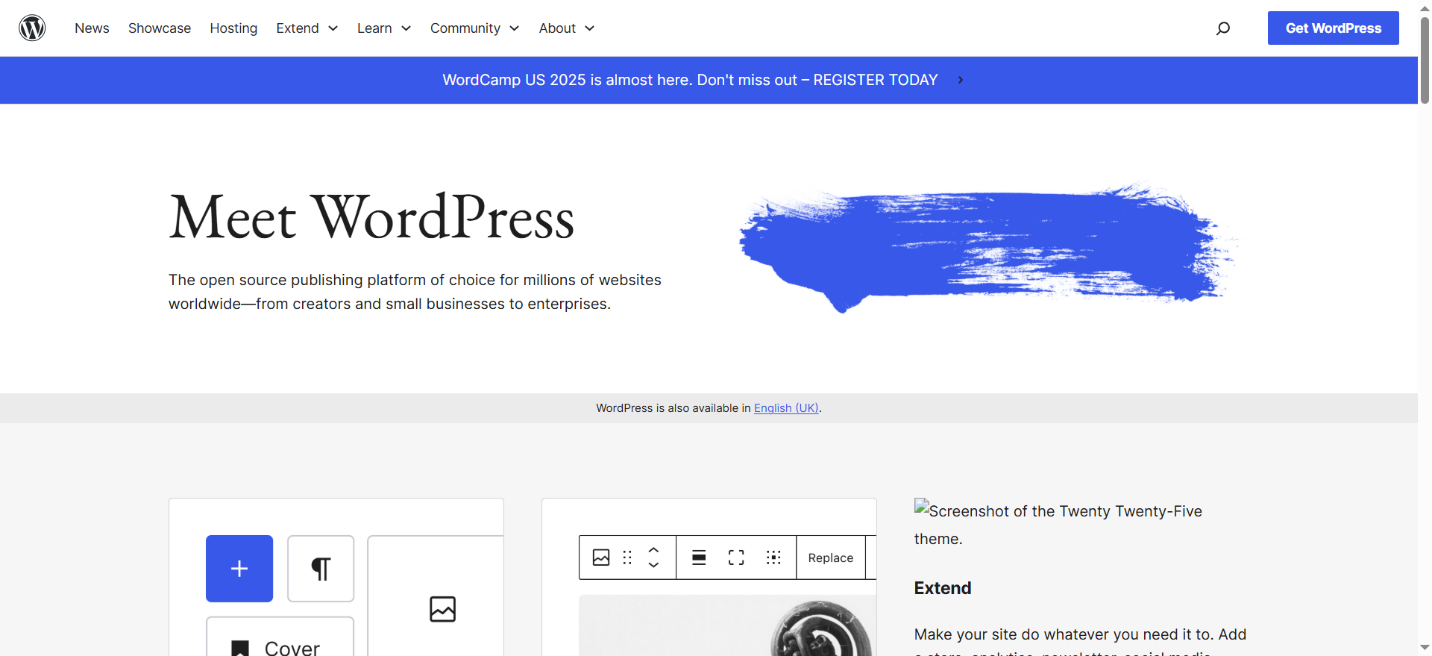
WordPress is the world’s famous content management system. You can judge its popularity based on the CMS market share. If you want to build an engaging and results-driven site, turn to WordPress.
The leading content management system offers thousands of plugins and themes, enabling businesses to capture the attention of existing and potential customer bases worldwide. WordPress enjoys a massive 61.4% market share in the global CMS market.
There are various notable WordPress sites available worldwide, including:
- IDR
- TechCrunch
- Angry Birds
- 007
- Opus One
- Disney Books
- Helpcode
- NGINX
- Slide Chef
- Userback
- Heart Aerospace
- Hey Studio
- Now New Next (NNN)
Key Features of WordPress
- Users can take advantage of a user-conducive interface and manage sites’ functionality and design.
- The built-in blogging features help users produce impactful content.
- Numerous themes and plugins allow users to improve their sites’ productivity to the next level.
Pricing
- WordPress does not charge website development or creation fees to users.
- Users will pay for miscellaneous charges, including web hosting costs and domain name charges.
2. Shopify

Shopify is another top-notch website CMS platform, specifically helpful for an e-commerce domain. Apart from offering e-commerce functionality, the platform delights users with impeccable features that help manage content related to blog posts, website pages, and products. 4.82 million Shopify stores are currently active worldwide in 2025.
Key Features of Shopify
- Users can develop and manage product pages.
- Customizable templates help businesses optimize product pages and blog posts.
- Numerous content creation tools make the job of content development, publishing, and management easy and impactful.
Pricing
- The Basic package is available for $19/month (once billed annually). It is available for $1 for the first 3 months.
- The Grow package is available for $49/month (once billed annually), but it is accessible for $1 for the first 3 months.
- The Advanced package is available for $299/month (once billed annually), but it is available for $1 for the first 3 months.
- The Plus package is available for $2300/month and valid for a 1- or 3-year term. It is available for $1 for the first 3 months.
3. Wix
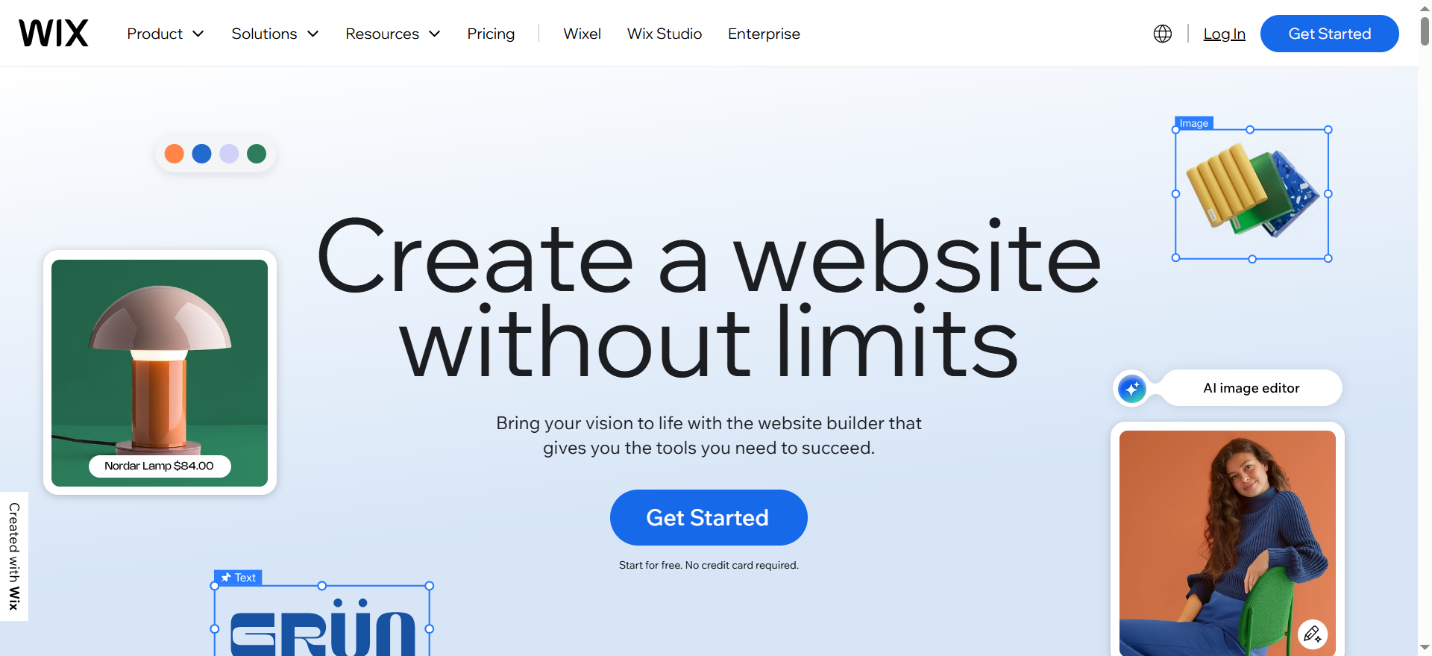
Wix is a prominent website CMS platform serving millions of customers worldwide. Through its attractive drag-and-drop interface, users can effortlessly create their preferred sites without coding.
It is no surprise that Wix had 272 million registered users, with 80 million active sites in early 2025. This means they receive updates or traffic every month.
Key Features of Wix
- It offers various templates that serve different use cases and industries.
- Users can personalize their sites using the drag-and-drop interface.
- The app market helps users improve the functionality of their sites.
Pricing
- The Business Elite package is available for $159/month.
- The Business package is available for $36/month.
- The Core package is available for $29/month.
- The Light package is available for $17/month.
- The free package allows users to develop a site, but it has a few limitations.
4. Squarespace

Squarespace is a renowned site builder that enables users to develop professional websites across various niches. The platform is user-friendly and easy to use. The attention-grabbing yet powerful designs help customers build stunning websites according to their specific needs.
Key Features of Squarespace
- Users can opt for several templates, which suit different niches.
- It provides users with numerous blogging options for publishing blog posts, including social media integration and SEO optimization.
- A near-perfect mobile app helps users manage sites and stores on the go.
Pricing
- The Personal package is accessible for $16/month (charged annually).
- The Business plan is accessible for $23/month (charged annually).
- The Commerce Basic package is accessible for $28/month (charged annually).
- The Commerce Advanced package is accessible for $52/month (charged annually).
5. Joomla
Joomla is a renowned CMS platform that helps users create stunning sites without fuss. The great thing about this impressive platform is the ease of use. As a leading open-source software, a community of volunteers has dedicated its time and energy to developing and maintaining Joomla. At present, the platform has a substantial existence in the CMS market. Joomla powers 2.4% of websites that utilize a content management system.
Key Features of Joomla
- Its multilingual support feature helps users build multilingual sites.
- Users can easily create responsive websites that suit various screen sizes.
- Various extensions and templates help improve website functionality.
Pricing
- It is a free and open-source platform. However, users will incur various related costs, including templates, extensions, hosting, and more.
6. Drupal
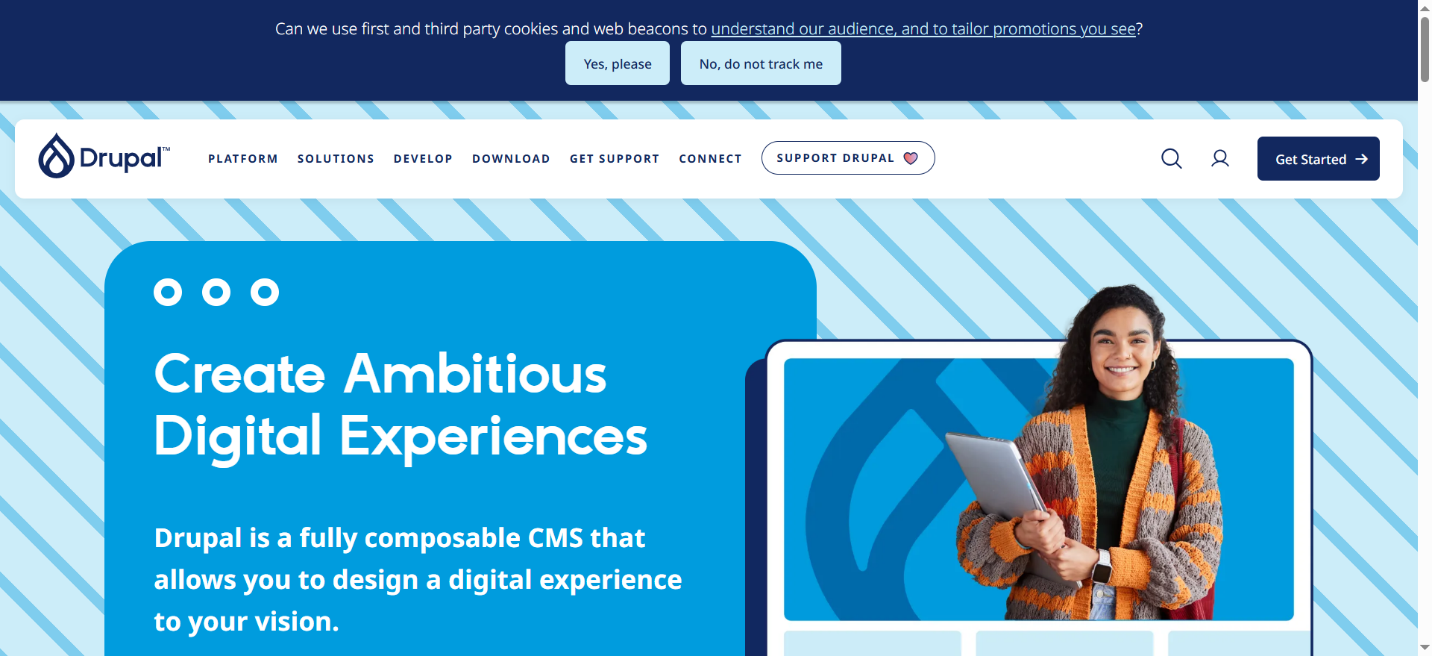
Drupal is an open-source platform that helps users build interactive websites. Developers should utilize this impactful platform to create a customized website that necessitates a significant data management effort. To understand the nuances of the famous CMS, explore the Drupal version history in detail.
Key Features of Drupal
- It is an SEO-friendly platform, which means it supports users who want to optimize their sites for search engines.
- Users can utilize various media management capabilities when managing their sites’ content.
- It provides users with multilingual support, allowing them to manage content in several languages.
Pricing
- The platform is free to use. That said, the price of a Drupal website largely relies on various factors, such as paid features, web hosting, and maintenance charges.
7. Magento (Adobe Commerce)
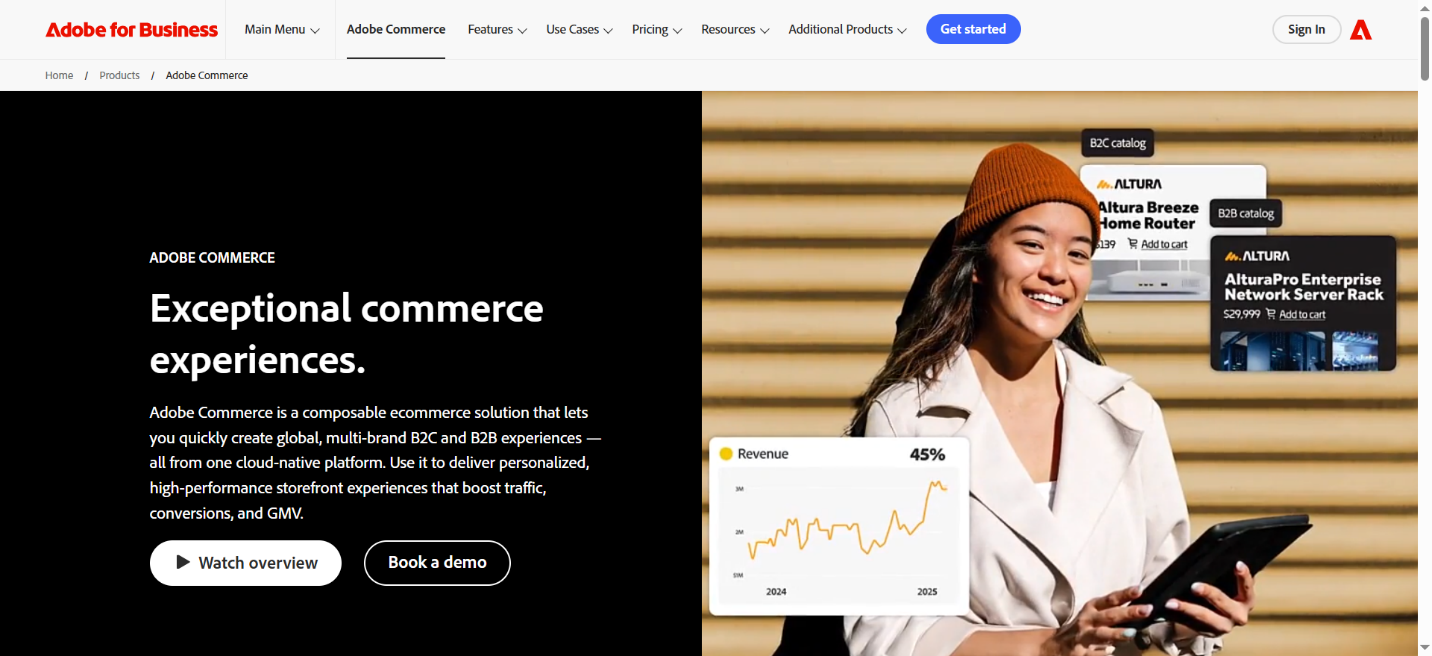
Magento is one of the most impactful open-source e-commerce platforms available. The platform is user-friendly and is easily customizable. Users do not require any rocket science to operate it according to their needs.
Magento helps users manage hundreds of products simultaneously. The paid version of Magento, previously called Magento Enterprise Edition, is known as Adobe Commerce. Magento has a 2.34% share in the global e-commerce platform market.
Notable WordPress sites have used Magento to assist their e-commerce operations, such as Cox & Cox, Barbour, Halley Hansen, ASUS, Olympus, and more. You can effortlessly understand different Magento versions by going through the Magento version history.
Key Features of Magento
- The platform suits newbies and experienced users alike.
- Users can easily customize their stores’ themes and functionality using different customization options.
- Its impressive scalability feature supports and fulfills the needs of small and large businesses.
Pricing
- The Magento open-source edition is free.
- Users can benefit from three pricing packages: Adobe Commerce as a Cloud Service, Adobe Commerce on Cloud (Pass), and Adobe Commerce Optimizer. They will need to contact the sales department to obtain customized pricing for Adobe Commerce.
8. HubSpot CMS
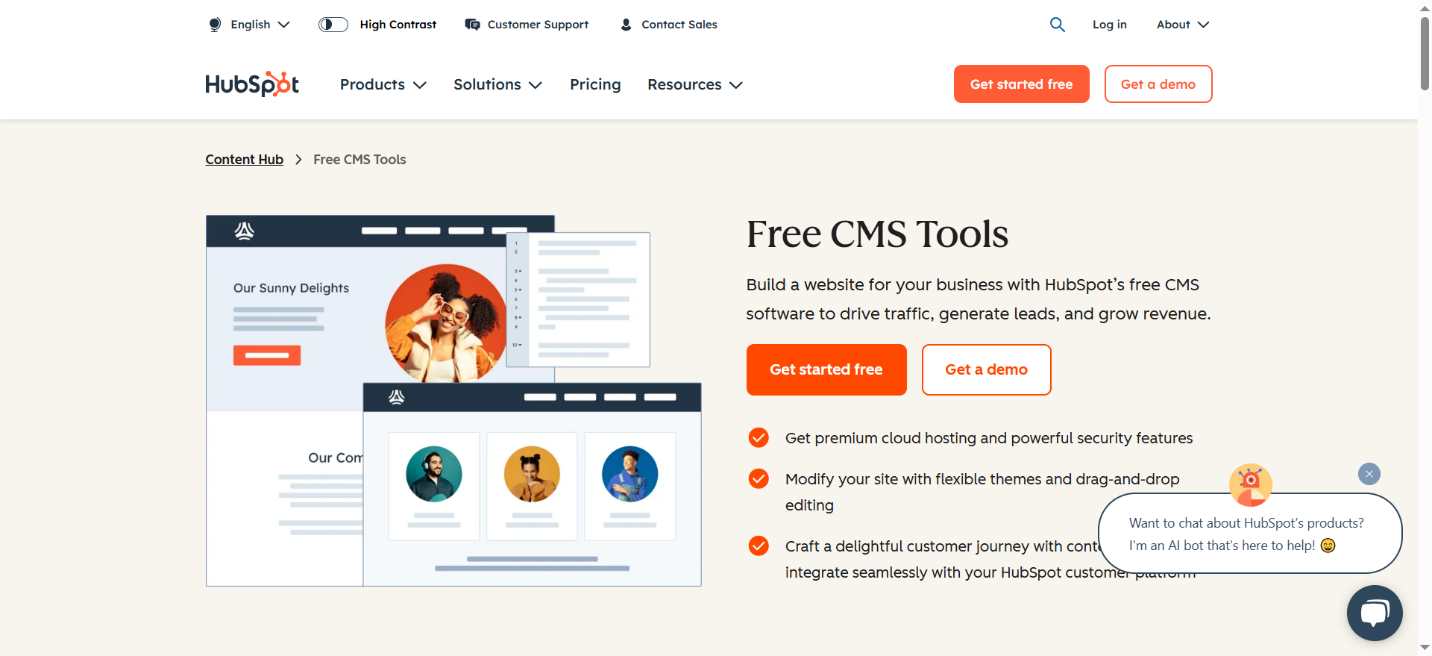
HubSpot is a famous CRM (Customer Relationship Management) software that also offers a dedicated content management system. This means that users can enjoy other perks like marketing automation, sales, and service tools.
Key Features of HubSpot CMS
- Users can take advantage of a user-friendly drag-and-drop editor, which helps them develop and optimize their sites’ pages and layouts.
- Content optimization tools help users enhance content for search engines.
- Users can create membership-based content and restrict access to it.
Pricing
- The platform offers a free tools package to its users.
- The Marketing Hub Starter package is available for $9 per month per seat.
- The Starter Customer Platform package is available for $9 per month per seat.
- The Marketing Hub Professional package is available for $800 per month (three seats).
- The Marketing Hub Enterprise package is available for $3600 per month (three seats).
9. Prestashop
PrestaShop is one of the leading CMSs that helps users create and revolutionize online stores across various niches and industries. It is another open-source platform similar to WooCommerce.
Key Features of PrestaShop
- Users can fluently customize their online stores utilizing the attractive theme codes.
- Multiple add-ons can help users enhance the functionalities and performance of their online stores.
- Several built-in features let users customize the cart and checkout experiences.
Pricing
- It is a free and open-source platform.
- Users must pay for various features, including hosting, premium themes, and more.
10. Textpattern
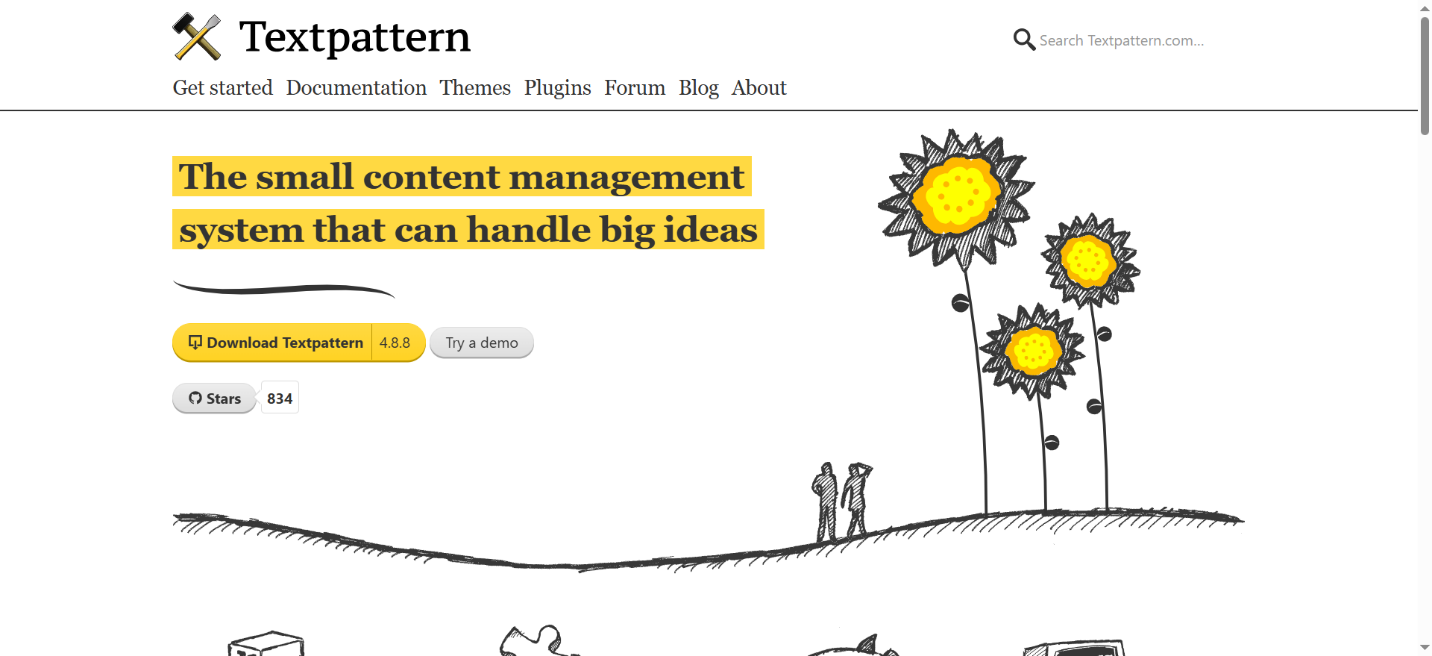
Textpattern is a user-friendly content management system that has been helping users build interactive sites for the last two decades. You can go through its extensive documentation to begin creating your ideal site.
Key Features of Textpattern
- It is a free and open-source platform.
- Users can smartly utilize various plugins, themes, and designs to optimize their sites.
- It helps users develop personal yet professional sites. Besides, they can create corporate sites tailored to their unique needs.
Pricing
- It does not charge users since it is a free platform.
- Users will need to incur other costs, such as web hosting, domain name, and more.
11. Optimizely
Optimizely is one of the top CMS platforms for websites, allowing users to create engaging and results-driven sites. It primarily works as a digital experience platform (DXP) and comprises a CMS as its crucial attribute.
Key Features of Optimizely
- Its simple content management system helps users develop, manage, and publish content without issues.
- You can use the platform along with third-party tools to supercharge the functionality of your site.
- The drag-and-drop builder helps users enhance their websites’ pages to the next level.
Pricing
- The platform offers various packages, including Content Marketing Platform, Content Management System, Web Experimentation, Analytics, Feature Experimentation, Configured Commerce, Digital Asset Management, Personalization, and Data Platform.
- All these packages are based on custom pricing, which means users will need to contact the sales department.
12. Prismic
Prismic is a unique website CMS platform that has transformed from a CMS into a headless page builder over the years. It helps users develop top-notch brand websites tailored to their specialized demands.
Key Features of Prismic
- Its various SEO tools help users optimize their sites for search engines.
- The media library allows users to manage multiple visual assets appropriately.
- The user-friendly interface assists newbies and experienced users in editing and optimizing content.
Pricing
- The free plan is available per repository.
- The Medium plan is available per repository for $150 per month (billed annually).
- The Platinum plan is available per repository for $675 per month (billed annually).
- The Enterprise plan is available at custom pricing per repository for $ per month (billed annually). For this purpose, businesses will need to contact the sales department.
13. Contentful
Contentful is another impressive headless CMS platform like Prismic that offers users a simple content management approach. It enables users to provide content across multiple devices and platforms using APIs.
Key Features of Contentful
- It allows users to describe custom content structures, fulfilling their specific content needs.
- Users can manage content in various languages to cater to the needs of global customer bases.
- The DAM (digital asset management) capabilities help users rapidly manage audio, video, and images.
Pricing
- The platform offers a free plan to its users.
- The Lite package is available for $300 per month. This plan comes with a 30-day free trial.
- The Premium package is available at custom pricing.
14. Concrete CMS
Concrete5, now called Concrete CMS, is an excellent website CMS platform that allows users to develop sites without coding. If you want to use a simple CMS that comprises several core features, Concrete CMS is a reasonable choice.
Key Features of Concrete CMS
- The built-in SEO tools help enhance content for SERPs.
- Users can personalize themes and templates to fulfill design needs.
- In-Context editing helps users edit content without navigating away from the page.
Pricing
- The platform is free to use and does not charge users a dime. However, they will need to bear different costs, such as web hosting, domain name, etc.
15. TYPO3
TYPO3 is an open-source website CMS platform primarily known as an enterprise-level content management system. The platform allows users to develop mobile-first responsive web pages. Moreover, a preview option helps them see how the content looks on different devices.
Key Features of TYPO3
- Users can easily manage various websites.
- Numerous extensions help users customize their sites.
- The built-in localization system allows users to publish content in various languages.
Pricing
- The platform does not charge users. However, they will need to incur various costs, such as web hosting, website development charges, domain name charges, and more.
16. Storyblok
Storyblok is another impressive headless CMS that offers an engaging yet user-centric interface. Luckily, users can easily collaborate on content and other related tasks with team members in real time by utilizing the visual editor.
Key Features of Storyblok
- The visual editor allows users to edit content on the web page, enabling them to see all the changes in real time.
- The platform offers users the desired level of convenience as they can organize content in multiple ways.
- A digital asset manager helps users smartly organize media content.
Pricing
- The Starter plan is available free of cost.
- The Growth plan is available for 99€ per month.
- The Growth Plus plan is available for 349€ per month.
- The Premium plan is available at custom pricing.
- The Elite plan is available at custom pricing.
17. Ghost

Ghost is a lightweight CMS platform built on simplicity, ideal for content creation. The notable CMS platform works exceptionally well for content creators and bloggers who want to publish without facing any issues. Ghost stands out from other content management systems, offering customers typical content management capabilities.
Key Features of Ghost
- Users can benefit from a user-friendly interface.
- It helps users deliver email newsletters, enhancing customer engagement.
- Users can smartly customize their sites with the help of numerous templates and themes.
Pricing
- The Starter plan is available for $15 per month (billed annually).
- The Publisher plan is available for $29 per month (billed annually).
- The Business plan is available for $199 per month (billed annually).
- The Custom plan is available for custom pricing (Available on a 1-3 year term).
List of CMS Platforms
Here is the list that comprises some of the best CMS platforms, such as:
- WordPress
- Joomla
- HubSpot CMS
- Wix
- Drupal
- Magento
- Shopify
- TYPO3
How Many CMS Systems are There?
Over 800 CMS platforms were accessible to users globally in 2024. Surprisingly, 29.4% of sites on the web utilize relatively unknown or infamous content management systems. WordPress has been leading the CMS market since it is the mastermind behind 43.6% of sites online. Moreover, it enjoys a massive 61.7% share in the CMS market.
What is Website CMS List?
The phrase “Website CMS list” is commonly used by netizens on the internet when exploring famous CMS platforms. Sometimes, they also search for the best website builders instead of a website CMS list to find various site builders that suit small and large businesses worldwide.
Wrapping Up
We hope you have appreciated our blog post describing the best CMS platforms thoroughly. All the above website CMS platforms help users develop their desired websites depending on their customer base’s varied needs.
Selecting the desired CMS for your site can become challenging, especially when you have multiple options. However, the above CMS platforms are enough to help you decide on the appropriate CMS for your potential website.
That said, the best CMS platform for your website heavily relies on your specific requirements.