



















Picking an enterprise eCommerce platform isn’t yet another tech choice—it’s the starting point of your digital business plan. For businesses operating today in hyper-competitive environments, the decision over the platform directly determines everything, from the quality of your customers’ experiences to your overall bottom line.
Choose poorly, and you’re stuck with slow performance. This can irk customers, constrain scalability, limit your growth, and incur surprise expenses, undermining your margins. For volume retailers, even slight technical glitches mean millions of dollars in lost revenue and soured customer relationships. And changing platforms later? That’s a time-consuming, pricey undertaking most businesses would rather avoid.
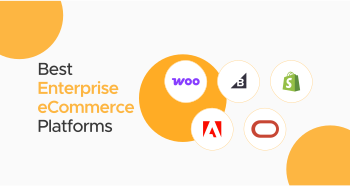
In this ultimate guide, we’ll take you through what actually makes an enterprise eCommerce platform. We’ll uncover the no-compromise features you require to succeed, and compare the best 10 solutions dominating the market in 2025. If you’re planning to open a new enterprise shop or thinking about a platform switch, you’ll get the guidance you need to make a fearless, future-proof choice.
What Makes a Platform “Enterprise Grade E-Commerce Platform”?
An enterprise eCommerce platform is not merely an upgraded shopping cart. It’s a highly evolved ecosystem built to service highly evolved businesses that operate at scale. This means those who handle extensive product catalogs, sell into multiple regions, and must integrate enterprise software (ERP, CRM, etc).
These platforms bring the horsepower to support thousands of simultaneous transactions without batting an eyelash. They offer bank-level security, extensive customization capabilities, and the reliability that high-volume companies require.
Enterprise platforms generally belong to three groups:
- SaaS solutions such as Shopify Plus have rapid deployment and managed infrastructure, albeit with some customization limitations
- Open-source platforms such as WooCommerce and Adobe Commerce leave you fully in charge of your codebase and functionality
- Headless commerce systems separate your frontend and backend, allowing for maximum flexibility in creating unique customer experiences
Your specific business model, growth trajectory, and technical capabilities will determine which approach aligns best with your strategic goals.
Must-Have Features for Enterprise E-Commerce Success
The Non-Negotiables
Scalability
It is first on the list—your platform has to stay performing despite growing traffic and increasing transaction levels. Nothing kills conversion rates quicker than laggy load times or failed checkouts when visitors are there.
Customization
Customization functionality is just as important. Enterprise companies tend to have specialized workflows, intricate pricing rules, or special checkout experiences. Your platform should be able to allow these adjustments without making you fit into inflexible, pre-determined boxes.
Omnichannel
Omnichannel capabilities have graduated from nicety to requirement. Consumers today demand consistent experiences across websites, mobile applications, marketplaces, and brick-and-mortar stores. Your platform must consolidate inventory, orders, and product information across every customer interaction point.
Security and Integration Essentials
Enterprise-level Security
It’s not a luxury anymore, but a necessity. To safeguard customer information and your business processes, ensure PCI compliance, strong SSL implementation, GDPR support, and role-based access controls.
Integration Features
They define how well your eCommerce site gets along with your current business systems. Smooth integration with your ERP, CRM, accounting, and marketing applications breaks data silos and expensive manual processes.
Payment Flexibility
One thing that will surely attract more customers and has become more important than ever is payment flexibility. Support ranging from legacy credit cards to digital wallets, buy-now-pay-later, and multi-currency capabilities to accommodate international operations.
Total Ownership Cost Evaluation
Last but not least, look at the total cost of ownership, rather than the initial price. Be aware of hidden charges based on traffic bursts, transaction count, or basic add-ons. The most economical option has transparent pricing that scales sensibly along with your expansion.
The 10 Best Enterprise eCommerce Platforms of 2025
1. WooCommerce: Best for Flexibility & Control
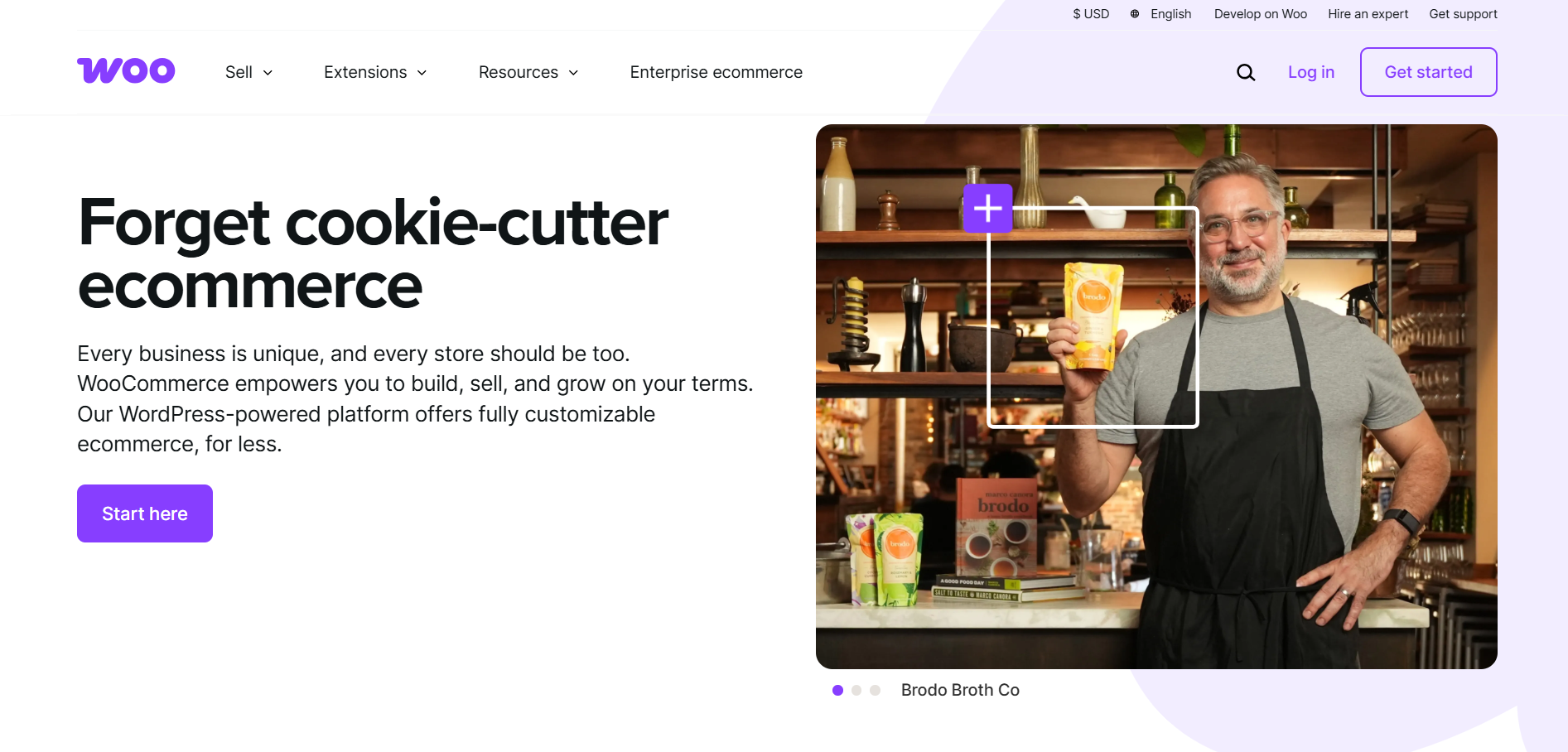
WooCommerce brings WordPress’s power to online selling, giving you complete control through its open-source foundation. It is one of the best eCommerce platforms with game-changing High-Performance Order Storage (HPOS). Their HPOS accelerates order processing up to 5 times faster and retrieves orders 40 times quicker than before.
What makes WooCommerce amazing is how it blends content and commerce smoothly. Your product stories and brand voice get the same powerful platform as your checkout experience. And when do you need something custom? The vibrant plugin ecosystem probably has you covered—if not, the passionate community of developers can help build exactly what you need.
Key Strengths:
- Open-source design for unlimited customization
- HPOS technology provides 5x faster order processing
- Smooth WordPress integration for content-driven experiences
- A large inventory of WooCommerce plugins supporting almost any functionality
- Strong community support and ongoing innovation
2. Shopify Plus: Ideal for Speed to Market
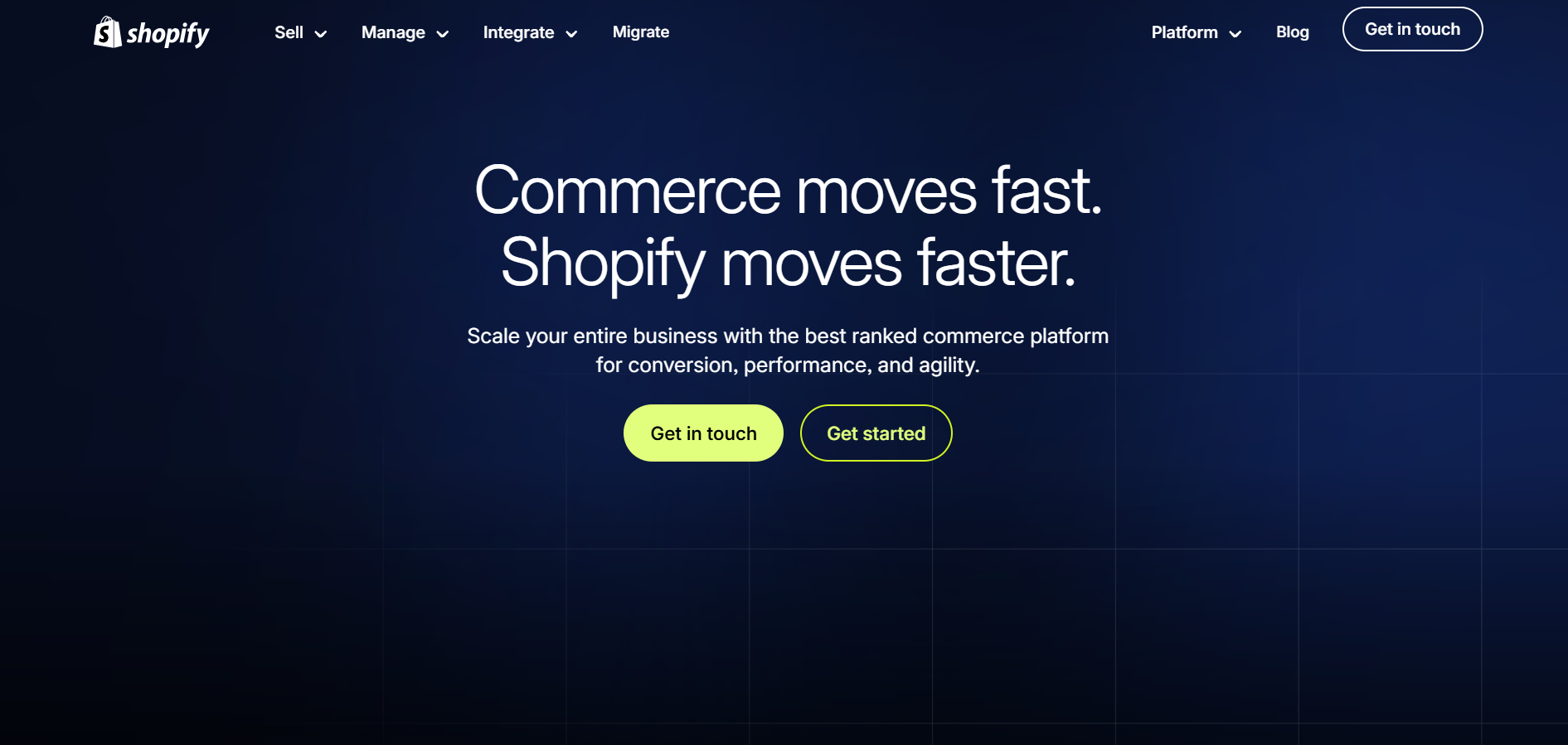
When time-to-market is crucial, Shopify Plus delivers. Companies go live 50% or more quickly than on other platforms, allowing you to take advantage of opportunities while your competitors are still in the works. The easy-to-use interface means your team spends less time fighting technology and more time driving sales.
Behind its simple facade lies sophisticated muscle—Shopify Flow automates those repetitive tasks eating up your team’s day, while the platform quietly handles security and scalability concerns. For growing brands that need to move quickly without technical headaches, Shopify Plus removes obstacles without sacrificing power.
Key Strengths:
- Fast setup with a user-friendly management interface
- Full omnichannel selling features
- Sophisticated automation via Shopify Flow
- Enterprise-level security and compliance features
- Plus customer-specific support resources
3. BigCommerce Enterprise: Ideal for B2B & B2C Hybrid Models
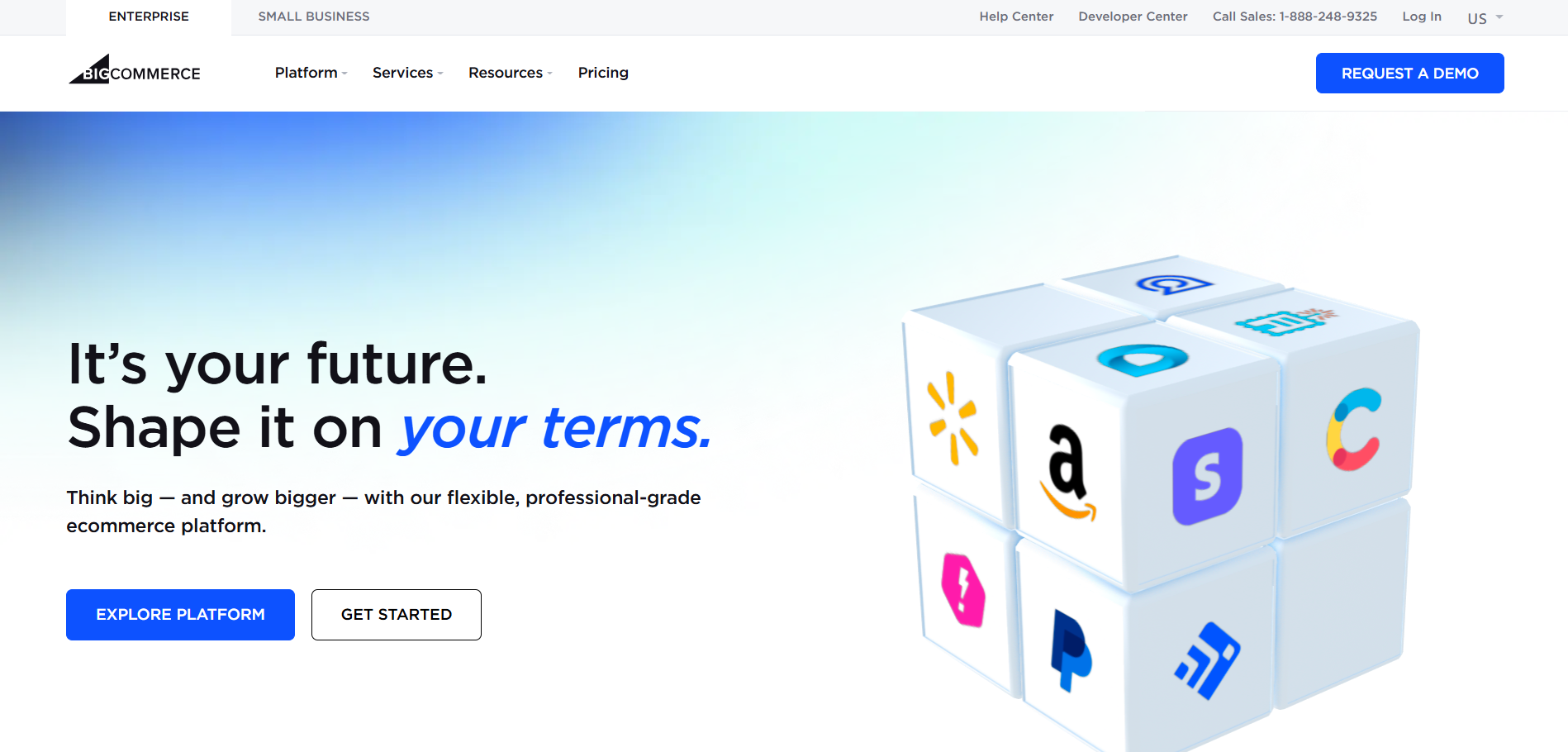
BigCommerce Enterprise doesn’t force you to choose between serving businesses and consumers—it excels at both. B2B sellers appreciate the custom pricing capabilities and buyer portals, while everyone benefits from the platform’s SEO strengths, which help customers find them organically.
The absence of transaction fees means your success doesn’t come with a penalty, and the headless commerce options let you create completely custom frontends while maintaining a rock-solid backend. It’s the balanced choice for businesses with diverse customer segments.
Key Strengths:
- Advanced B2B functionality, such as bespoke pricing models
- Better SEO out-of-the-box capabilities
- Headless commerce support for bespoke frontends
- No transaction fees to lower scaling costs
- Large app marketplace for additional functionality
4. Adobe Commerce: Ideal for Developer-Focused Businesses
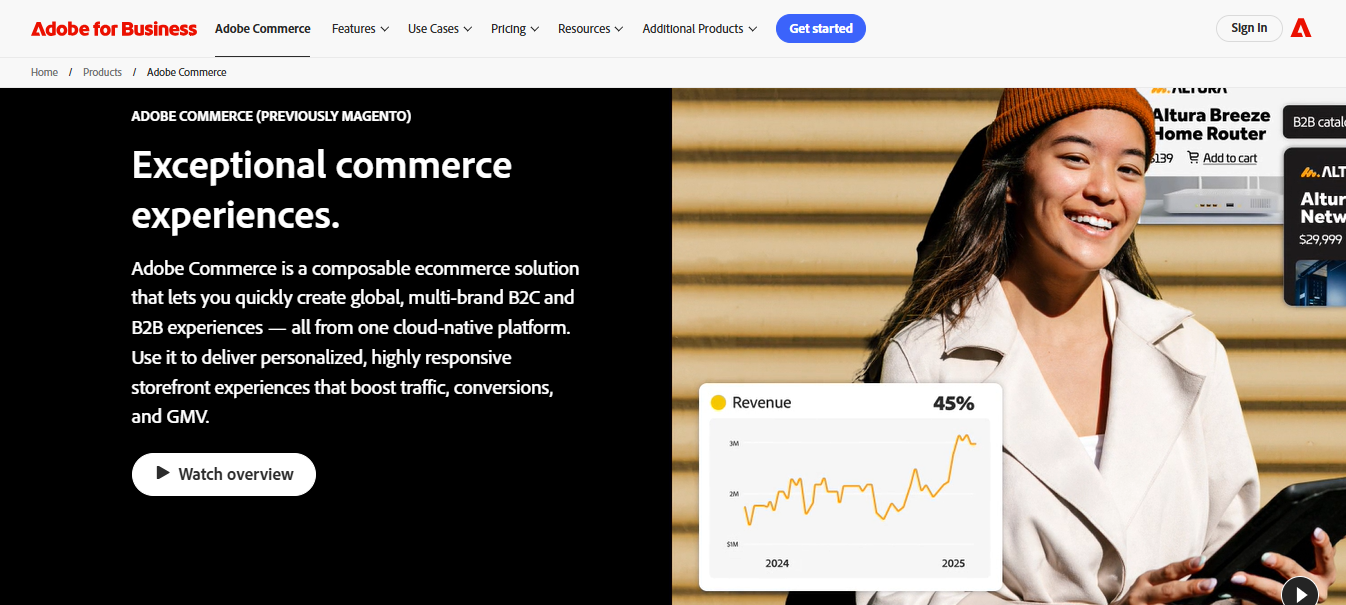
Adobe Commerce (formerly Magento) thrives in the hands of technical teams who value complete control. Its extensive customization capabilities mean virtually any commerce vision can become reality with the right development resources.
Integration with Adobe’s larger Experience Cloud offers possibilities for personalization that can reinvent how customers engage with your brand. For organizations with proficient technical resources and specific needs, Adobe Commerce offers the canvas and the tools to develop truly unique experiences.
Main Strengths:
- Outstanding customization potential with a solid extension marketplace
- Full support for complex B2B and B2C needs
- Advanced analytics and business intelligence tools
- Seamless integration with Adobe Experience Cloud
- Robust developer community and ecosystem
5. Salesforce Commerce Cloud: Best for Salesforce Ecosystem Users
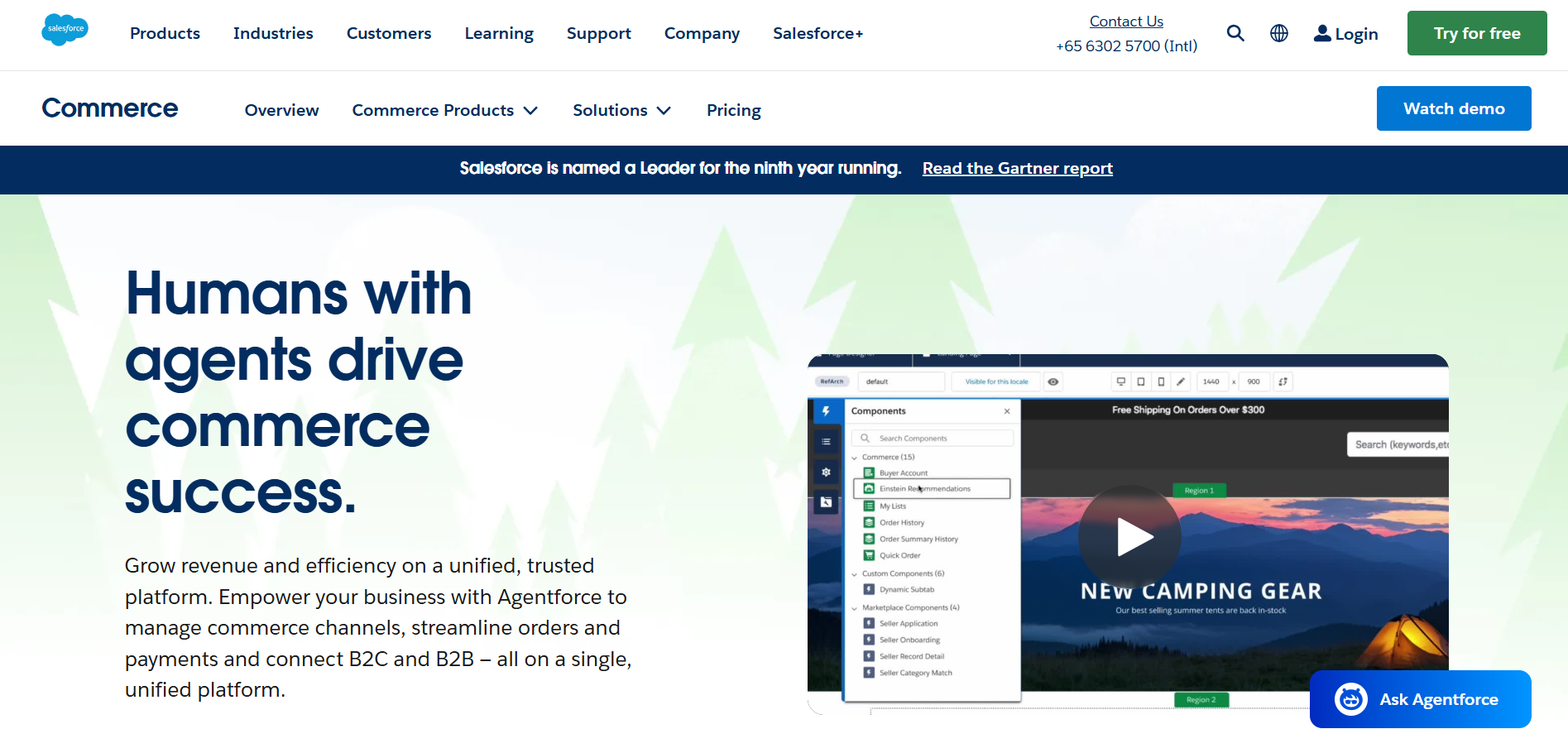
For businesses committed to the Salesforce platform, Commerce Cloud provides the promise of genuinely connected customer information. All your marketing, sales, and service teams operate from a single set of customer profiles, developing silky-smooth experiences across touchpoints.
Artificial intelligence-powered recommendations engage customers in products they will love, and global infrastructure from the platform guarantees consistent performance whether you’re selling to customers locally or growing globally. It’s commerce that naturally integrates into an expanded customer strategy.
Key Strengths:
- Unified customer data across marketing, sales, and service
- AI-powered personalization and product recommendations
- Strong support for both B2B and B2C models
- Globally scalable infrastructure for global growth
- Comprehensive order management capabilities
6. SAP Commerce Cloud: Ideal for Global B2B Enterprises
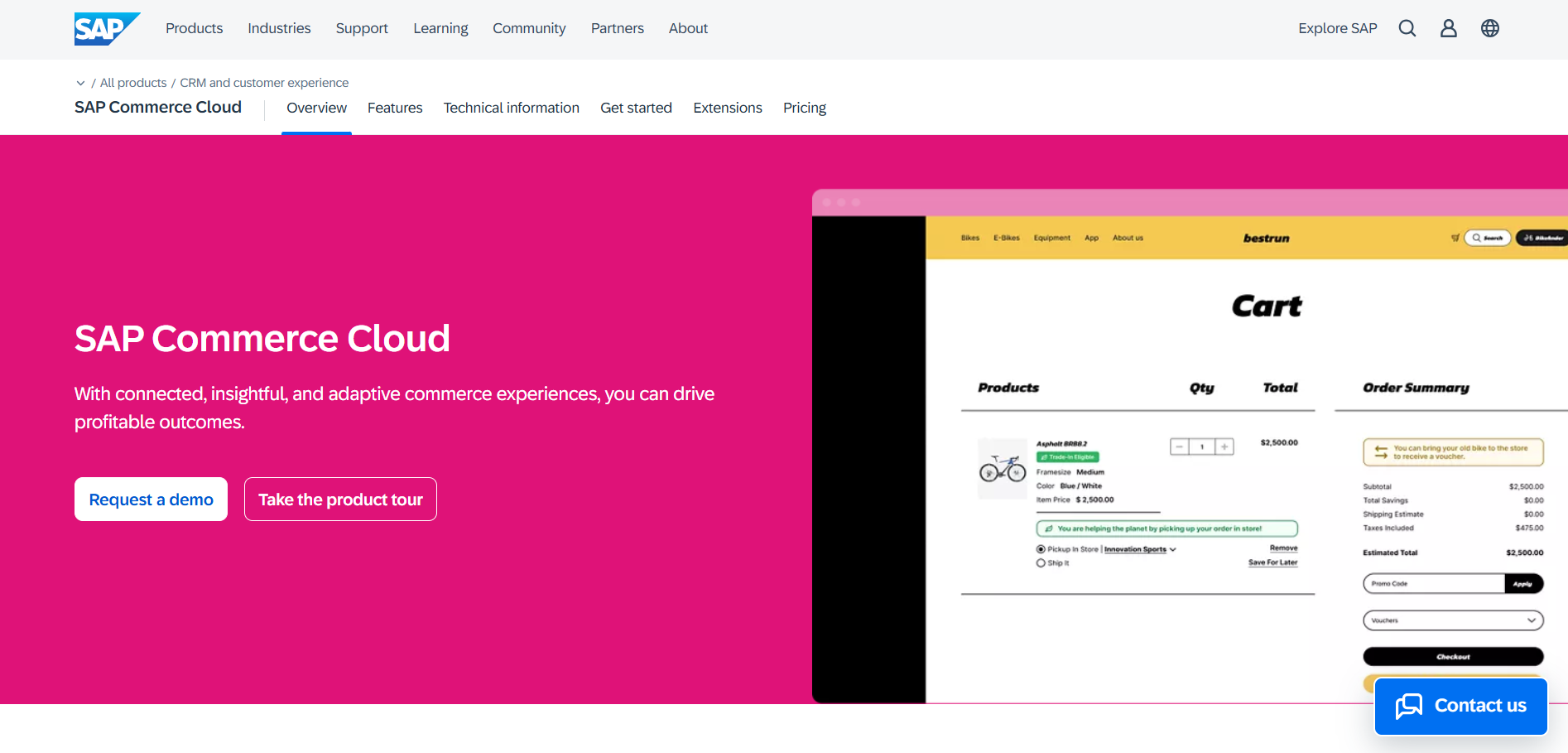
SAP Commerce Cloud understands the specialized requirements of B2B businesses—bulk purchases, approval workflows, and up-to-date stock visibility are not extras, but necessities. Its product information management will keep your complex catalog in harmony everywhere.
Comprehensive multilingual and multicurrency support comes as standard for international companies. And if you’re operating SAP’s enterprise apps, the flawless integration can reduce data silos that impede operations.
Key Strengths:
- Full multi-language and multi-currency support
- Sophisticated product information management
- Smooth integration with SAP’s enterprise applications
- Cloud or on-premise deployment flexibility
- Customized B2B functionality, such as contract management
7. Oracle Commerce Cloud: Ideal for Oracle Technology Users
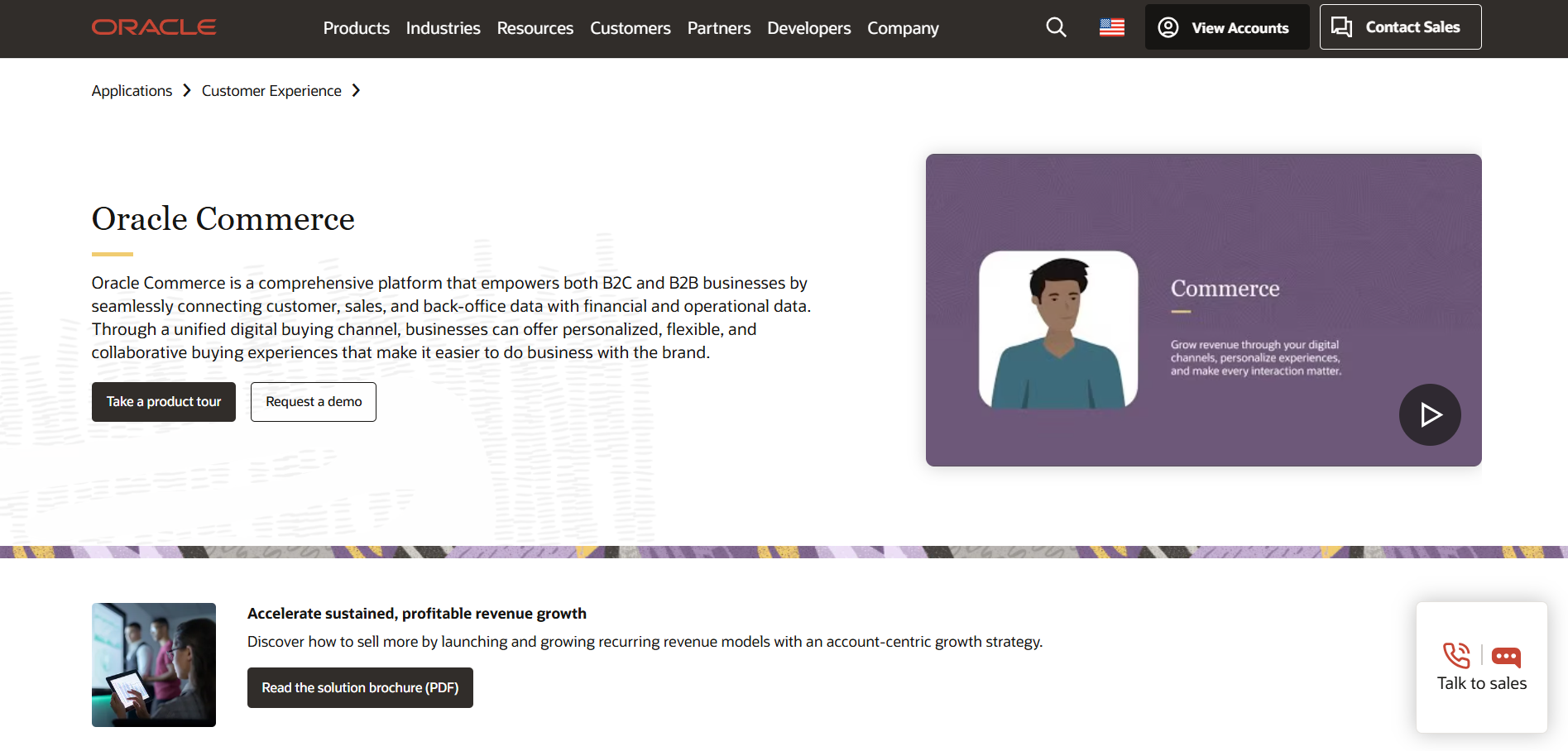
Oracle Commerce puts AI-driven personalization at the forefront of the shopping experience. This cloud commerce service enables consumers to discover what they’re looking for in a snap. Its cloud architecture strikes the balance between flexibility and enterprise-level performance.
For companies already on Oracle platforms, the out-of-the-box integrations with ERP and CRM deliver operational efficiencies that can radically reduce manual struggle. Security and compliance are inherent, meeting core concerns for enterprise companies.
Key Strengths:
- Sophisticated AI-based personalization features
- Cloud-native architecture for agility and performance
- Comprehensive B2B and B2C capabilities
- Seamless integration of Oracle ERP and CRM
- Security and compliance at the enterprise level
8. Commercetools: Ideal for Headless Commerce Innovation
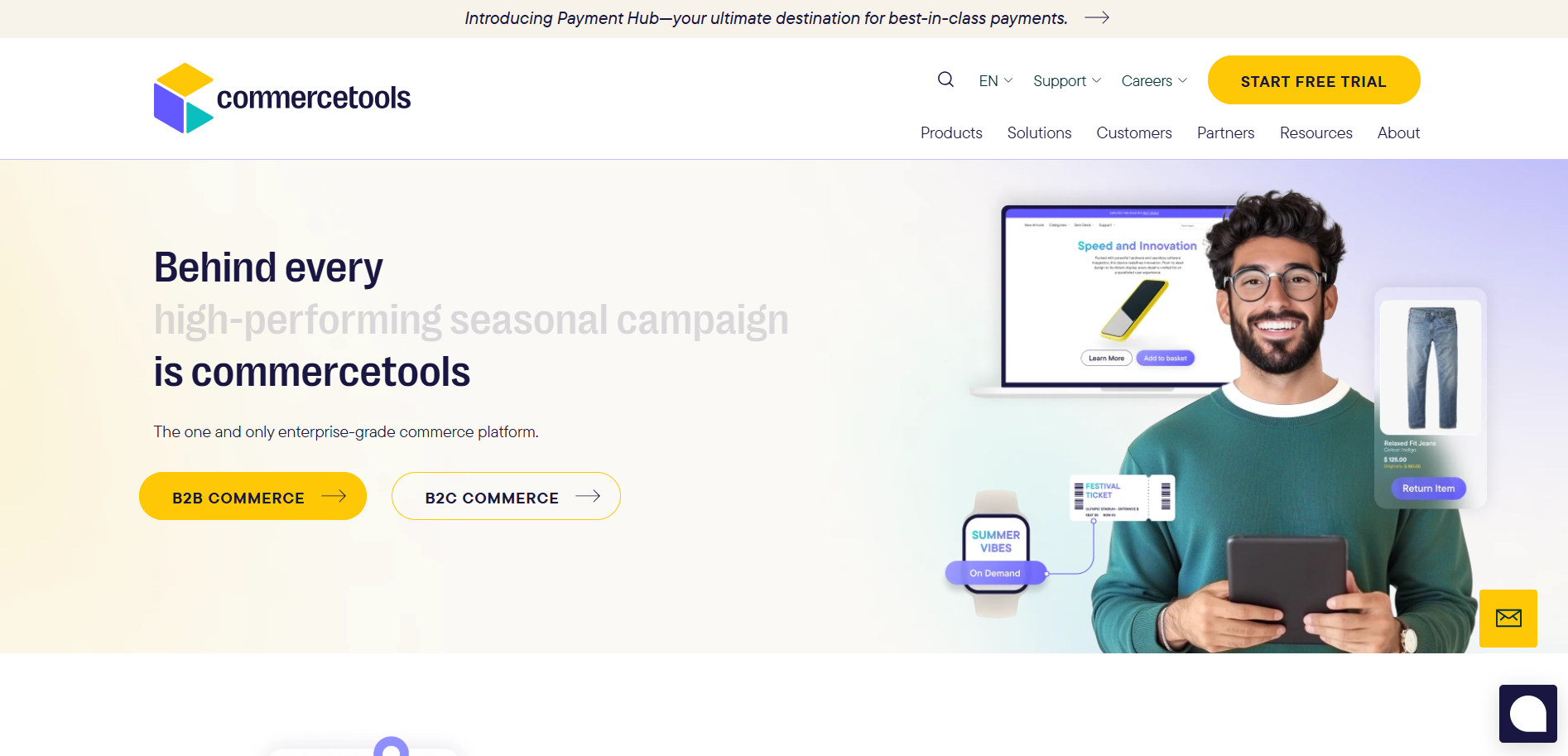
Commercetools embraces the API-first, headless approach completely. Rather than one monolithic platform, it offers composable building blocks that let you create exactly the commerce experience your business needs.
Its microservices architecture means you can start small and scale specific components as needed. For businesses looking to build unique digital experiences or integrate commerce into unexpected touchpoints, commercetools provides unmatched flexibility.
Important Strengths:
- API-first architecture to support infinite integrations
- Microservices-based development for modular development
- Absolute frontend development independence
- Highly scalable infrastructure to support growth
- Excellent developer resources and community support
9. Elastic Path: Ideal for Advanced Product Catalogs
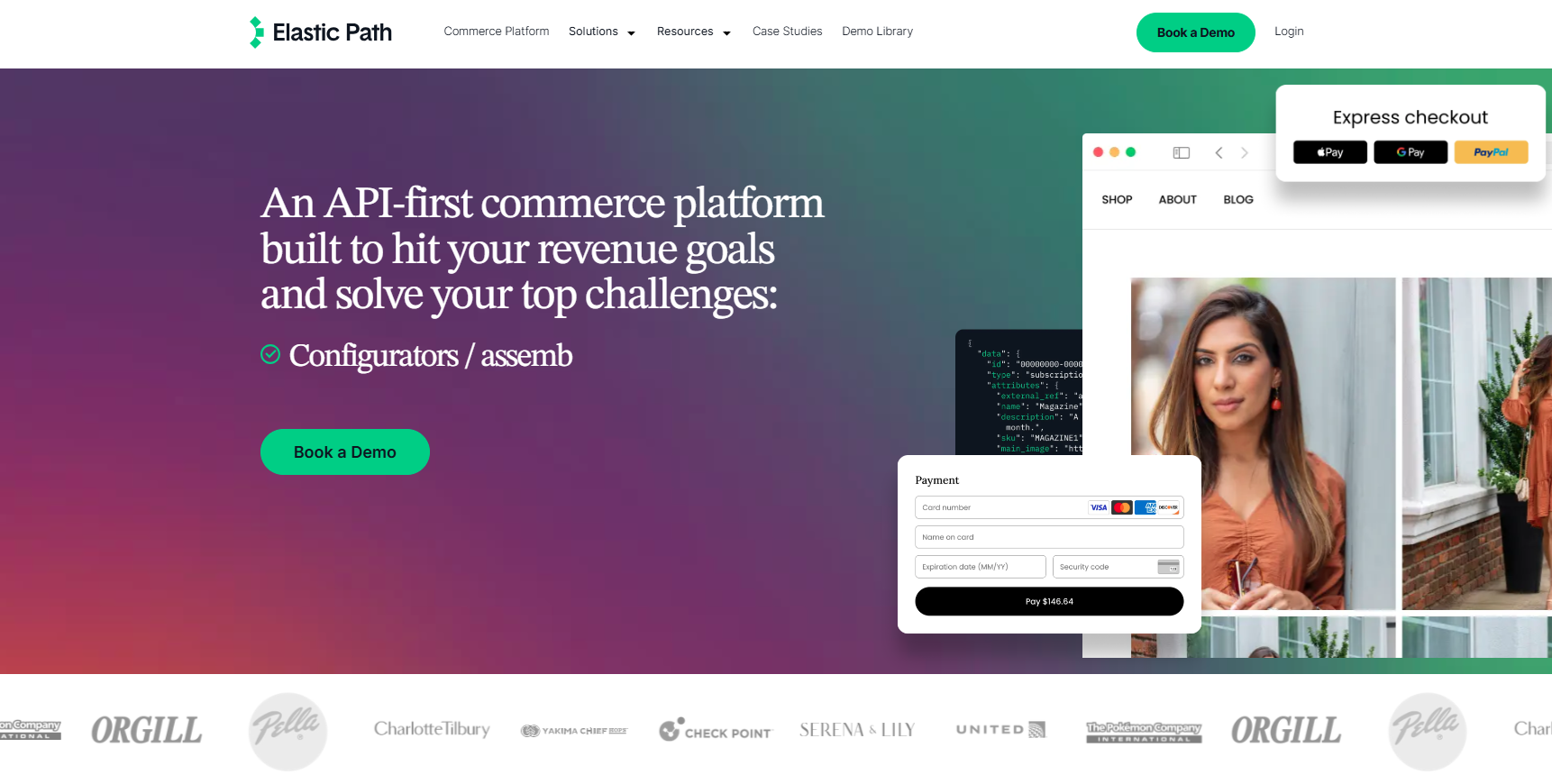
Elastic Path shines when your product catalog defies simple organization—complex bundles, configurable products, or sophisticated pricing relationships are its specialty. Its API-driven design supports extensive customization.
The platform accommodates various business models while maintaining enterprise security standards. For companies with product catalogs that other platforms struggle to manage elegantly, Elastic Path offers a specialized solution.
Main Strengths:
- Sophisticated bundling and relationship product capabilities
- API-driven architecture to facilitate customization
- Support for various business models
- Enterprise-level security and performance
- Extensive frontend framework support
10. OroCommerce: Ideal for B2B Experts
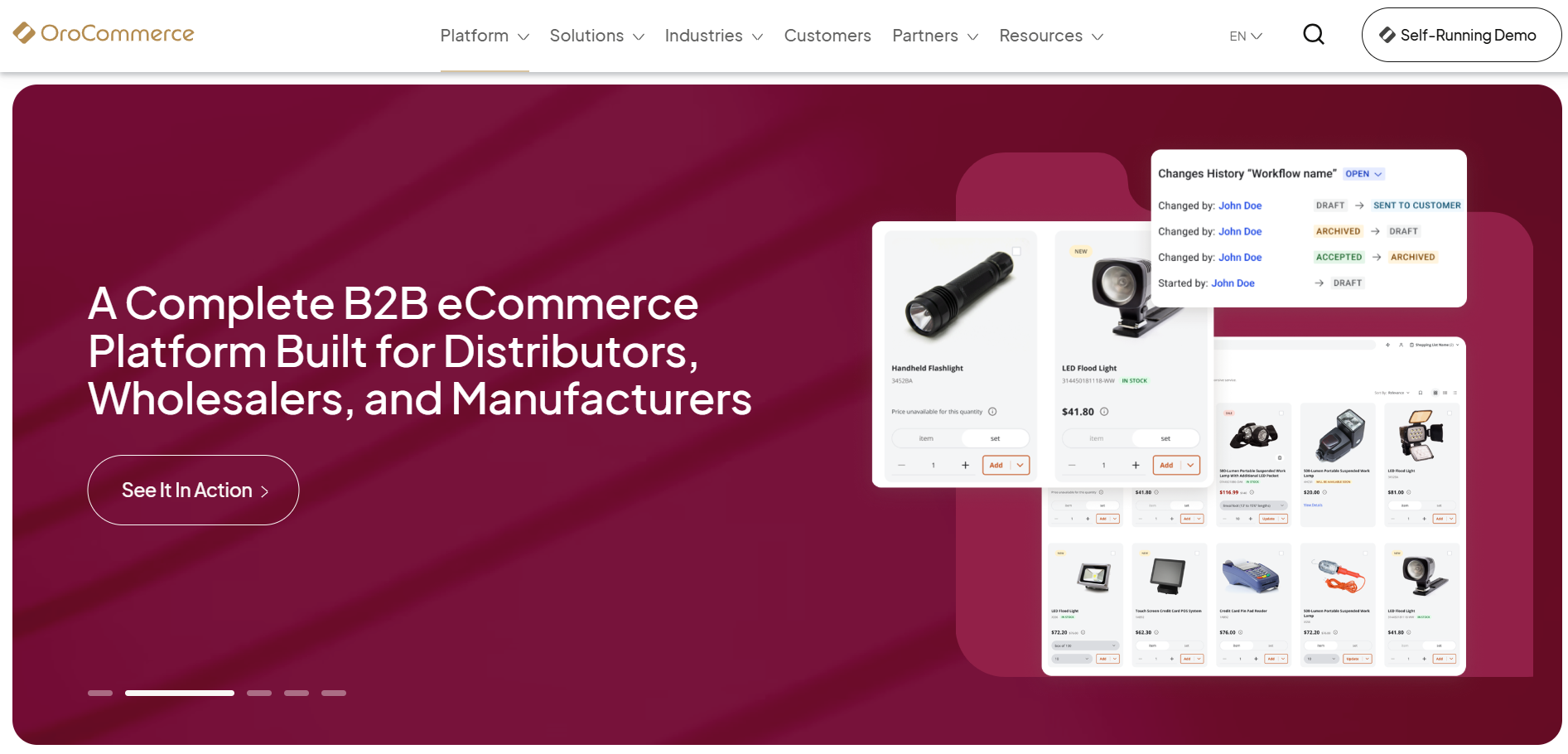
OroCommerce was built specifically for B2B commerce, with advanced price management and customizable workflows that reflect how businesses actually buy from each other. Built-in CRM integration means your sales and digital channels work together seamlessly.
Comprehensive reporting provides the insights B2B sellers need, while flexible deployment options accommodate your existing infrastructure. For companies focused primarily on business customers, OroCommerce offers purpose-built capabilities without compromise.
Main Strengths:
- Sophisticated discount and pricing management
- Workflow and approval process customization
- Built-in CRM and ERP integration features
- Extensive reporting and analytics
- Flexible deployment options to match your infrastructure
Choosing Your Perfect Enterprise Platform Match
Finding your ideal platform starts with understanding your business DNA and your future ambitions. A direct-to-consumer brand will have different priorities than a B2B manufacturer or a hybrid seller. Consider your growth trajectory, international expansion plans, and how quickly your product catalog might expand.
Evaluate your internal technical ability with honesty. Open-source solutions are highly flexible but need more expertise. If your organization has a small or less-technical team, a SaaS might be able to deliver better capabilities, with ease of management and balance.
Integration compatibility is another important consideration. Your eCommerce forum should integrate seamlessly with your existing business systems, rather than requiring you to start over. Seek out platforms that have built interoperability with the tools you currently employ.
Lastly, don’t undervalue the value of support when your store is making millions of dollars. You still want to have world-class support in your arsenal. It’s not an extravagance—it’s a business necessity.
Planning Your Platform Migration
Platform migration is akin to performing surgery on your business—the payoff can be enormous, but the operation needs to be well-planned.
Begin by estimating the actual cost of migration, encompassing both technical build and probable business interruption. Include not only the cost of the platform but also the design, build, data migration, and testing effort.
Ensure your SEO equity by doing full redirect mapping. Organic search ranking over the years can be lost without proper handling of URLs and redirects. Likewise, maintain customer information and relationships by migrating orders, account history, and loyalty data smoothly.
Timing is everything. Launch during your company’s natural downtime, when your staff has the capacity to watch systems and react swiftly to any problem. Steer clear of peak seasons if at all possible.
Pre-launch, perform rigorous testing. Check everything from site speed and checkout flows to payment processing, mobile responsiveness, and cross-browser compatibility. The more rigorously you test in staging, the smoother your launch will be.
Why WooCommerce Leads the Pack in 2025
In the 2025 eCommerce environment, WooCommerce remains unique by providing unparalleled flexibility without the price of being an enterprise. Developed on WordPress and entirely open-source, it provides businesses with full control—no licensing costs, no features locked away, no penalties for growth.
Its vast plugin base handles everything from complex shipping rules and payment gateways to loyalty rewards and AI-based search. And for uniquely specialized needs, the fact that the platform is open source means your dev team can code what you want.
WooCommerce Enterprise adds to this with focused Customer Success Management, performance optimization features, migration support, and heavy hosting discounts via Pressable—a managed WordPress host with enterprise-grade chops.
Relative to SaaS options, WooCommerce always provides a lower cost of total ownership. You only pay for the infrastructure and features you need, without success-based platform fees.
Business leaders such as Nutribullet, Xero Shoes, and Wet n Wild have all selected WooCommerce for a reason—it provides enterprise capability with startup flexibility.
Making Your Decision: The Bottom Line
Enterprise eCommerce is not a solution for everyone. Each platform has its strengths and drawbacks. Your specific business requirements, technical capabilities, and growth objectives determine the best option.
If ease of use and speed of deployment are your top priorities, Shopify Plus is a good choice. For sophisticated B2B businesses, BigCommerce or Adobe Commerce may be more up your alley. But for companies looking for the ideal combination of flexibility, scalability, and affordability, WooCommerce remains the gold standard.
Keep in mind, your eCommerce platform should be serving your business strategy, not the other way around. Select a foundation that enables your growth, not limits it.
Ready to move forward? Consider asking for a customized platform demo, reaching out to specialized agency partners, or talking to migration experts who can lead your transition with confidence.
Your digital commerce future is in the hands of the decisions you make today. Make them count by choosing the best eCommerce enterprise platform in 2025.