










































Microsoft SQL Server, also called Windows SQL Server, is a popular relational database management system. It is Microsoft’s brainchild and has become widely recognized worldwide. Since its beginning in the late 1980s, SQL Server has transformed into a remarkable database management system, highlighting the impacts of SQL version history.
This blog post will explain the SQL version history, its current version, and the latest and previous releases.
SQL Version History – A Brief Outlook of the SQL Version List
SQL Server has an impressive history, dating back to 1989. This section will describe the SQL latest release and other SQL versions. This SQL version list includes the previous and current versions.
|
Release |
RTM (no SP) |
Latest CU |
SQL Server 2025
|
TBA | TBA |
SQL Server 2022
|
16.0.1000.6 | CU19 (16.0.4195.2, May 2025) |
SQL Server 2022
|
15.0.2000.5 | CU32 (15.0.4430.1, February 2025) |
SQL Server 2017
|
14.0.1000.169 | CU31 (14.0.3456.2, September 2022) |
Note: Starting from SQL Server 2017, Service Packs will no longer be released.
|
Release |
RTM (no SP) | SP1 | SP2 | SP3 |
SP4 |
SQL Server 2016
|
13.0.1601.5 + CU9 |
13.0.4001.0
or 13.1.4001.0 + CU15 |
13.0.5026.0
or 13.2.5026.0 + CU17 |
13.0.6300.2
or 13.3.6300.2 |
— |
SQL Server 2014
|
12.0.2000.8 + CU14 |
12.0.4100.1
or 12.1.4100.1 + CU13 |
12.0.5000.0
or 12.2.5000.0 + CU18 |
12.0.6024.0
or 12.3.6024.0 + CU4 |
— |
SQL Server 2012
|
11.0.2100.60 + CU11 |
11.0.3000.0
or 11.1.3000.0 + CU16 |
11.0.5058.0
or 11.2.5058.0 + CU16 |
11.0.6020.0
or 11.3.6020.0 + CU10 |
11.0.7001.0 or 11.4.7001.0 |
SQL Server 2008 R2
|
10.50.1600.1 |
10.50.2500.0
or 10.51.2500.0 |
10.50.4000.0
or 10.52.4000.0 |
10.50.6000.34
or 10.53.6000.34 |
— |
SQL Server 2008
|
10.0.1600.22 |
10.0.2531.0
or 10.1.2531.0 |
10.2.4000.0
or 10.2.4000.0 |
10.0.5500.0
or 10.3.5500.0 |
10.0.6000.29 or 10.4.6000.29 |
SQL Server 2005
|
9.0.1399.06 | 9.0.2047 | 9.0.3042 | 9.0.4035 | 9.0.5000 |
SQL Server 2000
|
8.0.194 |
8.0.384 | 8.0.532 | 8.0.760 |
8.0.2039 |
SQL Server 7.0
|
7.0.623 |
7.0.699 | 7.0.842 | 7.0.961 |
7.0.1063 |
SQL Server 6.5
|
6.50.201 |
6.50.213 | 6.50.240 | 6.50.258 | SP4 6.50.281
SP5 6.50.416 |
SQL Server 6
|
6.00.121 | 6.00.124 | 6.00.139 | 6.00151 | — |
Who invented SQL Server?
The former Sybase Inc. developed the original SQL Server code in the 1980s, which SAP now owns. In addition, Microsoft developed SQL Server for OS/2 as a collaboration between Sybase, Microsoft, and Ashton-Tate in 1988. The partnership finished in 1990, and Microsoft took the name SQL Server.
When was the First SQL Server Launched?
The first SQL Server was launched in April 1989. Furthermore, the history of SQL Server or Microsoft SQL Server started with the first database product—SQL Server v1. 0, a 16-bit relational database for the OS/2 operating system. Sybase, a software company that created a relational database management system, developed this version.
In addition, Microsoft licensed Sybase’s technology and transformed it into SQL Server. SQL Server’s first version was a simple relational database management system that enabled users to develop and manage databases. At present, SQL current version is SQL Server 2025 or SQL Server 17.
When was SQL Server 4.2 Released?
In 1992, Microsoft launched SQL Server 4.2, the first and one of the old versions of SQL Server for Microsoft Windows. The version offered improved support for Windows and comprised numerous exciting features, including support for triggers, stored procedures, and views.
The release or launch of SQL Server 4.2 for Windows highlighted the platform’s start to success as a relational database management system.
When was SQL Server 6.0 Released?
In 1995, Microsoft released SQL Server 6.0, a crucial upgrade to the platform. This version enhanced performance, scalability, and support for distributed queries and transactions. SQL Server 6.0 was the first version that supported ODBC (Open Database Connectivity), a database access standard.
When was SQL Server 7.0 Released?
In 1998, Microsoft launched SQL Server 7.0, a significant success for the platform. This version offered revolutionary features, such as support for XML (Extensible Markup Language), data transformation services, and OLAP (Online Analytical Processing).
SQL Server 7.0 was the first version to utilize the Windows NT kernel, offering better performance and stability.
When was MS SQL Server 2000 Released?
In 2000, Microsoft released SQL Server 2000, SQL previous version, a significant upgrade to the platform. This version provided users with a few nifty features, including database replication, support for data mining, and backup compression. SQL Server 2000 was the first version that began supporting the Windows Server operating system.
When was MS SQL Server 2005 Launched?
In 2005, Microsoft released SQL Server 2005, a significant upgrade to the platform. This version presented or announced various advanced yet results-driven features, including the Common Language Runtime, XML data types, support for CLR, and database snapshots. SQL Server 2005 was the pioneer version that used the .NET Framework.
Since then, Microsoft has released or launched numerous versions of SQL Server, including SQL Server 2008 and SQL Server 2012. Moreover, in recent years, Microsoft released other versions, such as SQL Server 2016, SQL Server 2019, and SQL Server 2022. These versions have delighted existing and potential users with various features, including support for high availability, in-memory OLTP, and column store indexes.
What Do You Mean by SQL Server?
As you know, Microsoft SQL Server is considered a leading relational database management system. It primarily operates as a database server that saves and retrieves data that other software applications request on the same device or a remote computer using the client-server model. In addition, Microsoft offers APIs that help access SQL Server as a web service on the Internet.
What is the Future of Microsoft SQL Server?
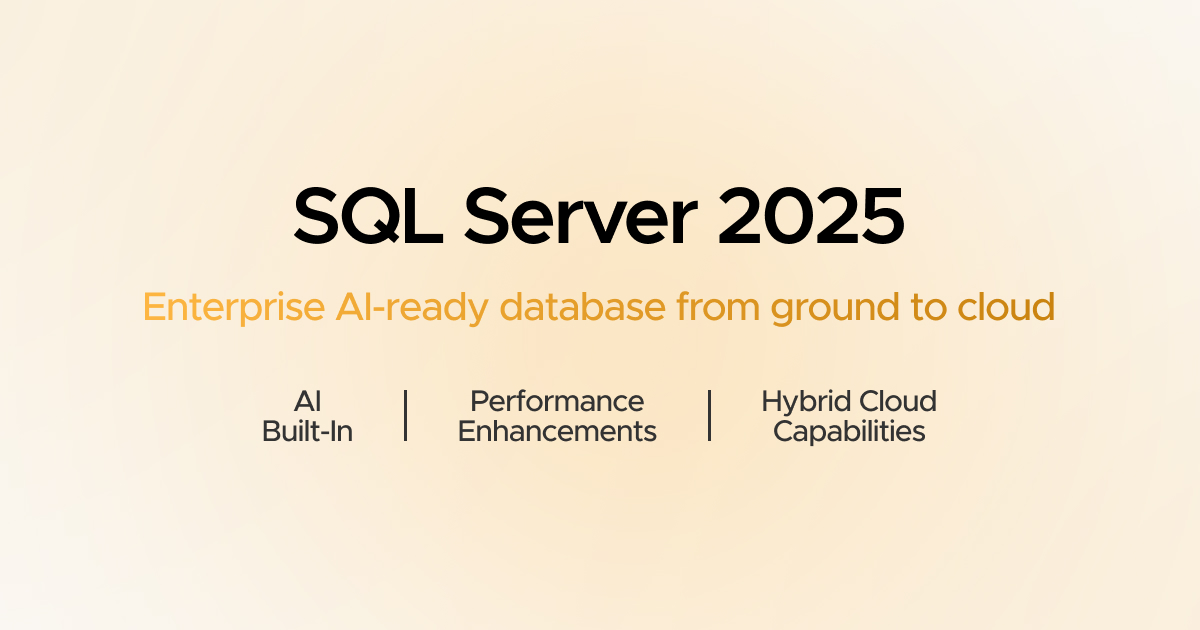
As expected, Microsoft SQL Server evolves rapidly. It integrates next-generation technologies to fulfill today’s data-centric enterprises’ diverse yet challenging needs. SQL Server 2025 offers a great mix of impactful new features that blend artificial intelligence (AI), exceptional performance enhancements, and seamless hybrid cloud capabilities.
This will ensure small or large businesses remain productive in a progressively data-driven world in the coming years.
Why Should We Consider SQL Server for WordPress?
SQL Server, Microsoft’s brainchild, is a helpful database management system. It has immaculate security features backed by exemplary performance and strong data management capabilities.
For businesses, whether large or small, that depends mainly on the features SQL Server offers or the Microsoft ecosystem, configuring WordPress can help automate operations and enhance the productivity of the existing infrastructure to the next level.
When you run WordPress on SQL Server, you can effectively synchronize data. This will ensure effortless integration between your backend systems and your site.
Wrapping Up
There is no denying that Windows SQL Server has traveled a long way since its first release in 1989. Over the years, the SQL version history suggests that it has evolved into a robust relational database management system that businesses or companies of all sizes widely use.
With the arrival of every new or latest version, Microsoft has announced new features and improvements that have made the SQL Server one of the most productive, dependable, and versatile database management systems available today.