












































To anybody involved in online commerce in 2025, knowing a few things about WooCommerce statistics would be essential. As arguably the best eCommerce platform globally, WooCommerce has millions of installs. Businesses can make wise decisions and keep up with the competition by staying in touch with WooCommerce stats related to usage, market share, and trends.
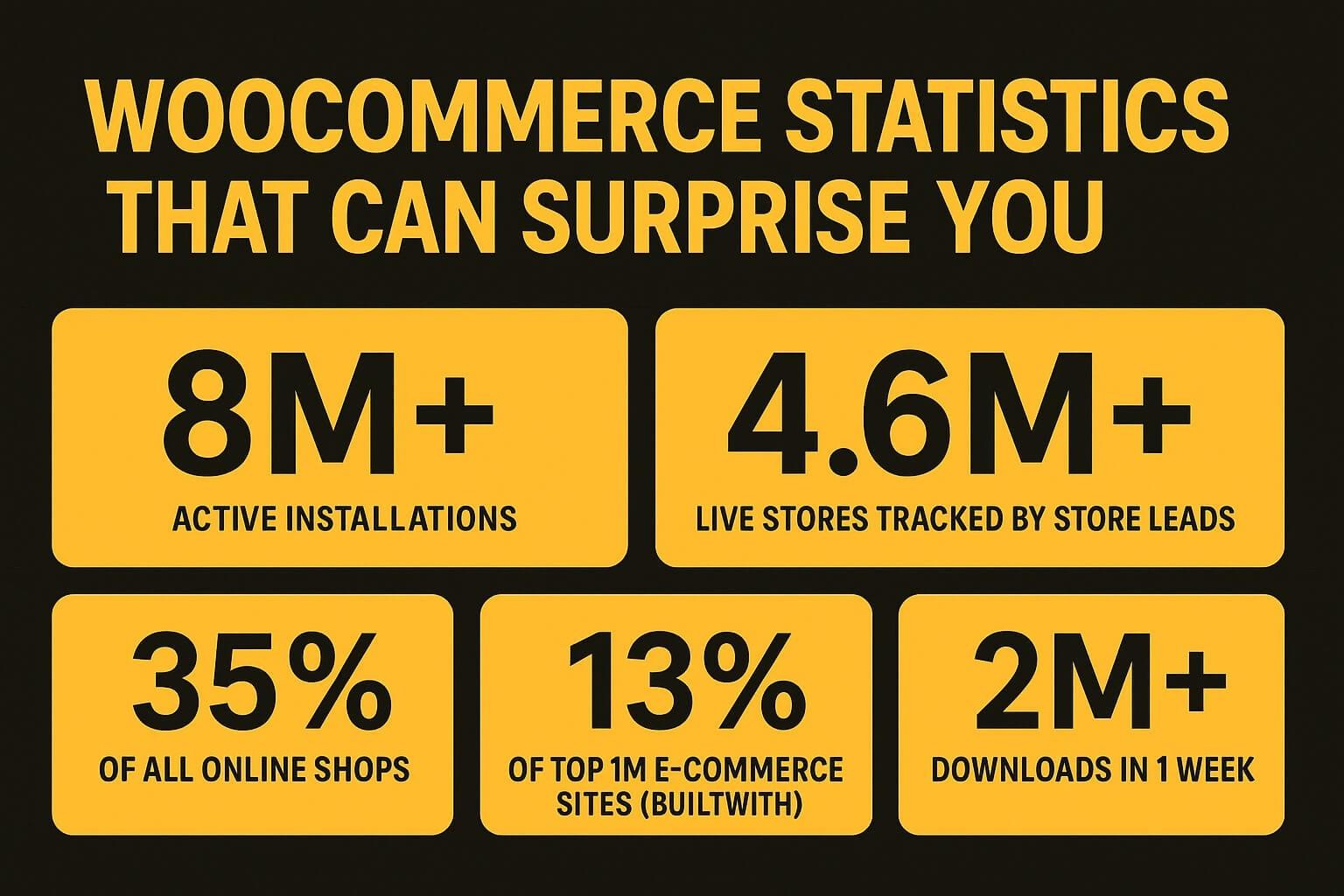
The growth of WooCommerce augments the general reign of WordPress, the world’s number one content management system. With a record “8 million-plus” active installations and “4 million+ live sites”, WooCommerce’s adaptability attracts businesses from small startups to large corporations. Whether you’re a small business or an enterprise, you must understand how WooCommerce works and expands so that you can plan your online store.
This WooCommerce statistics article will discuss the most recent WooCommerce usage stats, market share stats, and future trends. We will explain “what is WooCommerce” and how it can benefit you. We will also explore why WooCommerce is still among the best eCommerce platforms and how its massive ecosystem and continuous innovations can make your business successful.
Key WooCommerce Statistics at a Glance (2025)
To better comprehend WooCommerce’s enormous footprint and impact in 2025, let’s briefly see some of the most significant statistics that reflect its development and market share.
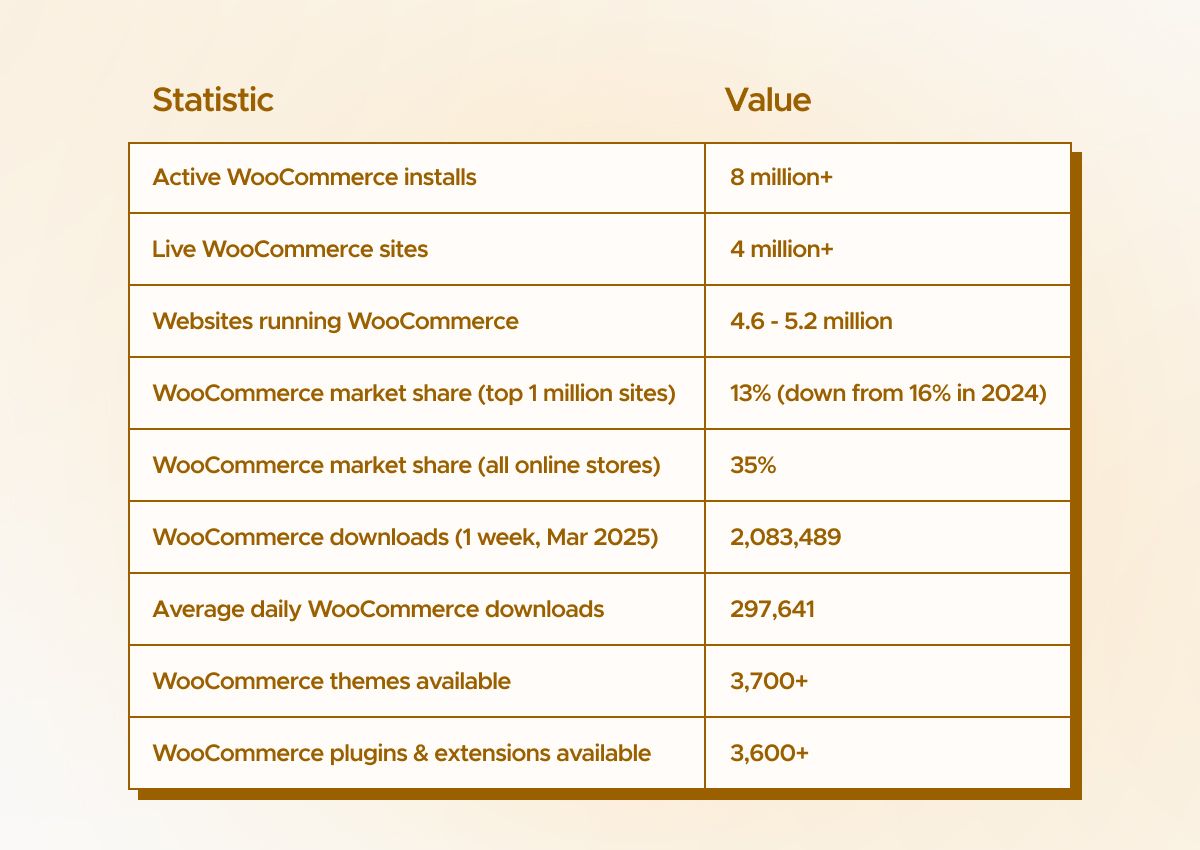
You now have a good idea of WooCommerce’s magnitude, so let’s get into the details of what sets this platform apart and why it has become the best solution for an astonishing number of online shops.
What is WooCommerce? Understanding the Platform Behind the Numbers
WooCommerce stands out as something truly remarkable in the e-commerce world. It’s a completely free, open-source plugin that you can grab straight from the WordPress repository. It can transform any regular WordPress site into a powerful online store.
What started in 2011 as just another small plugin has grown into something incredible—now it’s become the most flexible and customizable e-commerce platform you’ll find anywhere. The journey from humble beginnings to global dominance really shows how WooCommerce has captured what online merchants need.
Its uniqueness is not its economy (it is free) but its wonderfully versatile nature. You can sell real stuff, virtual objects, subscriptions, appointments, or services. It adapts itself to your business needs, not the other way around.
Why WooCommerce Statistics Matter More Than Ever
The online shopping landscape is changing rapidly. What was sufficient yesterday may be fruitless tomorrow. That’s why clever business owners and coders trust good data, not intuition or hype marketing claims.
WooCommerce data says more than statistics. It tells stories about actual businesses, true growth trends, and real market prospects. With more than 8 million sites, you can discover unique patterns and count on that intelligence.
Consider it this way: Do you prefer to guess which platform to use, or to make choices based on data from millions of actual stores? The response seems clear, but astonishingly, many select based on advertising instead of facts.
WooCommerce Statistics: How Many Websites Actually Use This Platform?
This is where it gets interesting. Various sources measure WooCommerce usage differently, and the figures paint a fascinating picture of market forces and measuring methods.
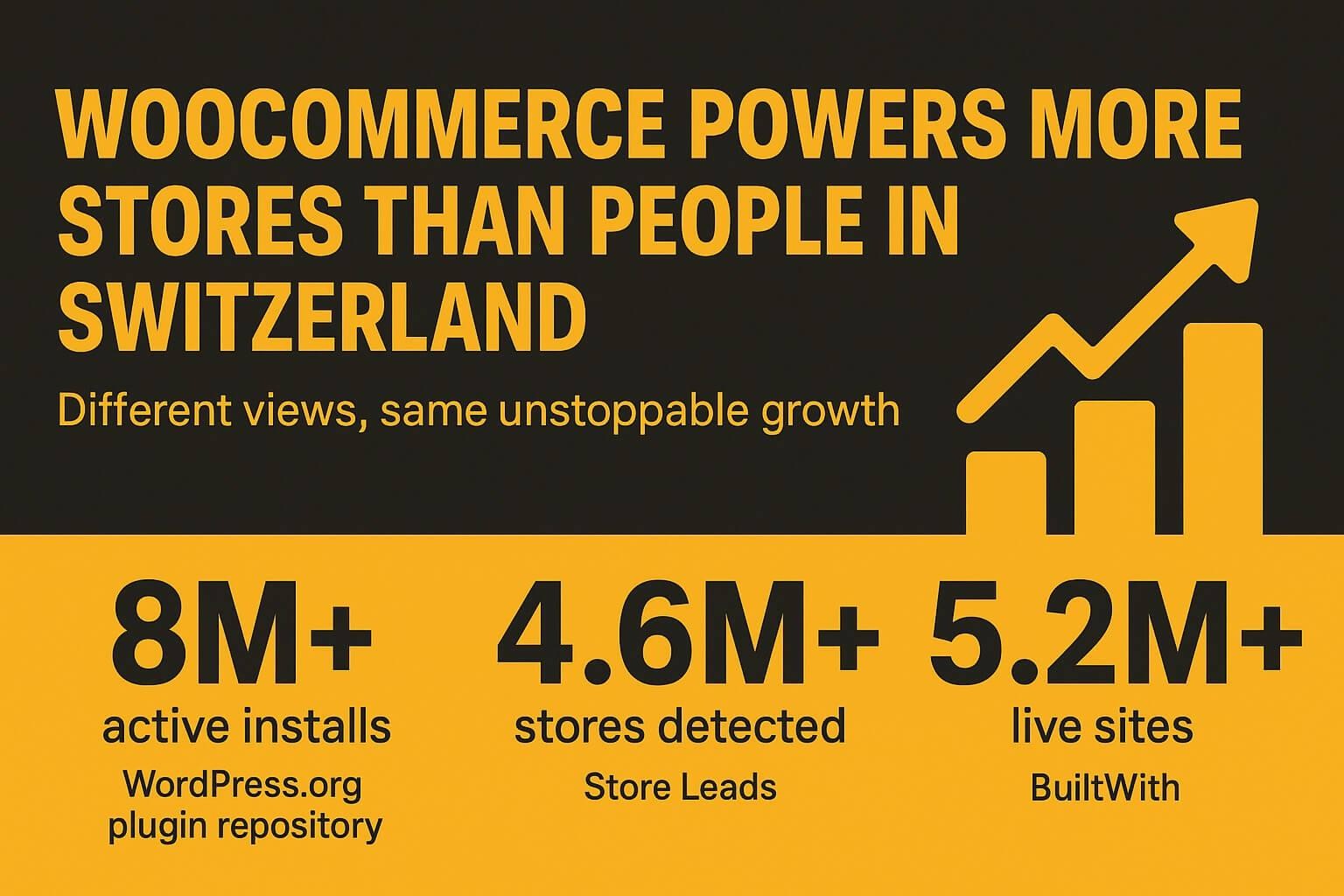
The WordPress.org plugin repository indicates more than 8 million active WooCommerce installs. That’s equivalent to stating there are more WooCommerce shops than people in Switzerland. But wait—that’s based on only one set of data.
Store Leads has monitored over 12 million websites and identified 4,613,637 sites running on WooCommerce. Meanwhile, BuiltWith claims 5,261,111 websites globally use this platform. The consensus? Over 5 million websites rely on WooCommerce worldwide for their online selling needs.
Why are these digits different? It’s comparable to asking three individuals to count cars in a parking lot from various positions. They each see something a little bit different, but they each know there are a lot of vehicles.
WooCommerce Market Share Statistics: Figuring Out the Competition
Market share informs us who’s winning in the competition for e-commerce platforms. But this is where WooCommerce stats become super interesting—and a little bit confusing.
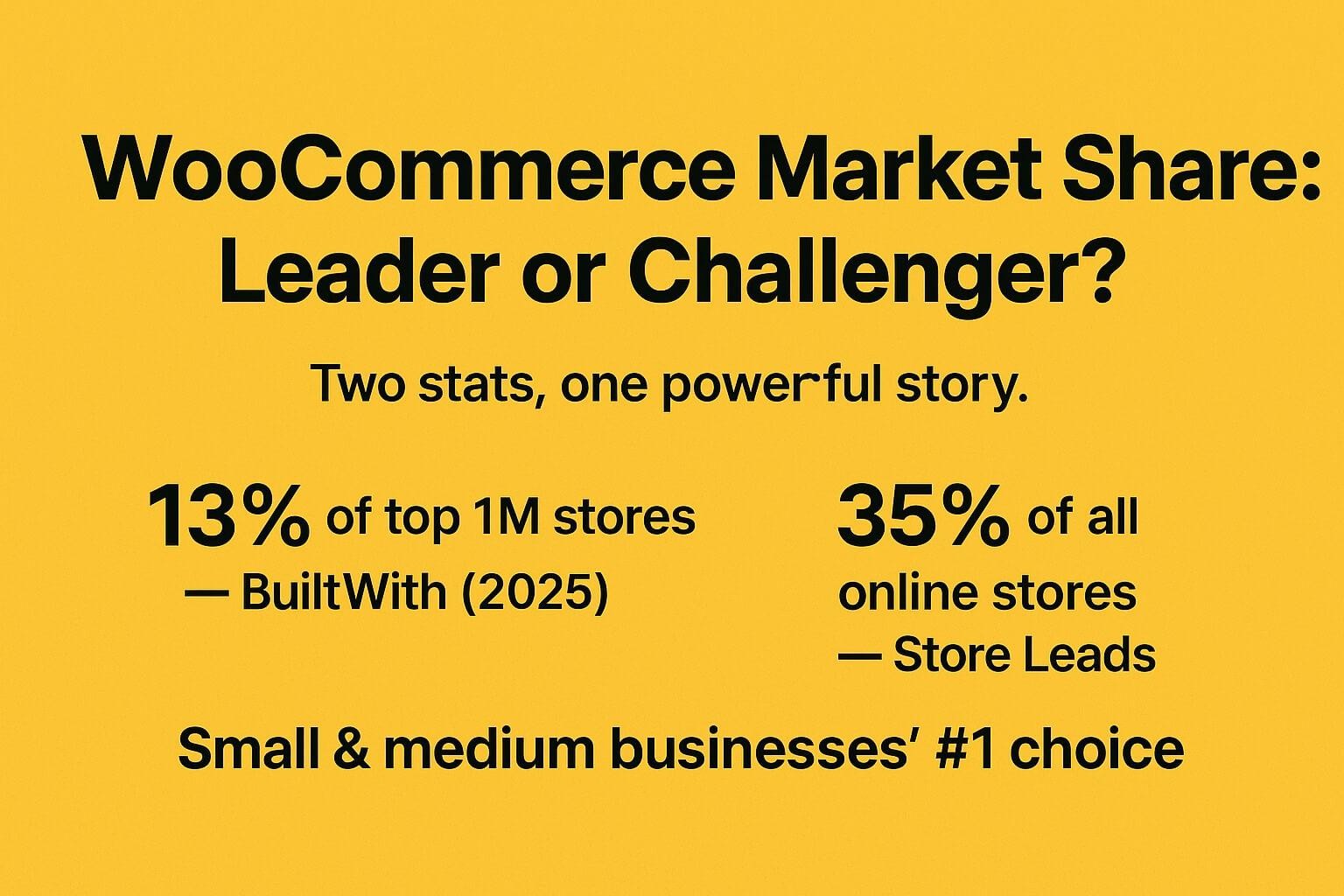
BuiltWith indicates that WooCommerce has a 13% market share among the top 1 million e-commerce websites as of 2025, down from 16% in 2024. On the surface, this would seem alarming for WooCommerce fans.
But Store Leads presents a whole different picture. According to their statistics, WooCommerce drives over 35% of all online stores. That’s a huge difference – we’re discussing the distance between being a solid competitor and the clear market leader.
The reason is the size of the sample and the method. Store Leads monitors 12 million sites of all sizes, whereas BuiltWith concentrates more on leading sites. The contrast indicates something fundamental about WooCommerce’s actual strength.
WooCommerce reigns supreme in the small to medium-sized business market. Although enterprise-sized businesses may prefer other solutions, millions of startups prefer WooCommerce because it is versatile and inexpensive.
WordPress eCommerce Statistics: WooCommerce vs. Everything Else
A statistic’ll probably surprise you: No other WordPress e-commerce plugin comes close to the top 10 global e-commerce platforms. Not even one.
Popular alternatives such as Easy Digital Downloads don’t even reach the top 20. This isn’t merely market leadership – it’s total ecosystem domination. When companies think of WordPress eCommerce services, they think they’ll have WooCommerce.
This monopoly status presents fascinating opportunities. If you’re already familiar with WordPress, then learning WooCommerce is an obvious next step. The difficulty curve is greatly reduced when you’re working with known territory.
Businesses already hosting WordPress sites should consider adding e-commerce functionality via WooCommerce. The integration is seamless because it is seamless.
WooCommerce Usage Statistics: The Growth Engine of New Installations
New WooCommerce statistics show us something interesting about platform traction. As WordPress.org reports in March 2025, WooCommerce was downloaded 2,083,489 times in one week.
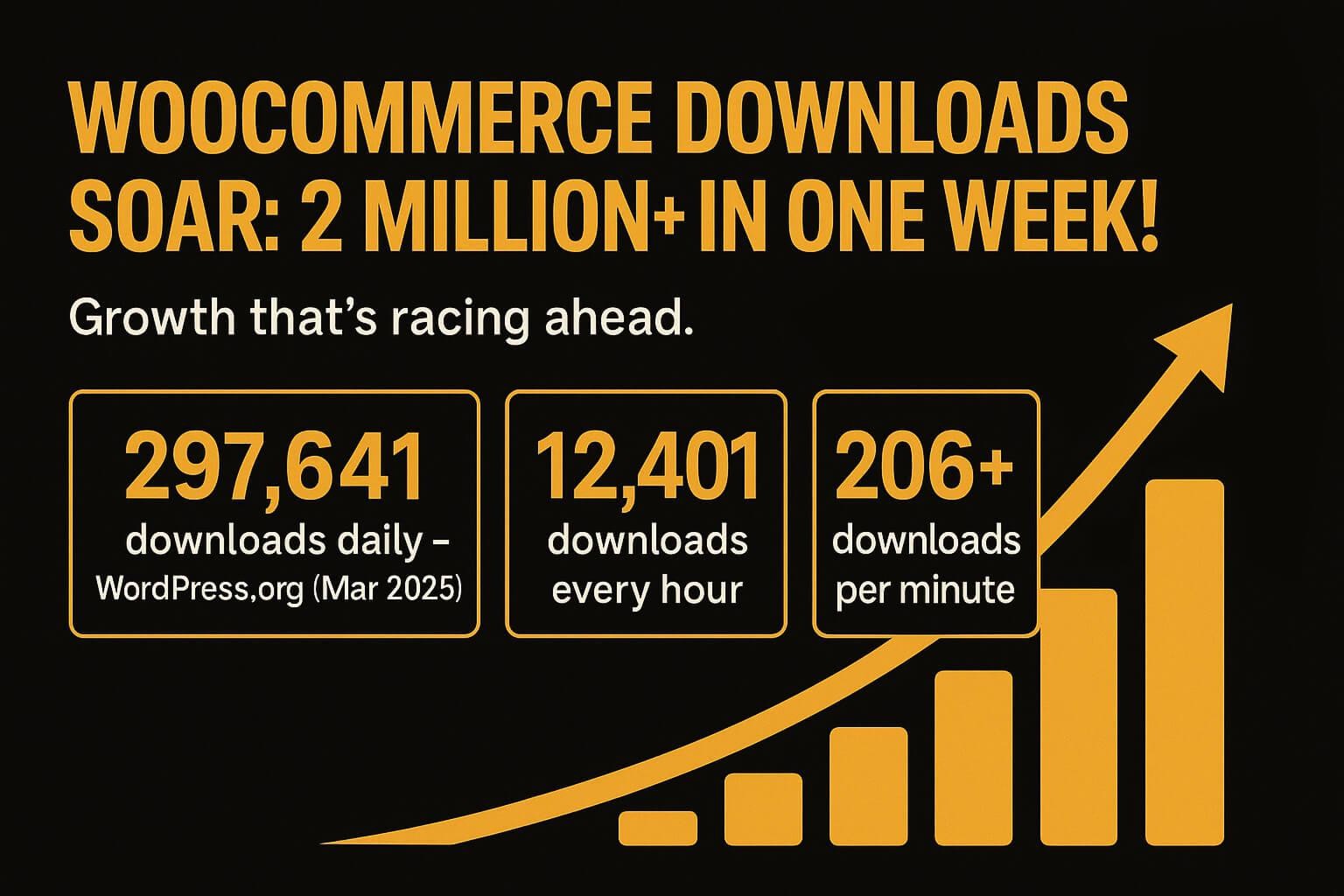
Let that soak in. More than 2 million downloads in seven days. That’s around 297,641 daily downloads, 12,401 per hour, and over 206 per minute. Even when you subtract updates and reinstallations, these figures show enormous growth.
This growth rate tells us something significant about confidence in the market. Folks aren’t simply attempting WooCommerce—they’re embracing it at a rapid rate. That sort of adoption doesn’t occur by chance in a competitive marketplace.
WooCommerce Statistics: The Ecosystem That Drives Success
WooCommerce’s success isn’t solely in the base platform. The ecosystem around it adds value that’s difficult to match elsewhere.
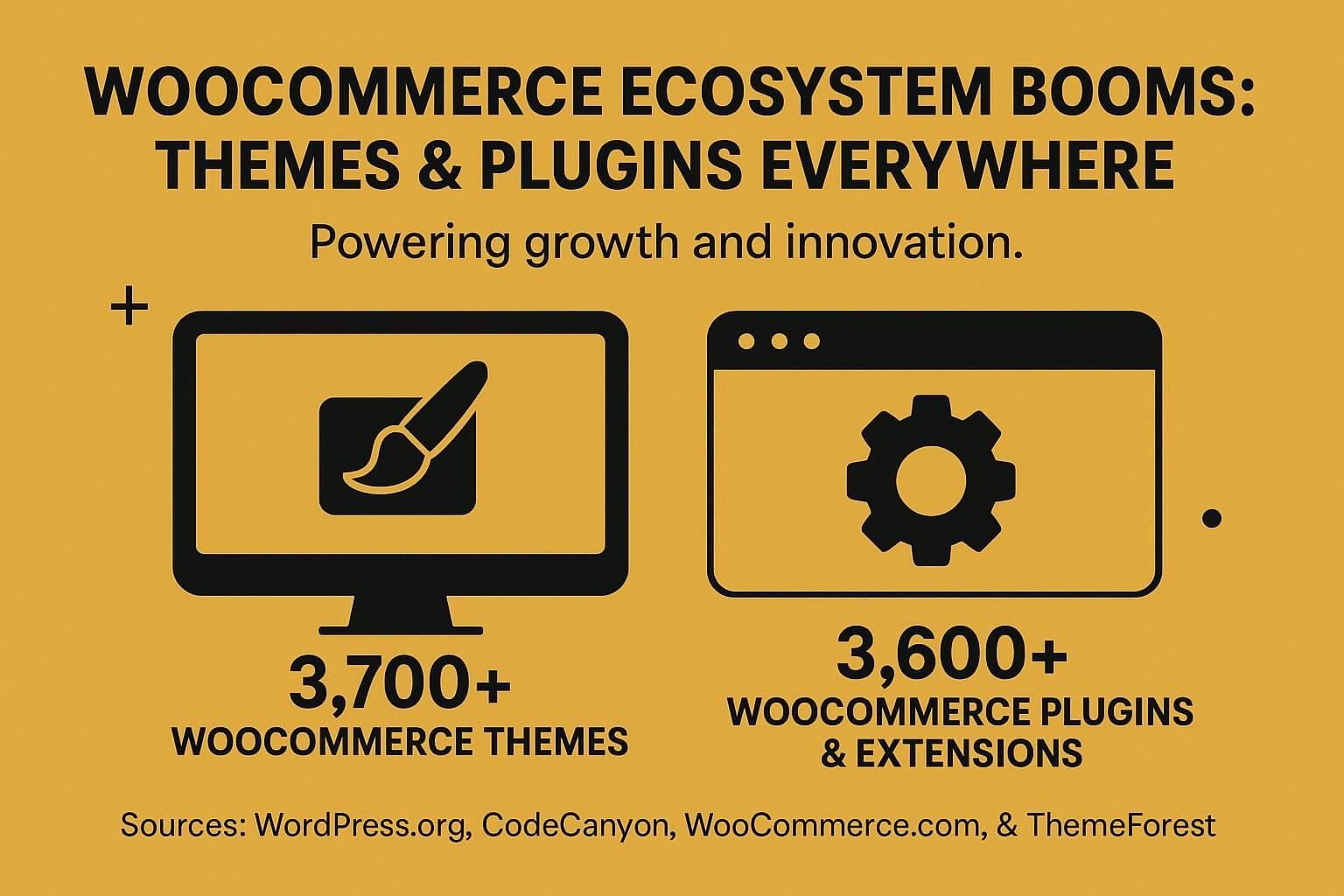
Theme availability is part of this narrative. ThemeForest has 1,500 WooCommerce themes, and the WordPress.org theme directory has 2,202 themes compatible with WooCommerce. That is more than 3,700 themes from two sources alone.
The plugin universe is as large. WordPress.org has more than 980 plugins with ‘WooCommerce’ in the name. CodeCanyon has 1,564 WooCommerce plugins for sale, and WooCommerce.com has 1,086 official extensions available.
WPExperts has also contributed to WooCommerce’s success. They provide top-notch WooCommerce services for top companies and have over 40+ WooCommerce extensions.
These aren’t arbitrary figures. They denote thousands of developers creating solutions for WooCommerce customers. This ecosystem impact provides a self-supporting cycle of innovation and expansion.
WooCommerce Trends: What’s Changing in 2025
Current WooCommerce trends expose strategic changes that astute business owners must know. WooCommerce is not idle – it is changing fast to satisfy shifting market needs.
The “more in core” project is the largest shift in WooCommerce’s strategy. Throughout the WooCommerce version history, it has integrated key features into the core product rather than demanding several dozen plugins just to get some essential functionality.
Brand management functionality has already migrated to the core in WooCommerce 9.6. Cost of Goods Sold (COGS) is in progress. Hide shipping rates option, enhanced dashboard performance, and more are scheduled for integration in 2025.
Pro Tip: Read about the latest WooCommerce 9.9 pre-release updates to stay ahead of any last-minute chaos in your store.
This change remedies one of the largest sources of WooCommerce complaints: plugin complexity. By moving critical functionality to the core, WooCommerce decreases installation time and conflicts.
Performance Revolution: The Technical Side
High-Performance Order Storage (HPOS) is a technical innovation that impacts all WooCommerce users. Preliminary testing demonstrates 5x faster order processing and 1.5x faster checkouts.
For those with hundreds or thousands of orders a day, these enhancements directly benefit customer experience and lower server expenses. The technical underpinnings are being rebuilt for scale.
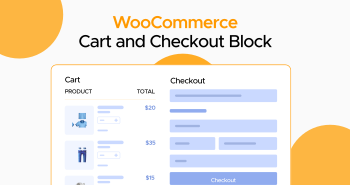
Block-based checkout is another significant improvement. This is not only a visual refresh – it’s an entire overhaul of the buying experience. The new system is better integrated with contemporary WordPress while allowing more customization.
WooCommerce Statistics: Why Use This Platform? Advantages Supported by 2025 Facts
The WooCommerce statistics reveal many strengths behind the massive popularity of the platform:
- Flexibility: WooCommerce is very versatile, adaptable to basic stores and anyone looking for advanced enterprise eCommerce website solutions.
- Cost-Effectiveness: Open-source with a huge free and paid plugin repository, it is cost-effective.
- Community Support: With millions of developers, merchants, and top WordPress agencies working together to improve it continuously.
- Integration with WordPress: Since WordPress leads in CMS adoption (Source: WordPress statistics), WooCommerce integrates perfectly, making maintenance and development easier.
Investing in professional WordPress maintenance services is essential for companies that want to unlock their full eCommerce potential. These services make your store work smoothly, stay secure, and keep it optimized for conversion.
Enterprise eCommerce Solutions: WooCommerce’s Expanding Horizon
The enterprise vertical is WooCommerce’s greatest opportunity for growth. While historically dominant in small to mid-market businesses, WooCommerce is now competing more and more for enterprise eCommerce solutions.
Recent platform enhancements directly address enterprise requirements. Improved performance, stronger security, greater scalability – these aren’t mere incremental enhancements. They’re targeted investments in the enterprise share of the market.
Businesses such as WPExperts specialize in creating enterprise-grade WooCommerce solutions. Their experience indicates that WooCommerce can meet enterprise needs well if developed and optimized correctly.
The Competition Landscape
Shopify continues to be WooCommerce’s main competitor, and the competition is getting fiercer. Various data sources indicate multiple leaders, but both platforms are undoubtedly competing for market leadership.
This WooCommerce vs. Shopify contest helps customers by pushing competitors towards innovation and increasing features. Both solutions focus heavily on performance, user experience, and richer functionality.
The main distinction is in philosophy. Shopify provides ease and hosted convenience. WooCommerce delivers flexibility and freedom of customization. Your decision is based on your priorities and technical comfort zone.
Where WooCommerce is Going: Considering WooCommerce Stats
Based on WooCommerce statistics and development trends, some projections make sense for the next few years.
Market share will stabilize and not rise exponentially. The e-commerce platform market is now mature, and large changes become less probable as platforms mature.
Technical advancements will keep speeding up. Performance, security, and user experience will remain the top focus areas. The platform is getting more advanced while ensuring it remains accessible.
WordPress.com integration would make the new market available. This availability may introduce WooCommerce to customers who have not had access before.
Now Make Smart Decisions with Complete WooCommerce Data on One Page
These WooCommerce statistics should guide your decision-making strategy, not control it. Numbers put things into context, but your needs dictate the best option.
If you’re after customization, possess technical resources, and prefer to have complete control over your store, WooCommerce statistics indicate that you’re not alone. Five million websites can’t be mistaken about everything.
If you’re a minimalist, you prefer hosted solutions that don’t require much customization, so that other platforms may be a better fit for you. The trick lies in aligning platform strengths with your real needs.
Conclusion: The Numbers Don’t Lie
WooCommerce stats in 2025 show a platform that can survive and thrive in a competitive market. With more than 5 million active installations, increasing download figures, and ongoing platform enhancements, WooCommerce is a continuing e-commerce powerhouse.
Whether you are considering WooCommerce services for a new website or assessing your existing platform, these figures put your choice in context. They indicate that WooCommerce’s blend of flexibility, affordability, and ongoing innovation still appeals to businesses globally.
Things are looking up for WooCommerce users. Platform development, ecosystem expansion, and market traction indicate ongoing success for this WordPress-based e-commerce platform.