































 Usman Hayat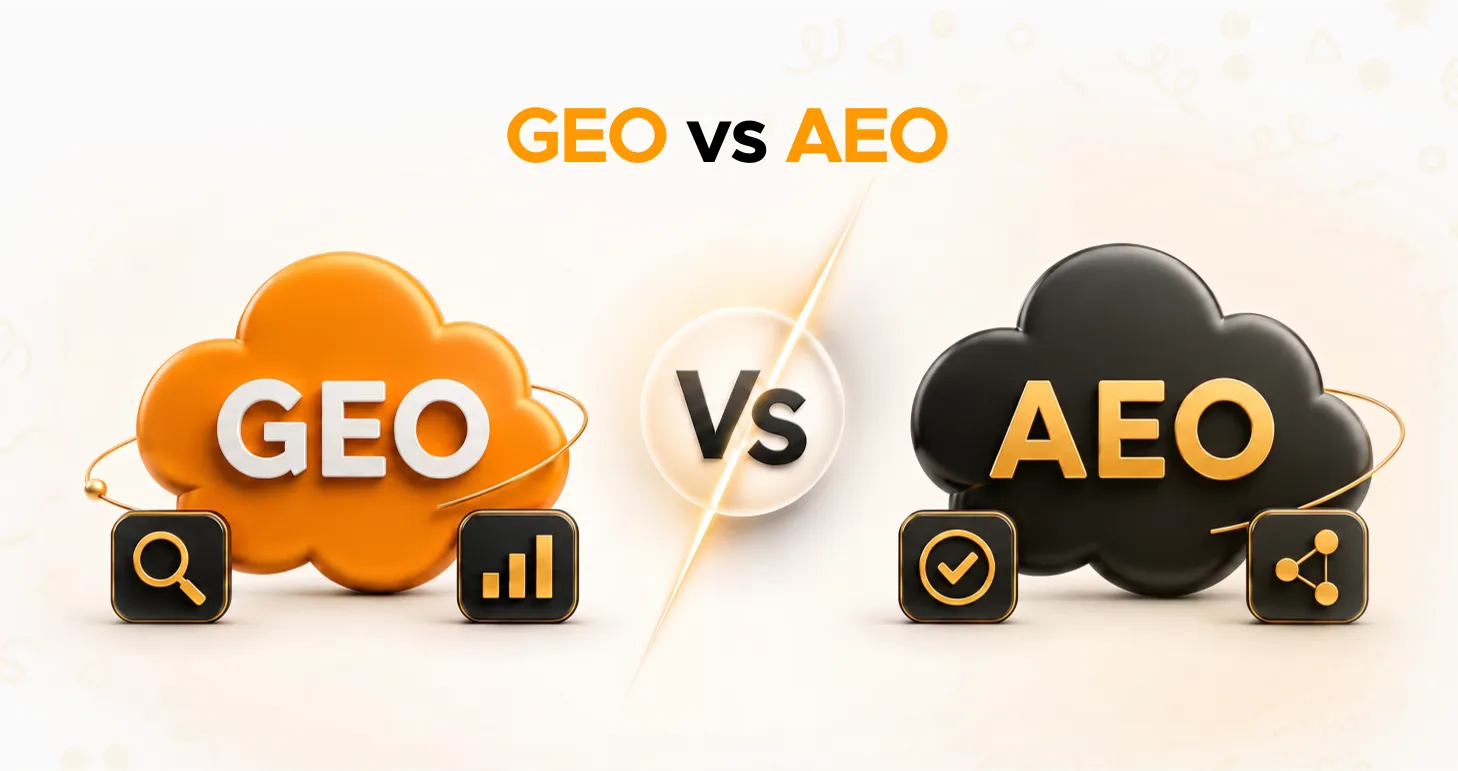
When you type a query in Google and instantly receive an AI-generated answer at the top, or use ChatGPT to ask the same query or something else and get a useful, sourced answer, a hidden tussle for visibility goes on behind the scenes.
Experience and benefit from this new world of search, which is being revolutionized by two incredible tactics: GEO (Generative Engine Optimization) and AEO (Answer Engine Optimization).
This GEO vs AEO blog post will thoroughly examine these value-driven strategies.
What is GEO?
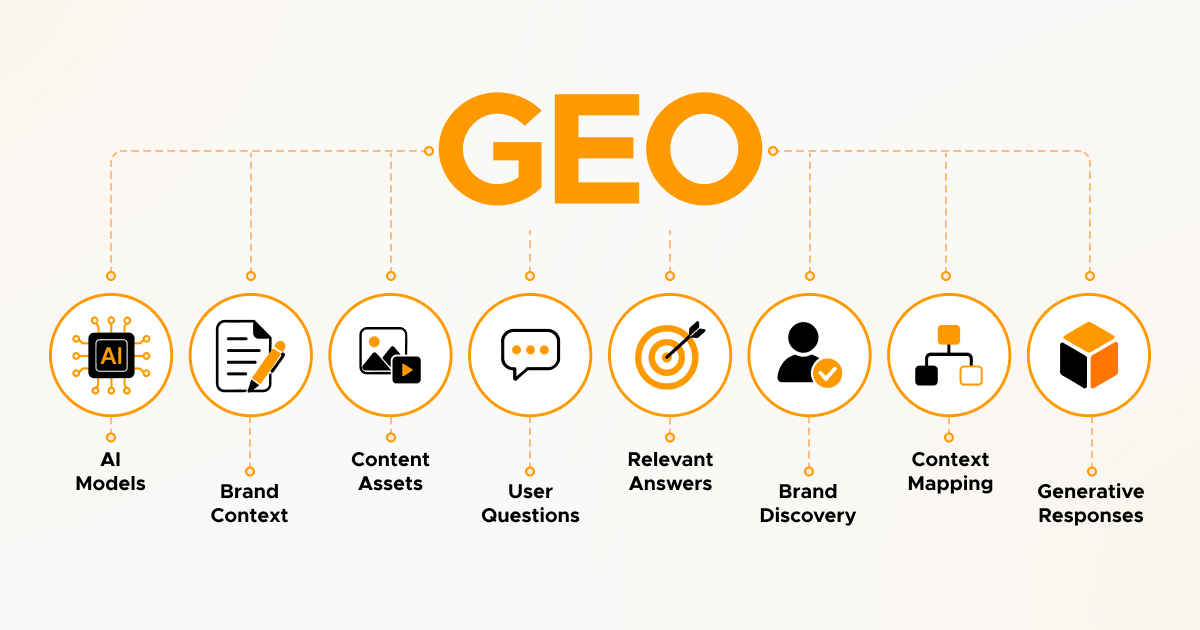
Generative engine optimization (GEO) is the process of using AI models to describe your brand, product, or expertise, producing generative responses. Rather than contending for blue links on a search results page, you prioritize what language models generate.
These can be comparisons, recommendations, narratives, or summaries; they are delivered to users when they ask a question.
GEO values context and association over rigid keywords. AI naturally showcases your brand in relevant conversations without needing instruction. This makes your brand discoverable in an organic, conversational way.
What is AEO?
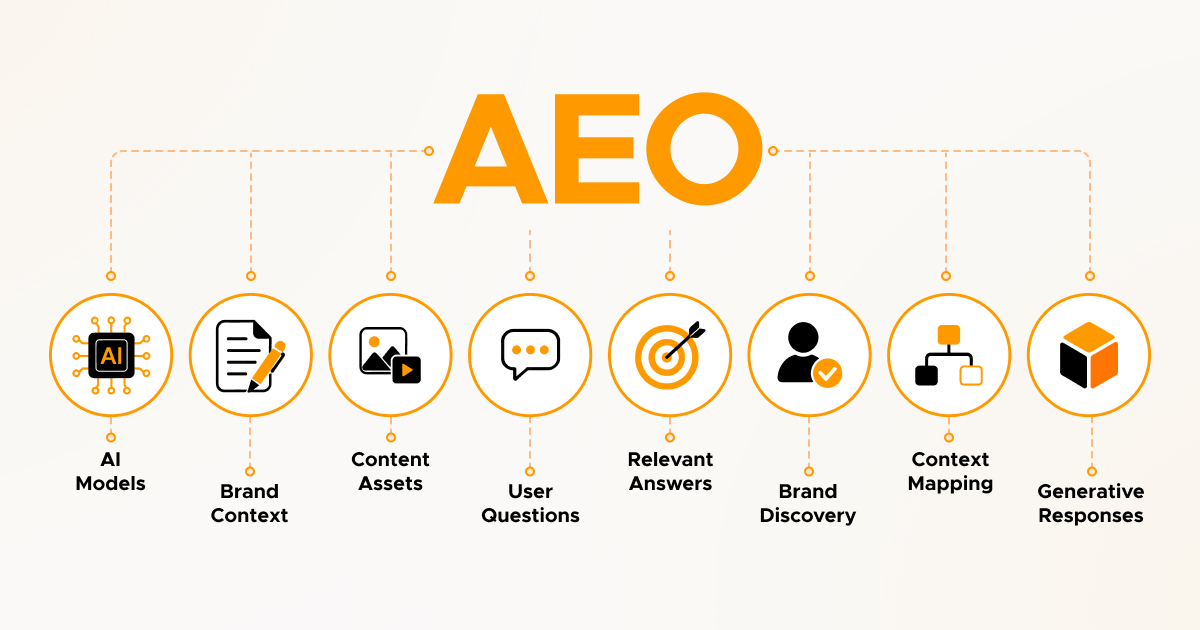
Answer engine optimization (AEO) ensures the answer is visible in search results. Rather than competing for traditional search rankings, you optimize your content so search engines can extract it and deliver it directly to users as the definitive response.
In this situation, don’t undermine the importance of formatting; it matters a lot. It includes clear headings, concise explanations, citations, schema markup, factual accuracy, and answer-first writing. In short, AEO prioritizes precision and clarity.
If your content is direct, communicates effectively, and provides valuable yet verifiable details, it becomes the response users view first. AEO helps transform information into authority and convert authority into trust.
Once both notions are understood, the importance of digital marketing becomes clearer. That’s because these strategies are handy for increasing and maintaining visibility in AI-powered search environments, empowering businesses to significantly improve their brand visibility.
GEO vs AEO Comparison At a Glance
| Category | GEO | AEO |
| Primary Goal | To show up naturally in AI-generated conversations | To be surfaced as a final authoritative answer |
| Biggest Strength | Expands reach through contextual mentions across many query types | Builds authority through accuracy, clarity, and trusted information |
| Best Use Case | Educational content comparisons, thought leadership, product positioning | FAQs, how-to guides, definitions, step-by-step instructions, fact-based queries |
| Suitable For | Generative models like ChatGPT, Perplexity, Claude, Gemini, etc. | Search and answer engines like Google AI Overviews, Bing Copilot, etc. |
| Required Approach | Offer depth, originality, and semantic richness | Offer structure, clarity, markup, and citations to denote authority |
| Output Style | Conversational, multi-angle synthesis | Direct, concise, answer-first formatting |
| Desired Outcome | The model discusses you | The model quotes you as the answer |
When and Why Should You Use Geo vs AEO?
As a small or medium-sized business owner, the GEO vs AEO analysis helps you develop realistic strategies to achieve your goals efficiently. For example, if you are willing to maximize your visibility or showcase your brand in AI conversations, focus on GEO.
If your goal is to make your answer the best on a given topic, AEO should be your priority. However, most businesses focus on a combination of the two concepts.
For GEO, you should focus on brand education, comparisons, guides, and top-of-funnel content, prioritizing thought leadership.
For AEO, prioritize how-tos, definitions, pricings, troubleshooting steps, and fact-based questions.
Keep an eye on the following beneficial tactics for GEO and AEO success:
- You should consider covering the complete loop of audience questions. These questions include basic, niche-centric, and other queries.
- Write and organize your content for AI so it can retrieve answers, and focus on highlighting bullets, short paragraphs, and front-loaded information with headers.
- Describe your products, services, features, and other helpful terminologies and approaches using a simple, easily understandable language to improve clarity as much as possible.
- Consider incorporating trust signals and credibility into your content, such as expert quotes, citations, recent statistics, and other resources.
- Check your content on different AI-driven platforms like Perplexity, Claude, ChatGPT, and more to see how they rank the content.
How Should Businesses Pair GEO and AEO?
When businesses fully leverage GEO and AEO, they improve reach and build authority. GEO helps scale awareness by embedding mentions into AI-generated outputs. As a result, businesses get discovered even when users don’t try to find them directly.
AEO completes the circle by locking in the official answer. Getting a place in an AI-generated answer validates a business as the ultimate authority, and that can help build trust instantly. This can allow businesses to convert high-intent queries.
Is SEO No Longer Significant?
The arrival of GEO and AEO doesn’t diminish the significance of SEO. This indicates that you cannot rely on SEO alone in this AI era. The fact is, you need to make your content as human-readable as possible. Similarly, aim to provide value to your readers through your content by resolving their queries up front.
Use simple language to provide clear answers to users. Follow a strong structure to help search engines easily discover your content. Hence, you can smartly send consistent signals across the ecosystem.
That’s the calculated, long-term, and fruitful approach. More importantly, you should know about SEO, GEO, and AEO to make the most of these complementary strategies.
Wrapping Up
We expect you to appreciate our GEO vs AEO analysis. The GEO vs. AEO debate will only get better with each passing day. These crucial strategies don’t mean you have to follow or chase another algorithm or completely reamp your content.
In other words, you don’t need to rewrite about SEO to be discoverable or prioritized by AEO and GEO.
There is no denying that AI systems now reside between your target customers and content. They decide what gets left out, what gets trusted, and what gets surfaced.
So, use both of these powerful terms wisely to enhance your brand visibility and discoverability.
FAQs
How can businesses design their content strategies for answer engine optimization as generative AI platforms expand?
Try creating clear, answer-first content that’s easy for AI to extract. Moreover, use structured formatting, concise explanations, FAQs, schema markup, and trustworthy sources. Remember, you must update your content regularly as platforms evolve.
What is the clear difference between SEO and GEO?
SEO helps you rank websites at the top of conventional search engines like Google to increase clicks and drive traffic to your sites. As for GEO, it helps you showcase your brand as a direct answer on AI-driven platforms such as ChatGPT, Gemini, and Perplexity.
Which common AEO mistakes should businesses not commit to maintain high visibility in answer engines?
Businesses should not undermine the importance of valuable content at any cost. They should avoid using outdated information and keyword stuffing. The content must offer value to existing and potential customers.
The language you use in content should be easy to grasp for all age groups. As you may be aware, AI engines value simplicity, verifiable accuracy, and clarity.
How to improve GEO results?
To improve Generative Engine Optimization (GEO) results, create highly structured, concise content that directly answers user queries. Likewise, using clear subheadings and adding multimedia, such as images and videos, is recommended.
Furthermore, develop authority through trusted third-party mentions, ensure technical accuracy, and update content regularly (every 3 months) to maintain reliability and help AI-driven search systems retrieve up-to-date, accurate content.
Does AEO decrease website traffic since users don’t click?
Unfortunately, AEO can lead to fewer clicks. However, it helps increase visibility and trust among qualified prospects. Users who still click usually have higher intent, while others remember your brand from the answer itself.