











































 Usman Hayat
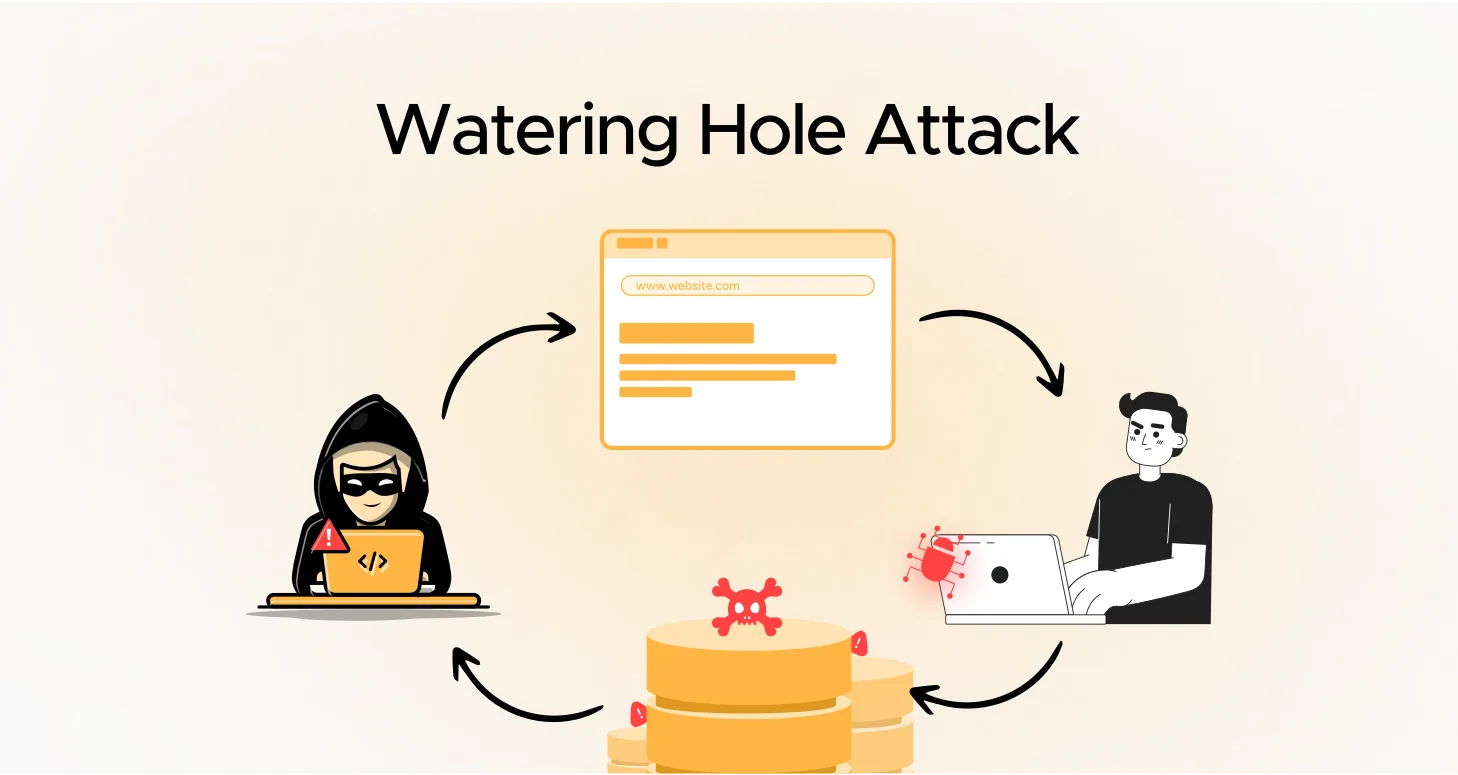
As an uncommon security threat, a watering hole attack allows attackers to infect sites that a specific user group frequently visits. The primary objective of this attack is to infect users’ devices with malware. The other motive of the watering hole activity is to gain access to workplace networks and exploit sensitive information.
This blog post will discuss a watering hole attack and how to appropriately circumvent this dangerous cyber threat.
What Do You Mean by a Watering Hole Attack?

A watering hole attack is a cyberattack that targets user groups by compromising the sites they visit. The name is derived from animal predators that lurk by watering holes and wait to target prey when they are unaware of potential risks.
As far as the watering hole attack goes, hackers, spammers, or other attackers lurk on particular sites and wait for an opportunity to harm them. Consequently, they successfully infect the sites’ visitors with malware.
Unlike phishing and spear phishing attacks, a watering hole attack attempts to corrupt users’ devices. Moreover, the attackers strive to gain unethical access to a connected corporate network. Phishing and spear phishing attacks, on the other hand, attempt to inject malware into users’ computers or steal data.
In a watering hole attack, cyber goons’ prime target is legitimate sites, where they implement zero-day exploits that scanners and antivirus detectors cannot detect. Because of this, a watering hole attack poses serious threats to companies and users who do not apply and follow recommended security practices.
Various Terms for Watering Hole Attack
Wateringhole attacks have numerous terms, including web watering hole attacks, strategic web compromises, and supply chain web attacks.
Web watering hole attacks allow hackers to target specific organizations or groups of users by infecting sites they regularly visit. They are equally devastating for organizations and users, jeopardizing their security and privacy.
If we talk about strategic web compromises, attackers try to compromise sites and web applications and misuse sensitive information to achieve their notorious objectives. In supply chain web attacks, a third-party site that belongs to a supply chain is compromised.
How Does a Watering Hole Attack Work?

Hackers or other cybercriminals typically profile their targets during a watering hole attack. The targets often involve employees of government organizations, large corporations, and human rights groups. The attackers locate the sites they visit and attempt to detect their vulnerabilities.
Once they find site vulnerabilities, they infect them with malicious JavaScript code or HTML (Hypertext Markup Language). As a result, they successfully redirect users to a spoofed site hosting the attacker’s malware. Attackers use watering holes to perform illicit activities, like data theft and espionage.
What are the Indications of a Watering Hole Attack?

Unfortunately, watering hole attacks are difficult to identify, but they look similar to other cyberattacks. That said, if the preparators have tackled cybersecurity measures and have compromised devices, systems, and apps, you will likely witness the following issues:
- Missing files.
- Computer performance problems and system slowdowns.
- Unexplained system crashes.
- Changes to browser security settings.
- Pop-ups or ads directing the user to a particular site.
- Unknown or new applications are downloaded to the user’s system.
If you think you have become a victim of a watering hole attack, you must contact IT security experts to be safe. In the meantime, you should also refrain from clicking links and downloading files.
Crucial Stages in Watering Hole Attacks

The watering hole attacks include the critical stages, such as gathering intelligence, analyzing the intelligence, preparing the attack, and executing the attack.
Intelligence Gathering
In the first stage of a wateringhole attack, attackers target specific groups of users who frequently surf a common website. This allows them to launch an advanced persistent threat (APT) to bypass all security measures deployed to safeguard users’ sensitive information.
Analysis
In the second stage of a watering hole attack, attackers identify and compromise the target site. They also obtain crucial information about user behavior, network response, tools, and techniques.
Attack Preparation
This is the third stage of a watering hole attack, where cybercriminals launch the attack to disrupt the productivity of a specific website. SQL injections, zero-day exploitation, cross-site scripting (XSS), etc., are prime examples.
Attack Execution
This is the last stage of a watering hole or supply chain web attack, yet the most significant one. When the watering hole is about to attack the organization’s target network, the compromised site delivers the malware payload to the user. Once the malware payload is delivered to the user, it moves to the organization’s IT network.
What Should We Do to Prevent a Watering Hole Attack?

If businesses and users want to overcome or minimize the risk of a watering hole attack, they need a combination of regular monitoring, proactive defense tactics, and cybersecurity awareness. Here are different measures website owners and users can take:
Limit Website Access
Businesses of all types need to be agile in this scenario. They should not allow their workforce to visit potentially high-risk websites at any cost. Besides, they can consider imposing network segmentation in their workplaces. This will ensure that a compromised endpoint will not harm the whole system.
Utilize Advanced Threat Protection (ATP)
It is necessary to utilize tools that monitor website traffic for zero-day exploits or malicious behavior. This helps identify watering hole activity on time.
Regularly Update Systems
Regularly update software, plugins, and browsers to prevent attackers from making full use of known vulnerabilities.
Enable Endpoint Protection
Security tools such as EDR (Endpoint Detection and Response) help monitor systems and identify infections if exposed to a compromised site. The same tool is handy when detecting malware activities.
Provide Awareness to Employees and Users
Inform employees and users regularly about the latest cybersecurity threats, including wateringhole attacks. Furthermore, they should be vigilant in highlighting suspicious behavior and incidents on trusted sites related to different cyberattacks.
They must also follow the recommended cybersecurity practices to mitigate watering hole attacks and other risks.
Collaboration on Threat Intelligence is Needed
Collaborate with industry peers regarding threat intelligence and constantly share news, happenings, or events related to watering hole attacks and other latest threats and vulnerabilities.
Wrapping Up
We hope you liked our blog post, which thoroughly describes the wateringhole attack. This targeted cyber risk may impact businesses, government organizations, and users.
In this cyberattack, attackers exploit vulnerabilities found in websites that a particular user group frequently visits.
As a result, they can inject malicious JavaScript code to compromise a website’s security and crucial data. To safeguard from the consequences of watering hole attacks, you can benefit from the above preventive measures, such as providing awareness to employees and users, updating systems and software, limiting website access, and using ATP (advanced threat protection).
Lastly, a layered security perspective, integrating the above practices, can help substantially decrease the threats of watering hole attacks.
To reduce damage considerably, businesses, whether large or small, must focus on implementing incident response plans to resolve potential infections promptly.


