










































 Usman Hayat
Artificial intelligence app development has transformed how we deliver innovative software, specifically in mobile app development. By analyzing large datasets and making decisions based on them, AI has surely revolutionized mobile apps, delivering more intelligent, responsive, and personalized experiences for developers, customers, and other stakeholders.
From predictive maintenance to language translation and chatbots, AI has empowered mobile apps to become user-friendly and intuitive, revealing the massive yet decisive potential of AI in mobile applications.
This blog post will describe the role of AI in mobile app development.
Role of AI in Mobile App Development
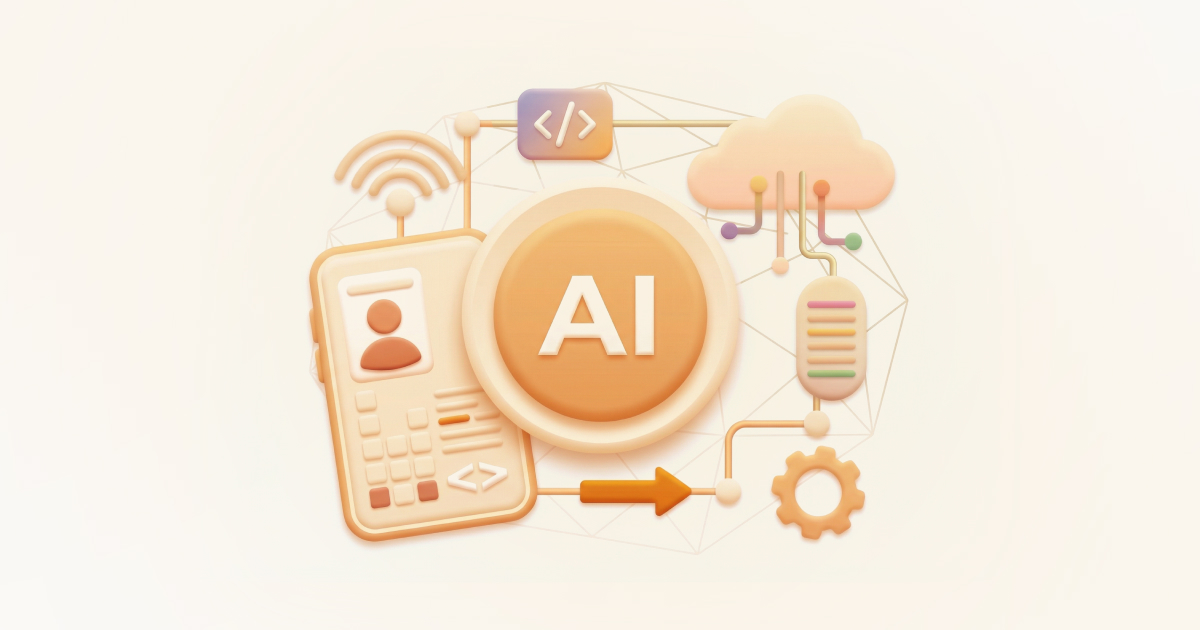
Stakeholders can easily apply Artificial Intelligence (AI) across industries such as retail, finance, real estate, healthcare, and more. The advantages of this technology are countless across all business sectors, and artificial intelligence application development is no different.
For instance, you can use AI to accumulate user data and craft personalized experiences for each user. Fortunately, an AI-powered app can help understand users’ preferences and recommend products, content, or services according to their needs.
Moreover, you can integrate AI-powered chatbots and virtual assistants into mobile apps to deliver customer support, provide feedback on user questions, and manage multiple tasks without human intervention, underscoring the advantages of AI in mobile app development.
Relationship of Mobile Apps and Artificial Intelligence

AI-powered apps are more intelligent and intuitive, and can deliver more value to end users. There are three significant dimensions for applying AI in mobile apps:
Prediction
AI enables app algorithms to solve complex problems and aid decision-making. Mobile apps can leverage AI to make logical, informed decisions.
Google Maps provides accurate travel time estimates. Uber identifies nearby cabs and recommends the best routes. These firms use AI to monitor historical traffic patterns and provide users with the best solutions in real time.
Recommendation
Companies, large and small, benefit from AI to build powerful recommendation engines in mobile apps. Recommendation engines evaluate past user actions and provide relevant recommendations for future actions.
Netflix uses AI to analyze viewers’ preferences and recommend the next film that matches them. Amazon tracks shopping behavior and recommends more products that customers are likely to buy.
AI applications in mobile apps can evaluate data faster than humans and keep up with prevailing trends. This enables apps to understand users better, provide more contextually relevant recommendations, and boost engagement.
Behavioral Analytics
AI makes it easier for users to predict and understand patterns, enabling more personalized app sessions. Startups can leverage sentiment analysis and deep learning to improve the user experience.
For instance, AI lets us understand why a user no longer uses an app. Google Analytics or CleverTap (an app analytics tool that uses AI to monitor user sessions) analyzes touch heatmaps and unearths navigation paths within mobile apps. AI-based analytics help prioritize and manage the app to meet user expectations.
Benefits of AI in app development
AI offers multiple benefits to users in app development:
- Automation: AI-powered tools and algorithms can automate and streamline time-consuming, repetitive tasks, empowering developers to focus on more complex areas of app development.
- Enhanced Efficiency: AI enables mobile apps to perform a variety of tasks faster than humans in various scenarios. Whether it’s responding to customer queries, processing data, or managing workflows, AI helps businesses boost efficiency and results.
- Personalization: AI can help develop personalized app experiences based on user behavior and data, driving increased engagement and user satisfaction.
AI has the right ingredients to enhance automation and enable intelligent interactions across web and mobile applications. From digital assistants and chatbots to personalized experiences, the applications of AI in the mobile app arena are countless.
What are Prime Examples of AI-powered features in Mobile Apps?
- Virtual Assistants and Chatbots: Examples of apps that use AI-powered virtual assistants and chatbots include Slack, Facebook Messenger, and Apple’s Siri.
- Image and Object Recognition: Users can use AI to identify and classify objects and pictures in mobile apps, enabling features such as object detection and augmented reality. Different apps that use AI-powered image recognition are Snapchat, Google Lens, IKEA Place, and more.
- Voice Recognition: AI-powered voice recognition enhances voice commands and controls in mobile apps, making them more powerful, user-friendly, and results-oriented. Popular AI-powered voice assistants include Apple’s Siri, Amazon’s Alexa, and Google Assistant.
- Predictive Analytics: AI can analyze user behavior and anticipate future actions, enabling mobile app developers to make data-driven decisions about functionality and features. AI-powered predictive analytics apps include Spotify, Waze, and Google Maps.
Impact of AI on Mobile App User Experience
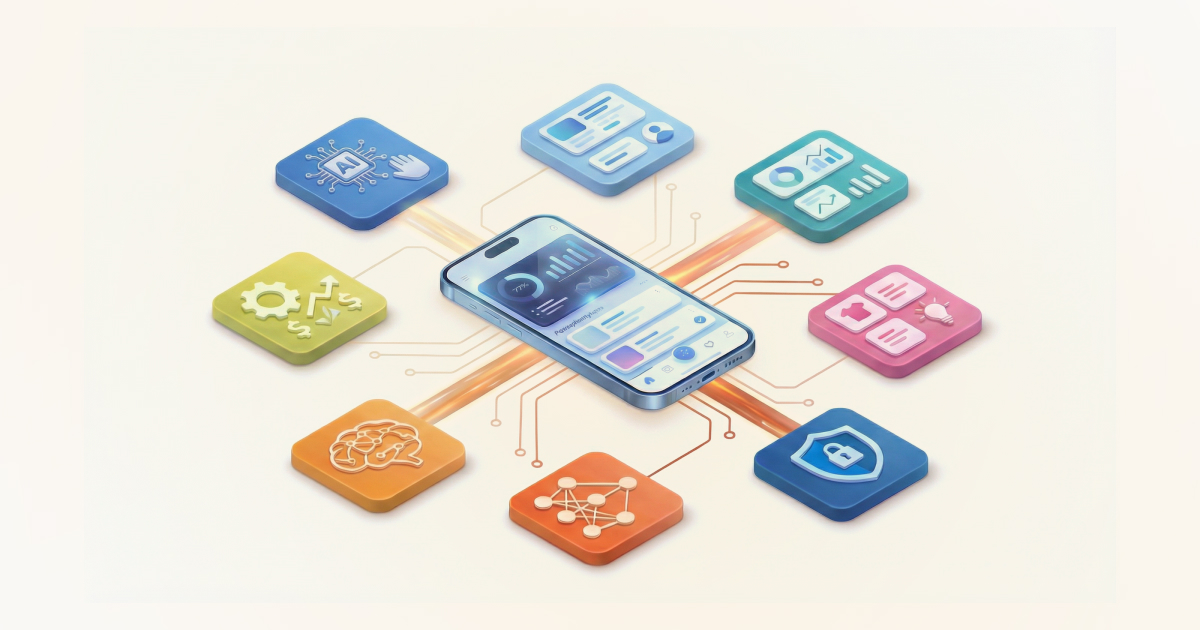
Artificial intelligence (AI) has a productive impact on mobile app development; it can help create graphic assets and images for the application, enhance user interactions, and ensure seamless performance.
Improve Automation while Retaining Human Inputs
Artificial Intelligence (AI) helps humans make more informed decisions. AI has reduced the requirement for human input in analysis. Furthermore, AI-powered devices and tools reduce the need for human input while delivering the best outcomes that benefit humanity.
That said, it is crucial to understand that you can design AI to work collaboratively with other users, rather than replace them comprehensively. By accommodating human inputs such as oversight and feedback, the technology can be fine-tuned to better align with human values and needs.
As a result, AI in mobile app development can enhance automation while retaining human capabilities and perspectives.
Improved user engagement
AI-powered features in mobile apps development, such as personalized content and recommendations, have increased user engagement by delivering a more tailored experience. By analyzing user data, AI algorithms can recommend high-quality content and features that support individual users, keeping them engaged and using the app longer.
Intelligent and Personalized Recommendations
Once businesses launch their AI-driven mobile apps, they can likely improve sales and revenue by considering user preferences. Suppose your app prioritizes a specific domain; you can offer users personalized recommendations depending on their previous browsing behavior.
Moreover, by analyzing user data, AI-powered tools can offer personalized service suggestions and intelligent product or service recommendations, increasing the likelihood of engagement, conversions, and sales.
Challenges of AI Integration in Mobile App Development
You can associate multiple challenges while integrating AI into app development.
Complexity of AI algorithms
AI algorithms are difficult for novice users to understand and require specialized knowledge to implement and maintain. App developers can hire AI experts or coordinate with reliable third-party AI providers to ensure their app’s features work flawlessly.
Data privacy concerns
different privacy concerns you can associate with AI-enabled apps, as they mostly require the storage and collection of large amounts of user data. To resolve such issues, app developers must ensure that user data is collected and used transparently and in compliance with all applicable privacy regulations. Tackling these challenges requires smart planning and execution to ensure that the key advantages of AI in mobile app development outweigh the associated costs and risks.
Cost
Cost is a key challenge in integrating AI into mobile app development. Developing AI-powered apps often requires complex algorithms and significant development time, which can increase costs.
Use AI to Leverage the Capabilities of Your Mobile App with Objects
Artificial intelligence can help apps impress their users and even exceed their expectations big time. Moreover, it can help them win over their current and potential users compared to competitors. When developing a mobile app, consider building AI from scratch or waiting until more data streams in to support implementation. In this situation, contact Objects, a top-notch, impactful mobile app development company that knows how to integrate AI into your existing or new apps, driving conversions and sales by sharply expanding your customer base.
By adopting Artificial Intelligence in mobile app development, you can enhance the end-user experience, gain realistic, relevant audience insights, and craft a seamless solution users love.
FAQs
What are 5 Applications of AI?
Five crucial applications of AI are healthcare diagnostics, e-commerce personalization, autonomous vehicles, virtual assistants/chatbots, and fraud detection in finance. All leverage AI for tasks ranging from language comprehension and pattern recognition to complex decision-making and process automation, enhancing efficiency and the user experience.
Which Mobile Phone has AI?
Galaxy AI is built into Samsung-branded devices, including tablets, earbuds, and smartphones. It was first introduced with the Galaxy S24 series smartphones and has since been added to numerous products.
What are the Four Kinds of AI?
Four key types of artificial intelligence include reactive, limited-memory, theory-of-mind, and self-awareness. Currently, we have only real-world examples of reactive, limited memory. Reactive machines respond to the situation at hand and make decisions without memory of the past, such as IBM’s Deep Blue supercomputer.
You can train a limited-memory AI and use it in self-driving cars. This AI can make decisions by detecting issues and providing robust solutions, essentially learning from historical incidents.
What apps use ML?
As expected, numerous apps have begun benefiting from AI alongside ML, including YouTube, Uber, Amazon, Facebook, Google Search, and many others. As you may be aware, ML algorithms are a crucial part of any contemporary mobile app.